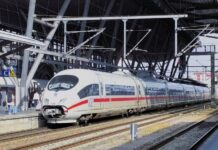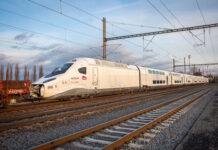

















According to an article in Parisian who had access to an internal SNCF document, the railway company is considering " optimising services "This could result, at worst, in the closure of certain lines. In the long term, this could result, at worst, in the closure of certain lines and, at best, in an increase in the number of services. reduction in the number of daily trains. In particular, the ends of lines on which high-speed trains run at reduced speeds will be targeted, at a time when SNCF is short of trains to meet demand on its network.
Other services include in the hot seat, daily newspaper Le Parisien These include Paris-Dijon, Paris-Chambéry, Paris-Metz/Nancy, Paris-Grenoble, Paris-Annecy and Paris-La Rochelle. This is bad news at a time when the government is trying, as part of the ecological transition, to get the French to prefer the train because of its lower CO2 compared with other modes of transport. The SNCF has denied at this stage that it has any plans to close any lines, but these leaks are already causing a stir among the elected representatives of the towns and cities concerned. " SNCF Voyageurs denies: there are no plans to reduce overall TGV services or to stop destinations." Alain Krakovitch, Director of TGV-Intercités, tweeted later in the day.
Another target mentioned by Le ParisienThese are employees who work in Paris but live in Tours, Lille, Arras, Reims or Le Mans to enjoy a better quality of life. Once sought after by the SNCFThese pro, neo-nomads who like to teleworkThe rail company now seems to be less interested. Or, at the very least, it intends to charge them a fair price for their journeys. So, after an increase of almost 5%, these passengers will see the 1er Next February, the price of their monthly Max Actif and Max Actif+ season tickets will increase by 10% and 5% respectively.
A business model on the brink of implosion
If SNCF were to have to make decisions about its network, it would be to because of a model that has been in place for decades, but no longer holds up since the opening up of the market to competition and the arrival of operators such as Trenitalia and the Renfe. Until now, the most profitable rail routes, Paris-Lyon in the first instance, were used to ensure the operation of loss-making services. However, these foreign companies have eaten into its market share and therefore its profits, forcing it to find ways of making substantial savings. In addition to this, the public company is forced to invest, via its subsidiary SNCF Réseau, in the maintenance and modernisation of an ageing French network.
Rail tolls, the cost of which continues to rise, contribute to this, and now account for 40% of the cost of a ticket. At a Senate hearing in 2023SNCF Chairman Jean-Pierre Farandou estimated that over the next 15 years the company would need to spend €100 billion to meet its targets. network investment requirements rail. And, as of this year, the budget dedicated to this work must be increased by an additional €300 million, which will be taken from the profits of SNCF Voyageurs!
The situation is all the more difficult for the carrier as it is the only one until 2027 to carry these investments within the competition fund, as the new competitors are not putting their hands in the wallet for the time being. Hence its obligation to cut the sources of losses and, at the same time, to make the necessary investments.increase its rates to save its business model. The increase this year is expected to be around 2.6%, in line with expected inflation, after an average increase of 5% in 2023.