







It has been nearly two decades since Linz has been working to rid itself of an eminently industrial image, which, while certainly contributing to its prosperity, has also «invisible» it to tourists, who are more attracted by the Baroque grace of its buildings. Salzburg or the imperial majesty of Vienna. The turning point came in 2009, when the city received the title of European Capital of Culture. This event transformed Linz. And it intends to make it known with a certain dose of boldness, creativity and humor.
In Austria, the city is renowned for its creative spirit, but also for a certain self-deprecation. Its new tourist slogan, « Take a risk, visit Linz » (« Dare, visit Linz »), as evidenced by his promotional video. Indeed, it plays the Hollywood blockbuster card: a monster, emerging from nowhere, transforms the city, going as far as to deface it. A quirky way to challenge accepted ideas and affirm an identity that refuses conventions.
For Marie-Louise Schnurpfeil, director of the Linz tourism office since 2023, the challenge is to transform a rather unique city into a true tourist attraction. Linz prefers to focus on its distinctiveness, its urban energy, and its ability to surprise. This strategy should undoubtedly appeal to both tourists seeking less conventional destinations and conference and business event organizers seeking venues offering more than just hotel infrastructure and meeting rooms. And this, by offering a symbiosis between heritage, contemporary creation, and local life, not to mention prosperity, owes much to its economic power.
Large industry and start-ups
With about 215,000 inhabitants, Linz is the third most populous city in Austria, after Vienna and Graz. It is primarily one of the country’s main economic drivers. The city has more jobs than inhabitants and attracts daily around 110,000 people who come to work from the surrounding municipalities.
For a long time, Linz was considered the main industrial hub of Austria. A city of chimneys, blast furnaces and large companies, whose economic activity seemed to obscure any other attraction. Its industrial history remains, for example, inseparable from Voestalpine, the Austrian giant of steelmaking and steel processing technologies that employs nearly 50,000 people worldwide and whose production site is located in Linz. Another regional player of considerable importance, Energie AG Oberösterreich operates in the energy, electricity and telecommunications sectors. The construction sector is also well represented with Swietelsky, one of Austria’s major construction groups.
Alongside these economic giants, Linz also stands out for its new gems, start-ups often active in the fields of high technology, research and the creative industries. The numerous universities and research institutions contribute to nurturing this ecosystem, which also benefits from a strong tradition of cooperation between businesses and the academic world.
The figures from the local chamber of commerce and industry testify to this vitality: more than 800 new companies were created in the city in 2024. Innovation, digital technologies, and creative activities are taking up an increasing place in this changing economy.
This dynamic also represents an argument for business tourism. Professional trade shows, conferences and international meetings benefit from a city that combines economic power, accessibility and modern infrastructure. Linz thus has a MICE potential that is still relatively unknown to international markets, particularly in France.
The real change in Linz’s image dates back to 2009, the year the city shared the title of European Capital of Culture with Vilnius. The event acted as a formidable catalyst for transformation at the time. The municipality invested heavily in cultural facilities, especially along the Danube. Because it was a paradox for Linz. Located along the famous river, it had long neglected it – or more precisely, reduced it to a role of a transit route where factories and expressways coexisted.
The Danube is back in the heart of the city
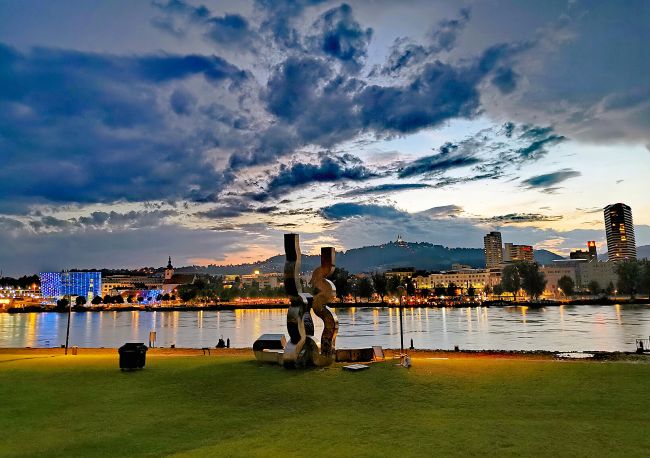
Today, the banks of the Danube are adorned with urban promenades and parks while hosting several cultural institutions within contemporary structures such as the Lentos, the fine arts museum with a remarkable collection of paintings and sculptures from the 20th century.e and XXIe For centuries, one of the most beautiful buildings outside Vienna. Its domed facade overlooking the Danube actually evokes a bridge.
Across the river, on the other side of the river, stands the Ars Electronica Center, dedicated to the interactions between art, technology, robotics and society. The institution is a veritable international reference in the field of digital creation. A little further on, the Bruckner Haus, a congress and concert hall opened in 1974, has indeed set the benchmark for this reconquest of the river.
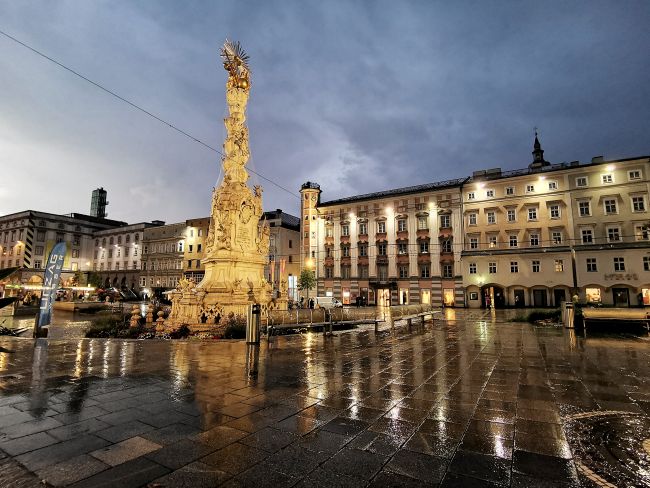
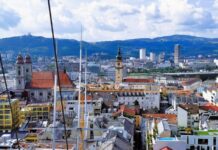
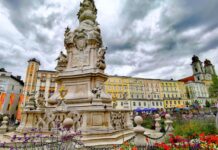
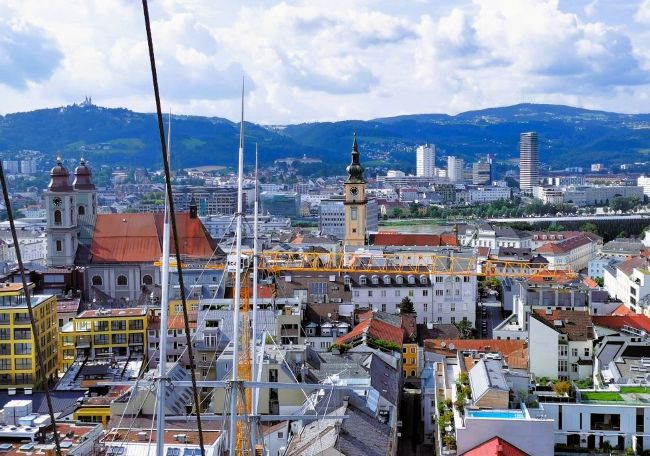
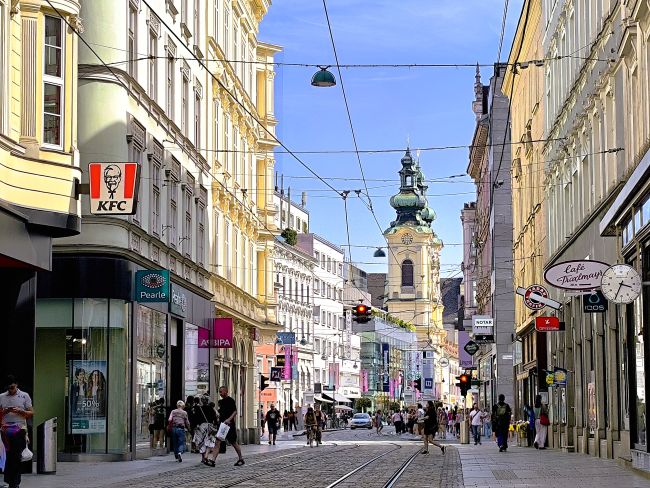
Returning to the historic center, with carefully renovated houses designed to accommodate the European capital of culture, Linz demonstrates that it also has remarkable architectural heritage. Hauptplatz (Grand Place) is one of the largest in Austria and is lined with splendid Baroque buildings. It forms the heart of the old city.
The latter houses art galleries, gourmet restaurants, bistros and creative spaces in its beautiful pastel-colored houses. The historic heart is dominated by the silhouettes of some emblematic buildings such as the imposing Cathedral of the Immaculate Conception (Mariendom), in pure neo-Gothic style; or the Linz Castle. Dominating the Danube, it is today a museum. Or again, the Pöstlingberg hill, crowned by a Baroque church at an altitude of 539 meters and accessible by an ancient tramway.
Linz also cultivates a more unexpected artistic identity with Mural Harbor. In its port on the Danube, the walls and industrial infrastructure have transformed into gigantic canvases for street art. International artists have created monumental murals there, transforming a port environment into an open-air gallery.
The initiative clearly demonstrates the vocation that Linz has discovered: that of a city where industry, art, technology and creativity coexist and mutually nourish each other. Between Baroque heritage, contemporary architecture, digital art, street art and industrial power, Linz has built a unique personality in Austria. It may not have the romanticism of Salzburg or the opulence of Vienna, but it offers a different reading of Austria, more creative, more industrial and more contemporary. Something that will appeal to MICE providers and business travelers alike!