









What is the importance of Linz as a congress and conference destination in Austria? What are the strengths behind its positioning?
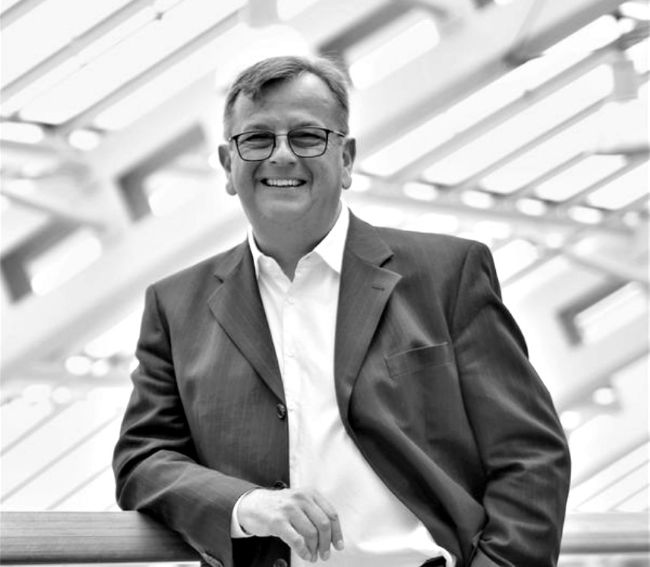
Thomas Ziegler – Linz occupies a particularly central position in Austria. If a circle of 250 kilometers is drawn around the city, it covers nearly 90% of the Austrian population. No other city, not even Vienna or Salzburg, enjoys such a central location.
Linz also has a strong industrial identity. We are located in a region where the steel industry, chemistry and the agri-food sector play a major role. But Linz has evolved a lot. For a long time, it was perceived as an industrial city, but it has gradually developed a true cultural dimension with the multiplication of festivals and major events.
Along the Danube, the Brucknerhaus is one of the city’s main cultural facilities. It is a municipal institution dedicated to events, music and cultural events. We also have the Tips Arena, a sports complex that hosts major events and large concerts.
Furthermore, Linz organizes the Bruckner International Festival every year, whose origins date back to the 1970s. I also remember the first Klangwolke, or «sound cloud,» a musical event created in 1976. I was a child and I used to come by bicycle to observe the loudspeaker and laser installations. It was absolutely fascinating. This event, which combines classical music and visual art, has helped pave the way for other cultural events, including Ars Electronica.
All these elements strengthen the attractiveness of Linz, both for individual tourism and for business tourism. To convince a conference organizer, it is not enough to have a well-functioning conference center: you also need to be able to offer the participants a city, a cultural offering, and experiences.
The name Design Center may come as a surprise. Is it really a center dedicated to design or is it a conference center that simply has a different name?
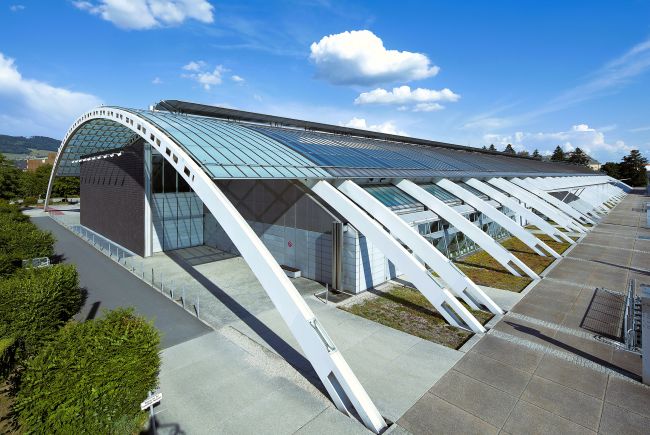
Thomas Ziegler – It is indeed a congress and events center. But its history explains its particular name. In 1989, the city mayor, Franz Dobusch, announced among his first priorities the construction of a conference and exhibition center. The municipality therefore launched a reflection with international architects and experts in order to define the capabilities, dimensions, and location of the future facility.
The project was then presented under the title «Design: Center Linz». It was not yet a definitive commercial name, but rather a presentation of the concept. The mayor eventually decided on this name. Thus, the Design Center Linz was born, filling a real gap in the city’s event offering.
How has Linz’s image evolved among international organizers?
Thomas Ziegler – When I started working here, one of my first business missions took me to Innsbruck, on the occasion of an event organized by the Austrian National Tourist Office. With a colleague, we had the impression that we had to give a real geography lesson to our international interlocutors. Many of them asked us: «Linz? But where is Linz?»
For the Austrians, of course, the city was well known. But abroad, one had to explain that it was located between Vienna and Salzburg, on the Danube, and that it then had about 180,000 inhabitants.
Since then, we have expanded our commercial activities abroad, participated in professional trade shows, and worked with the Austrian tourism bureaus in the Benelux region, Great Britain, and sometimes the United States. We have also organized promotional campaigns in Las Vegas and Miami. And we have noticed that visitors who discover Linz are often pleasantly surprised. They appreciate its architecture, cultural offerings, and quality of life. Once there, many want to return.
Today, about 80% of our events return every year, while 20% are itinerant events that change their destination.
What is the international dimension of your business today?
Thomas Ziegler – Our clientele remains predominantly Austrian, although we also work with international companies and organizers. We cannot compete with major global congress destinations such as Paris, London, Vienna, or even Warsaw. Some international scientific events naturally prioritize these major cities. Our goal is therefore to gradually strengthen Linz’s international visibility, even if the lack of air connections can be a problem.
Indeed, is the insufficiency of air connections still a major obstacle?
Thomas Ziegler – The issue must be viewed from a different perspective. When I introduce Linz to an international organizer, I begin by explaining to him that the central train station is only 680 meters from the Design Center. From this train station, it is possible to reach the Vienna-Schwechat airport directly in about 1 hour and 40 minutes. The journey is simple: you get on the train in Linz and arrive directly at the airport.
We also need to relativize distances. In cities like London or Paris, travelers often have to plan for nearly an hour to get to the city center from some airports. Linz is obviously much smaller, but its rail accessibility is an advantage.
Travel habits are also evolving. Participants at international conferences are now more accustomed to combining different modes of transport.
The Ars Electronica festival is a good example of this. This international event attracts a considerable audience every year, with the programming spread across several sites. Participants can arrive in Vienna and reach Linz by train. For this type of event, the journey is not necessarily a problem.
Is the Ars Electronica festival today your most international event?
Thomas Ziegler – Yes, it is probably the event that has the greatest international visibility. It attracts a very important audience every year for five days, around digital creation, new technologies and art. This type of event mobilizes several infrastructures. The Tips Arena can accommodate about 9,000 people for major concerts, while the Brucknerhaus hosts smaller events, including concerts in its large hall with 1,200 seats.
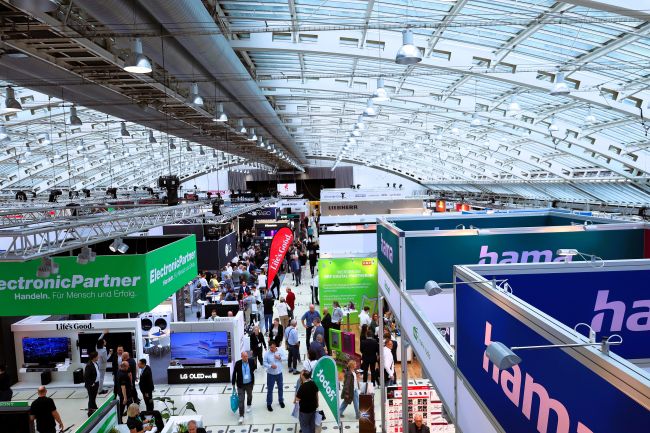
The Design Center also plays an essential role in logistical organization. It can accommodate large catering operations and the facilities necessary for multi-day events. This complementarity between the facilities is a real advantage for the city.
Are the hotel capacities in Linz sufficient to meet the needs of international congresses?
Thomas Ziegler – I think our offer is well suited today. We have establishments in different price categories, which allows us to meet the needs of congress participants and cultural visitors alike.
The offer is largely composed of private and family hotels. Marriott brings an international brand to the destination, while other independent establishments contribute to the diversity of accommodation.
Would Linz nevertheless need to attract more large international hotel chains, such as Hilton, Hyatt or Accor, to strengthen its image abroad?
Thomas Ziegler – It would certainly be an advantage to have more well-known international brands. These brands help reassure some organizers and participants who are unfamiliar with the destination.
But Linz is not Vienna. We must take into account the size of our market and our positioning. However, the region has a particularly dynamic economy. For example, Google has announced an important project in Upper Austria, even though it is not located directly in the city.
Linz also hosts Dynatrace, one of the world’s leading companies in the IT sector. This company grew here from a small structure that only had a dozen employees. Today, it employs about 3,000 people in Linz.
Naturally, we would like to see more large international companies choose the city to establish their Austrian or regional operations. But we must remain realistic: Linz is not Vienna and does not enjoy the same international visibility. Our development must be based on our own strengths, namely our economy, our geographical position, our cultural offerings, and our event infrastructure.
Case - Linz: a daring and seductive unknown
Linz: a daring and seductive unknown
- Thomas Ziegler, General Manager of the Design Center Linz: «Linz is at the heart of Austria»
Linz: the practical guide
