
















How do you see Aigle Azur since your arrival?
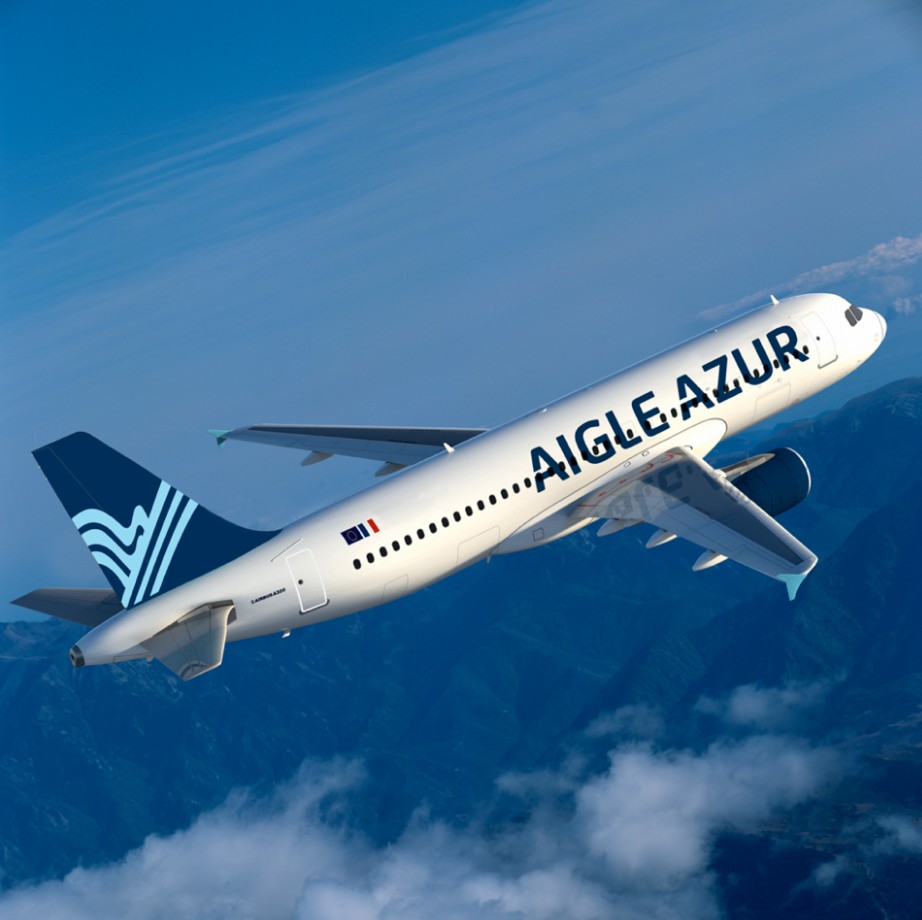
Cédric Pastour - I started work in mid-May. It's a company you have to learn about, and it's exciting! I'm really enjoying working for this company. It's a great company, with an extremely rich past and very interesting prospects for the future.
What tasks have you been given?
C. P. - The Chairman entrusted me with two main tasks when he appointed me: we have to work on improving the company's profitability, which is now a must for all airlines in France. This means working both on expenses, by reducing our operating costs and improving our productivity, and on improving revenues, which involves improving the load factor and the average coupon price. My second mission is to work on the launch of the Paris-Peking route, which will be operated from 28 June, with three weekly frequencies. This is the concrete result of the HNA group's acquisition of a stake in Aigle Azur last year, and the shareholders' desire to diversify the company into long-haul business.
Why has the launch taken so long?
C. P. - We made the Paris-Beijing project official in October 2012, when the HNA group acquired a stake in Aigle Azur, with a launch planned for 2013. But the problem of a "new entrant" flying over Siberia slowed the project down. It's a very complicated dossier. The liberalisation of Siberian overflight slots, provided for in an agreement between the European Union and Russia, was blocked by the ETS project. In the end, the blocking point was lifted. Otherwise, this would have created a distortion of competition that would have been difficult for Aigle Azur to accept.
Other sticking points have also emerged internally...
C. P. - We have reopened a round of negotiations with two representative trade unions with a view to signing a new long-haul agreement or an amendment. We will be working in this direction. The vast majority of staff are waiting for the move to long-haul, which is entirely legitimate: in any airline, such a development is positive for staff as it is synonymous with internal promotion. It's an opportunity for the company, and we all have a responsibility to give ourselves the means to succeed.
What are the next steps in your Asian ambitions?
C. P. - The move from short- and medium-haul to long-haul already marks a major turning point in the airline's history: these are two different businesses. We are moving forward according to a step-by-step development plan, and we want to move quickly to operating a daily flight to Beijing by 2015. We will then turn our attention to two targets: Hong Kong - but this will mean opening bilateral negotiations to amend the aviation agreement - and Shanghai.
Is the Paris-Moscow line meeting its objectives?
C. P. - We carried 55,000 passengers on this route, with a load factor of around 55%. This is a source of satisfaction for a first year of operation, but we are still in a growth phase. Our partnership with Transaero, which has also signed an agreement with the Russian airline UTair, will enable us to increase our connections to some twenty destinations in Central and Eastern Europe, via Moscow. We are therefore continuing to build this route, which has the unique feature of departing from Orly South, as will be the case for Beijing, whereas our competitors are at CDG.
What is Aigle Azur's current economic situation?
C. P. - At 31 March 2013, we had sales of 337 million euros, a slight increase of 2.7%, and an operating loss of nine million euros. This was mainly due to the cost of opening the Paris-Moscow route - the opening of a daily route is of course a major investment for an airline - and a highly unfavourable euro-dollar exchange rate. Our objective is to be close to financial equilibrium by 31 March 2014, and then to return clearly to profitability by 31 March 2015. That's our roadmap.
How are relations with HNA's Chinese investors going?
C. P. - From what I've been able to observe since my arrival, relations are very good. The shareholders Go Fast and HNA are discussing and working on the strategic directions to follow. But when it comes to air transport, the rules of common sense are usually self-evident, whether the shareholders are French, Chinese or American. So they all agree on points that are common sense when it comes to developing a long-haul business. It's just that we sometimes have to explain to our shareholders that we operate in a regulated environment, in France and within the European Union, particularly in terms of slot allocation. We need to do some educational work, which is normal and legitimate.
Is the company working on other projects?
C. P. - We don't want to open too many sites at the same time, but rather complete those that are already planned. Believe me, I know enough about this business to know that's more than enough for the moment...
How do you see the future of Aigle Azur?
C. P. - I'm confident because we've set ourselves a controlled timetable that allows all the teams to work in the same direction, with the same objectives.


