






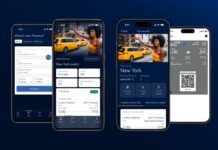

Picking up the phone to book a room or, worse still, pushing open the door of a hotel and asking if there are any vacancies: old-fashioned! Nowadays, a third of all bookings are made over the Internet, and more and more often directly on hotel websites.
Over the last ten years, these hotel websites have enjoyed exponential success, particularly with business customers. Since its launch in 1996, marriott.com has gone from booking one room per hour to 1,400 per hour, and from 0.3 % of business volume to 15 %. But it is over the last three years that the acceleration has been most marked: in 2006, the site brought in 4 billion dollars in gross hotel revenue, up 38 % on the previous year and up 100 % on the year before that. For its part, Hilton achieved 10 % of sales via its sites last year, an increase of 25 % on 2005. "We are targeting 25 % of sales for 2009", explains Philippe Garnier, Hilton's Director of Business Development. Even Kempinski, which until January was still among the last to consider its site as a simple showcase for the brand, has added a booking tool, without turning its back on its commercial partners such as booking sites or travel agencies.
But the popularity of e-commerce among leisure and business travellers alone does not explain these results. For hotel chains, groups and collectives alike, the Internet has become a genuine, if not the main, marketing weapon for developing market share. Against their natural competitors, of course, but also against the other Internet distribution channels they wish to free themselves from in order to increase their profitability. "A booking via our site costs us very little, whereas on a partner portal we have to pay 10 to 25 % in commission", confides Thibault Ruffat, Warwick's European Sales and Marketing Director.
Virtual visits and loyalty
To hold their own against the heavyweights of the web, where multi-brand offers can be compared, dedicated sites need to be as attractive and innovative as possible, and above all stand out from the crowd through almost constant changes that reflect the spirit of each brand.
Until recently, visitors could look forward to images of the hotel façade, the lobby and a suite. Not to mention the bell on a reception desk, which is certainly pretty, but of no real interest. Now he even has access to photos of the standard rooms, which are, after all, the most popular. Not to mention the virtual tour and 360° panoramas of the meeting rooms. Hotel chains and other groups of independents are of course counting on this detailed documentation to initially capture a part of the leisure or business clientele who usually do their research via online agencies and come to their pages for more detailed information on a pre-chosen product. "They know that by coming to us, they will find more details and be able to get a better idea of the hotel they want to stay in," continues Philippe Garnier. And to encourage visitors to make their transaction, they all guarantee the "best price". "If, within 24 hours of making a reservation on one of our brands' websites, a customer finds a lower price on the Internet for the same room, the same number of people, in the same hotel, with the same conditions and rate restrictions, we will match it and even offer an additional 25 % discount", stresses Richard Biggs, Director of Distribution and Brand Development for Rezidor.
At the same time, customers often have access to a specific loyalty programme on the Internet, compatible with those of the airlines, each enabling them to accumulate miles during the same stay.
Business customers in demand
In addition, the chains, whether integrated or voluntary, pay particular attention to business customers on their websites. "When a company has a contract with Warwick, we provide them with a code so that their travel managers or individual travellers can access the negotiated fares directly online. Otherwise we also offer a whole series of package deals tailored to this market", explains Thibault Ruffat. For its part, Rezidor does not hesitate to stimulate demand by sending B-to-B customers a monthly e-letter highlighting Mice. To meet the needs of businesses, chains are also not shying away from investing in more or less sophisticated seminar organisation services. Especially as the majority of events are now booked online. Starwood Meeting Planners makes it possible to submit a request for a quotation for a seminar at one of the group's hotels, and promises a quote within 48 hours. Reservations for meetings of less than fifty people can be made in real time at its outlets in the United States, Canada and Australia. And the Stargroup system facilitates group bookings," points out Vanina Sommer, Director of Public Relations for France. Coordinated directly by the travel manager, it can also be used to send an invitation to participants, who can then register their wishes online" and book their room in real time on a personalised site specially created for the event.
To adapt to different markets, websites are increasingly available in several languages. But this is not just a matter of translating content. "We are developing each area with a specific vocabulary and offerings that take into account the search and buying habits of each of our markets, whether in Denmark, France, Germany, Norway, Switzerland or the UK," explains Richard Biggs. To stand out from the crowd, channels now have to go beyond these services, which have become essential. Many of them are not hesitating to come and hunt on the agencies' turf. At Accor, for example, you can book a plane ticket at the same time as a room. And on marriott.com, web users can plan their stay down to the last detail. Not only can they carry out a search based, of course, on their destination, or by entering keywords that are much more uncertain, such as an address, a district or a service. Once they've made their choice, they can go to the new 'destination' section, where city guides, local information, concert, exhibition, festival and theatre programmes, shopping addresses, sporting events, nightlife and more await them. All that's left to do is draw up their programme and edit it on the city map, with details of each place they want to visit.
Increasingly tailored offers
For its part, Hilton, after having inaugurated a search engine enabling customers to choose their accommodation on a map so as to be as close as possible to their final destination, will soon be offering its customers visibility of fares over several days, before and after the dates chosen. As is already the case on airline websites, "the fares for each night will appear on a calendar and flexible customers will be able to take advantage of the most advantageous prices".
Travel assistance, flexibility and adaptation to regional markets are currently the preserve of just a few chains and are aimed primarily at the leisure market. But there's nothing to stop travel managers and business travellers turning them to their advantage.
Special report - Internet: hotel boom on online sales
- Internet Boom for online hotel sales
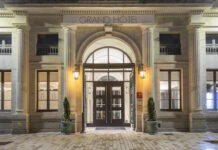
Kempiski Bristol Hotel