














Fifteen years on. Much has been said - and is still being said - about safety and security since that famous 11th September 2001. The images of the planes crashing into the twin towers of the World Trade Center in New York, now part of our collective memory, changed air transport forever. Precisely because this atrocious act led to the introduction of strict security measures and tighter checks on passengers and their baggage, it has transformed the experience of air travel into a veritable obstacle course, with airport waiting times often verging on the indecent.
And yet. It is precisely this difficult context that has given rise, in a positive way, to a new approach to travel. Faced with passengers fed up with long waits and tedious checks, aircraft manufacturers, airlines and airports have all sought solutions to make air travel stress-free. And it is technology that has given air transport the means to offer what passengers have been dreaming of since aviation became mass transport: almost total control of their journey, from booking their ticket to arriving at their destination.
Flexibility, mastery of the elements, individuality... these are words that are once again becoming evaluation criteria for all those who take the plane. A tall order, given that the number of passengers is expected to rise steadily over the coming years: 3.8 billion in 2016, around five billion in 2020 and probably seven billion in 2034, according to the 2015 forecasts of the International Air Transport Association (IATA). All these people expect - and rightly so - to have the best possible conditions in which to enjoy their journey.

SIGNIFICANT TIME SAVING
What does this mean in practice? A quick look back. Over the last ten years or so, online booking and the printing of boarding passes by passengers have become common practice. The sceptics will say that these measures, introduced in the name of progress, have above all enabled airlines to save on certain operational costs. This is not entirely untrue... But, despite everything, this development has a positive counterpart for passengers, in particular by giving them more control over their choice of fare, which can be booked with a simple click from a laptop or even a telephone. When the boarding card is issued, for example, the seat can be selected several hours or even several days before the actual departure. This avoids stressful waiting times at airport check-in desks. It also saves a little time before you actually get on your plane. And that's no mean feat for an early morning departure.
From there, it was time to go further; to simplify and streamline the travel experience. In this context, the widespread use of new high-tech tools has come to the rescue of the air travel industry. It is estimated that 83 % of passengers are connected by smartphone, a figure that rises to 88 % among business travellers. Given this unanimity, the smartphone has quite naturally become the key element in the air transport chain. All airlines are working to integrate it into their customers' travel experience, both on the ground and on board their aircraft. "The world is on the movesays Frédéric Gagey, CEO of Air France, in the preamble to the company's annual report. Markets are evolving and the digital revolution is profoundly changing our society. Faced with these challenges, we have to adapt and meet our customers' requirements. Digital transformation and simplification of our procedures are the main thrusts of an ambitious programme to modernise Air France.".
A HUGE LEAP FORWARD
For its part, IATA is working on a programme of improvements called "Fast Travel" in cooperation with airport technology specialist SITA and most of the world's hubs. The aim of the programme is to offer an à la carte service at six key points in the journey: check-in, bags-ready-to-go, travel documents, self-service boarding, rebooking and baggage reclaim. By 2020, IATA and its partners hope that 80 % of passengers will be covered by these technological improvements. This is a huge leap forward, given that in 2015 only 29.2 % of the 3.8 billion passengers benefited from these advances. Although IATA hoped to achieve a penetration rate of 40 % by 2016, these ambitions have unfortunately been revised downwards, as there are still many legal and security obstacles to be overcome, such as the printing of baggage tags from a private computer. Be that as it may, IATA's top Fast Travel performers so far are Alaska Airlines, Air New Zealand, Hawaiian, Qantas and SAS Scandinavian Airlines, all of which offer at least four of the six options available to 80 % passengers. Other airlines such as Air France, Cathay Pacific, Delta, Finnair, KLM, Lufthansa, Singapore Airlines and United are also making rapid progress in this area.


The various high-tech applications have already had a very positive effect, totally transforming passengers' perception of their journey. In the SITA report on the use of technology in air transport, 86 % of passengers said they felt positive about their check-in experience, a figure that rises to 89 % for baggage check-in thanks to the simplification of procedures.
You only have to look at most of the major hubs: for the last one or two years, travellers have been seeing self check-in kiosks and automatic baggage drop-off zones springing up here and there. According to Finavia, the operator of the Heslinki hub, the time taken to check in and drop off baggage is cut in half compared with processing it at a counter. Which is important, especially during busy periods.
In an interview with the online magazine Tnooz, travel technology specialist Joe Leader, Director of APEX (Airline Passenger Experience Association), recently explained that "we are on the cusp of a new golden age of the passenger experience. In the past, travellers bought their tickets purely on the basis of price and speed to get from point A to point B. Then loyalty programmes became a new criterion. Loyalty programmes then became a new criterion. But today, passenger experience is more important than loyalty when it comes to making purchasing decisions. Airlines are also benefiting, since customers are willing to pay more for a value-added service.". A revolution!


GENESIS OF EVOLUTION
And that's just the beginning. Because now airlines can, among other things, track the passenger's every move, so they can react if something unexpected happens. Better still, they can anticipate them. "For example, our passenger flow management system at the new Doha airport enables us to identify delayed passengers and warn them by means of a message. We can also send an agent to the exit of the aircraft who, in the event of a flight delay, will take the passenger directly to his or her connecting flight and carry out check-in and identity checks at the aircraft access bridge from a mobile check-in station."says a Qatar Airways official in Doha.
But it's not just the passenger, but also his or her baggage that will be geolocated throughout the journey. Who hasn't dreamt of knowing where their luggage is at any given moment and what time it is expected to arrive on the conveyor belt? This is possible at Lufthansa, where since June the German airline has been testing an option in its application enabling passengers to track their luggage on their smartphone. Lufthansa has also worked with suitcase brand Rimowa to integrate an electronic baggage tag. Intelligent luggage is becoming more than just a reality.
For some time now, other airlines have been joining forces with manufacturers to create communicating luggage, most notably Air France-KLM with Delsey. This brand recently presented its Pluggage connected suitcase, while Samsonite is due to launch the Track&Go model on the European market by the end of the year. Soon, the risk of travellers forgetting their suitcase or having it stolen will be virtually zero, thanks to notifications received on their smartphone if someone tries to open it.
More à la carte services thanks to NDC
Yet another acronym coined by IATA, the International Air Transport Association: "NDC" or New Distribution Capability. This new programme aims to modernise the presentation of an airline's service offering to travel agencies. This enables the agency to offer the customer a real à la carte product and to make linear comparisons between airlines. "NDC is a pro-consumer development, a real leap forward in innovation. Passengers can literally do their "air shopping" with their travel agent."said IATA Director General Tony Tyler when presenting the programme in Miami in 2015.
NDC will therefore make it possible to offer airlines a transparent range of services and prices. According to an IATA survey, more than 75 % of passengers are in favour of this system for the clarity of price and flight comparisons, as well as in the construction of the air fare (fare and taxes, for example). In addition, 68 % of travellers would also appreciate being informed by their agencies of additional service options before the flight. 70 % of them would even admit to being tempted to buy these optional services if they obtain the necessary information.

 SWISS HIGH-TECH KNIFE
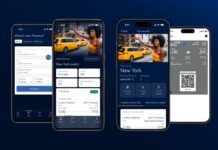
Once again we come back to the smartphone, the Swiss army knife of the nomadic traveller. Presented in Munich last March, Lufthansa's Smile application sketches out the journey of the future, with a range of 80 à la carte services accessible via the traveller's phone. "The new application will anticipate our passengers' expectations and offer them complete independence in their choices, says Annette Mann, Head of Customer Services at the German carrier. Our surveys show that today's passengers want to benefit from a technological link, a personalised service, but with the autonomy to make their own decisions, she says. This also corresponds to an erosion of the product as defined by travel classes. A passenger may, for example, be travelling in business class on a long-haul flight and then continue his or her journey in economy class. Or need to use a lounge in transit..."
This anticipation of expectations will involve taking passengers' travel habits into account at the time of booking, for example by automatically offering them a window seat based on previous bookings or by making it very easy to book a taxi on arrival at the airport. At the same time, the installation of iBeacons - small antennae that communicate via Bluetooth with smartphones - which are currently being tested in the Bavarian terminal, will enable passengers to interact with each other as they stroll through the airport. Once activated, the Smile app could, for example, offer passengers a last-minute upgrade - against payment - if they are travelling in Economy or Premium class. "An economy class passenger transferring for several hours may also be offered access to the lounge."adds Annette Mann.


For its part, Air France is working on a similar concept that will accompany passengers throughout their journey through the airport, showing them, for example, how long it will take to reach the boarding gate from a specific point. KLM in the Netherlands, for its part, is particularly responsive on social media. "Since 30 March 2016, it has been possible to quickly receive travel documents and flight status updates via the Facebook Messenger chat application.In the Air France/KLM annual report, Pieter Elbers, Chairman of KLM's Management Board, states: "On other airlines, it is also possible to order a special menu in advance. On other airlines, it is also possible to order a specific menu in advance, an option available to passengers in the premium classes of Singapore Airlines or Malaysia Airlines for regional specialities or signature dishes.
Airports have also entered this high-tech race, highlighting the flexibility offered to passengers".who will build his route"In 2013, Augustin de Romanet, CEO of Aéroports de Paris, told Air& Cosmos magazine. Geolocation, which is now integrated into most airport applications, makes it easier for passengers to find their way around the airport and head straight to their boarding lounge. At the same time, these applications can provide shopping tips and point out special offers. What Augustin de Romanet describes as a transformation of the airport into a "a place to live, with its shops, hotels and cultural facilities, rather than a place to pass through." !


A new technological development is set to revolutionise the air travel experience by making the notorious security checks less tedious. Since 2012, IATA and its partners have been working on new measures for searching passengers. Instead of going through metal detectors, the idea is to use security scanners which, while respecting passenger privacy through anonymously formatted images, will detect any anomalies in a matter of seconds, such as the presence of explosives or objects considered dangerous. This technology has the dual advantage of being able to screen a greater number of passengers per hour - we're talking about 300 passengers per screening checkpoint and up to 800 passengers per hour for a double checkpoint - and of using a less intrusive technology. This would, for example, allow passengers to leave computers, laptops and other electronic items in their bags, thanks to a more effective X-ray system.
In France, the civil aviation authority is working with airports to improve both safety levels and the fluidity of airport hubs. Some airports are already equipped with new body scanners and shoe scanners. They help to better identify potentially dangerous passengers. All the while preserving what is essential for passengers: an optimum level of comfort.


