




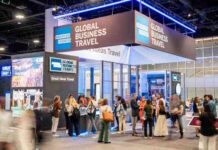






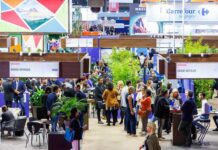






MICE activity, new organisation and, of course, CSR, lifestyle and bleisure: the tenth edition of the Global Meeting Exchange (GME) gave Accor management the opportunity to take stock of the major current trends. This key meeting of the French group with buyers and event organisers brought together nearly 300 guests from 19 to 21 July at the Accor headquarters in Paris. Fairmont San Francisco. A historic hotel - it was in its Penthouse Suite that the famous charter giving birth to the UN was signed - entirely representative of the offering of this luxury brand which, since its takeover at the end of 2015, has helped to position Accor both in the US market and in high-end events.
" This century-old brand is renowned for hosting major gala evenings, in particularsays Mansi Vagt, Vice-President of the Fairmont brand worldwide. Now that MICE is picking up again, customers are turning to trusted brands and hotels where participants can enjoy a real experience. "According to Meenaz Diamond, Accor's Senior VP Global Sales: "This is not a trivial matter. People only take part in an event if they really want to. Their choices are more considered. So we need to give them reasons to travel. "Hence the importance, highlighted at these GMEs, of health and well-being and of discovering the city, which give events added value. " This leisure aspect already existed in the MICE sector, but has accelerated with the crisis." said Meenaz Diamond.
Indulge yourself, stop living at 100 an hour: the growing awareness of the need for a more balanced lifestyle triggered by the pandemic is having other impacts on the hotel business. A large number of speakers noted that the trend towards 'bleisure' has increased with the spread of 'work from anywhere. While Fridays and Mondays are the days most people telework, hoteliers are seeing more and more professionals arriving on Thursday, working at the hotel on Friday and enjoying their weekend before leaving on Monday. " We now have a large number of visitors on Sundays, which used to be the quietest day.says Jeff Doane, Accor's Managing Director, North America. While it will be some time before business travel returns to 2019 levels, bleisure will help to offset this."
On both sides of the Atlantic, market trends are much the same, with a recovery driven by the domestic market, both leisure and business, with SMEs travelling more than large companies, which are still cautious but are starting to travel again. " We also underestimated one factor in this recovery: the resurgence of small meetings and the need to meet up again to recreate connections" explained Markus Keller, who expects larger events to gradually return to Europe, as is already the case in the United States.
All in all, Accor is now reporting results close to those of 2019, whether in North America, the Middle East or Southern Europe, while Asia is being penalised by a sluggish Chinese market. " Such a recovery was unexpectedbut I remain cautious about the months ahead." said Patrick Mendès, Accor's Chief Commercial Officer, who also stressed that the recovery was primarily driven by higher room prices, " while visitor numbers are still down on 20%" . In this context, Jan Freitag, Costar's director of hotel results analysis, believes that the strong rate growth seen in luxury hotels - +55% in Madrid, +36% in Paris, LDN +33% in London and +25% in New York - should stabilise next year as a result of the return of business customers and corporate groups benefiting from negotiated rates.
Speaking by videoconference, Patrick Mendès took the opportunity to review the development of the French group over the past few years and to outline its future at a time when Accor has just announced a new organisation for its operations. In almost a decade, the Group has gone from 460,000 rooms in 2013 to 775,000 rooms, a figure that should be passed this year, with a million rooms expected in two or three years' time. This development has been marked by an explosion in the number of brands within the group, which has almost quadrupled in just a few years.
Through acquisitions and the creation of in-house brands, Accor has gone from from 13 brands in 2013 to 43 today. Along the way, the Group has lightened its real estate load - 97% of its establishments are now 'asset light', compared with 59% in 2013. It has also globalised, with 61% of its hotels outside Europe, compared with 26% previously. Above all, Accor has stepped up the pace in the luxury and lifestyle segment, which now accounts for 33% of its offering, compared with 11% in 2013.

With Fairmont, Raffles, Mama Shelter, 25Hours and The Hoxton to its credit, Accor is today one of the world's leading hotel chains. the world's number 2 in the luxury and lifestyle segment. Admittedly a long way behind Marriott and its 418,000 rooms, but with 107,000 rooms, the group is ahead of the likes of IHG (106,000 rooms) and Hyatt (93,000 rooms). This underpins the changes to its organisation announced a few weeks ago.
Whereas Accor is number 1 worldwide in the economy segment and leader in just about every region of the world except the United States and China, the group to split its activities in two by october. On the one hand, its "power brands", which range from economy to top-of-the-range and still account for 75% of its business, are moving towards management by market with regional managements for the Americas, Europe-Africa and the Middle East-Pacific. The luxury and lifestyle segment, on the other hand, will see the appointment of four CEOs to head up Raffles and Orient-Express on the one hand, and Sofitel and MGallery on the other, with a CEO for Fairmont and another in charge of the Ennismore joint venture, dedicated to lifestyle hotels.
This brand-oriented approach will lead to finer management of each of them, with a homogeneous network and the same promise throughout the world. " This division will focus on strengthening the identity of its iconic brands, investing in the best talent, selecting the best locations and offering unique and innovative experiences." Accor stated in a press release at the beginning of July.
" Everything that worked before no longer works today. Not having the same product everywhere in the world, but the same brand promise is essential" said Sébastien Bazin, CEO of the French group, in a video conference speech at the end of the event. A CEO who is convinced that in the future " 100% of customers will choose a brand not for its sense of design or the size of its rooms, but for its values" .
In this context, Brune Poirson, Director General for Sustainable Development - and at one time Secretary of State for the Ecological Transition - highlighted the objectives of a group that aims to be carbon neutral by 2050 and to halve its emissions by 2030: " Before, companies saw sustainability as a good thing, but marginal. We want to put it at the heart of what we do, make it part of our DNA. "A change which, for Brune Poirson, " is no longer an option "In the face of combined pressure from regulators and investors, as well as from the Group's customers and employees.
As well as working with other hotel groups on common standards, Accor has taken a number of initiatives of its own, such as the a ban on single-use plastic by the end of 2022In addition, the Group is working to reduce the amount of food waste and the proportion of meat in the F&B offer, as well as improving energy efficiency and using green energy. Ultimately, 100% of the Group's establishments should boast an eco-responsible label by 2025.