


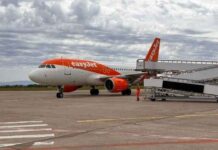

















This should be confirmed in 2020. The private Spanish airline Air Europa is to join the IAG group, abandoning its independent status. The agreement will bring British Airways and Iberia under the umbrella of the parent company. a carrier with a relatively high profile. A subsidiary of the Spanish Globalia group, which also includes a chain of hotels, travel agencies and tour operating companies, Air Europa carried 11.8 million passengers last year, with turnover up 9.3 1Q3 to 2.11 billion euros, and a profit of 100 million euros. Above all, Air Europa has a network of 70 destinations, including a large number of flights to Latin America as well as North America and the Caribbean.
Battle over the Latin American axis
In Latin America, Air Europa ranks among the leading European airlines alongside Iberia, TAP Portugal and Air France. Air Europa's market share in terms of number of seats on the Europe-Latin America axis was 9.14 %, according to OAG's figures for November. This puts the company ahead of KLM, Alitalia and Lufthansa.
Air Europa serves this winter season 22 destinationsin addition to seasonal flights to Varadero. After Quito in 2018, Panama, Medellín and Iguaçu in 2019, Air Europa will be inaugurating two weekly services between Madrid and Fortaleza in Brazil in December, thanks to synergies with the other airlines in the Skyteam alliance (Air France-KLM and GOL) which, over the past year, have turned Fortaleza into a transatlantic mini-hub.
It is therefore easy to understand why IAG was so interested in the airline. The integration of Air Europa will give the airline group the largest market share on the Europe-Latin America axis, particularly following the announced departure of the LATAM group from the oneworld alliance.
Still according to OAG's figures, calculated on the basis of the number of seats on sale in November 2019, the trio of Iberia, British Airways and Air Europa will have a market share of 27.2%, a long way from ahead of Air France-KLM with 19.4% and TAP Air Portugal with 10.3%. The group would then serve 24 destinations in Latin America. On the Spanish domestic market, IAG will in future have an absolute monopoly. The group will own 84% of all seat capacity through Iberia, Vueling and Air Europa.
On the other hand, the takeover of LATAM by Delta Air Lines, a Skyteam member, should probably result in new synergies with the airlines in the alliance. In the long term, it is possible that a joint venture on the south transatlantic route gives Air France-KLM with LATAM a market share close to 30% in seats.
The Air Europa takeover: a death knell for secondary airlines?
The acquisition of Air Europa marks the structural weakness obvious of secondary carriers in Europe, demonstrating that critical size has become a survival criterion for most European carriers, particularly independents.
Since the resounding bankruptcy of AirBerlin, Germany's second-largest carrier, at the end of 2017, the airlines disappearing in Europe have accelerated. This year saw the disappearance of Germania in Germany, Flybmi and Thomas Cook in the UK, WOW in Iceland and Slovenia's national carrier, Adria Airways. We won't go back over the painful episodes in France linked to the disappearances of Aigle Azur and XL Airways. Many also believe that one of the next big victims in Europe could be the low-cost carrier Norwegian, while there are strong presumptions that Alitalia will be integrated into the fold of a mega airline group.
Even the CEO of Globalia, Air Europa's parent company, seems to have doubts about the future of Europe's secondary airlines. In the official press release, Javier Hidalgo indicated that the integration of Air Europa into IAG meant " a strengthening of the company's present and future. We are convinced that the integration of Air Europa into a group like IAG will be a success. Over the years, IAG has demonstrated its commitment to the development of its member airlines and to the Madrid hub. "he said.


