





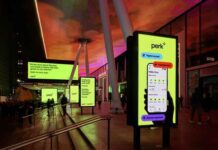








Biometrics, chatbotbaggage tracking, virtual reality... In recent months, the major airlines have been vying with each other in their imagination to improve the passenger experience and reduce friction at every stage of the customer journey. For Jean-Baptiste Nau, senior manager at Wavestone and a specialist in air transport, we are seeing a second wave of digitalisation which today focuses on a range of differentiated, personalised services. "The first wave occurred roughly during the first part of the 2010s.he believes. Traditional airlines and low-cost carriers had digitalised basic transactions such as ticket reservations and check-in via their smartphone applications."
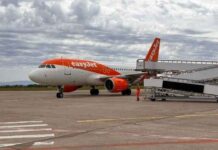
So it's time for innovation. Some of the most original initiatives include the use of augmented reality to check the size of hand luggage for KLM customers andeasyJetvirtual reality for entertainment in living rooms or on board a wide range of aircraft, but also the first biometric terminal recently unveiled by Delta Air Lines in Atlanta. Lufthansa remains the model in this respect. The German carrier is aiming to become the most digital airline in the world, and is investing €500 million in a range of projects between now and 2020. With HomeTag, Lufthansa customers will be able to print the luggage label at home. A partnership with baggage handler Rimowa goes even further. There's no more need to print and stick on a label, because it's all done by Rimowa. an electronic tag which is displayed on the case and updated each time you travel. All you have to do is place it on the carpet. Among other initiatives, the German carrier is also developing a car-sharing service with car2go to share parking and fuel costs when travelling to the airport.
Within the terminal itself, a system of beacons - intelligent beacons - installed in Munich and Frankfurt. geolocates passengers in real time. In this way, Lufthansa can tell passengers whether they have enough time to reach a particular lounge in relation to the distance separating them from their boarding gate. Lufthansa is also testing facial recognition to enable passengers to pass through the control gates almost without stopping.

Swiss Army Knife
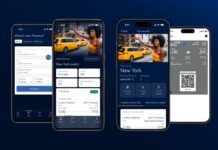
Air France is not to be outdone. At the seventh edition of #AFDigiDays in mid-February, the French airline presented new features to support its customers throughout their journey. It all starts with the enhancement of its mobile application, which becomes a real Swiss Army knife. In addition to the 20 payment solutions already on offer - Paypal, credit card, bank transfer, etc. - Google Pay and Apple Pay, the electronic wallets of the two digital giants, will soon be added.
In another development, the application now estimates the journey time to the airport, taking into account the means of transport - car, metro, bus - and traffic conditions. Once at the airport, the passenger is, as with Lufthansa, geolocated from the terminal map. Thanks to this, it can be guided to the boarding gateIf there is a change of gate in the meantime, the route is adjusted accordingly. Air France already has data from around twenty airports in France and abroad. Paris Orly and CDG will be included in the coming months.
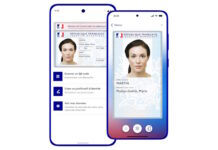
The mobile application also enables baggage to be tracked at every stage of its journey. Passengers are notified in real time of the status of their baggage: on board, disembarked, placed on conveyor belt number X. But above all registration which has been greatly simplified. To add their ID card or passport, travellers simply need to position their ID document in the space indicated by the application and scan it. The regulatory data fields are then automatically filled in using the extracted information.
At the same time, Air France is also experimenting with the biometric card for baggage drop-off and boarding. Like Lufthansa, the project calls on facial recognition. Once customers have been invited to scan their passport using the mobile application - they can also do so at a self-service kiosk at the airport - the system can reconcile the passport photo with the photo of the passenger. scanned identity document with their face captured "live" by an automatic machine each time they pass through. Matching the biometric data with the customer's image will then allow the customer to be authorised, or not, to drop off their baggage and then to board. "This 'matching' avoids the need to collect personal data or access a database."says Carole Peytavin, Head of Customer Experience at Air France. On arrival, the application asks customers to rate their travel experience using a star system, from one to five. "This provides immediate feedback"says Stéphanie Charlaix, vice-president of digital products and innovation at the French company. Soon, for all these actions, customers will be able to interrogate the application by voice via Siri on the iPhone, with the integration of other voice assistants such as OK Google! under way.
Finally, Air France is also chatbots. After Louis for luggage customer service, then Lucie, a kind of inspirational tourist guide for choosing a destination, here is Léa. Available in French and English on Facebook Messenger, this conversational agent is responsible for managing unforeseen events. Léa will report any problems on the route and suggest alternatives. Depending on the problem encountered, she will send details of the accommodation offered, certificates of delay or cancellation and compensation vouchers for transport, accommodation and meals. As far as the meal voucher is concerned, Air France is transforming the dematerialised boarding pass into a voucher. "There is no longer any need to queue up to collect it at the counter, customers can use this e-coupon to spend"says Aurélie Rédon, head of customer priorities and contingencies. Starbucks is one of our partners.
For Sophie Montoussy, consultant at Wavestone, this digitalization strategy illustrates the desire to offer a seamless customer journey. "In the past, digital technology was mainly used at check-in and a little at the airport. Today, the traveller experience is extended over time, and the points of contact with the airline are multiplied."To ensure that there are no gaps in the journey, airlines have launched a battle to provide wi-fi on board. This is a key factor in winning the loyalty of business travellers.

The challenge
"This is a major challenge for airlines, which have to equip themselves progressively, and therefore tie up several hundred aircraft. This takes timesays Jean-Baptiste Nau. Customers expect the same service, whatever the aircraft and flight."And all at no extra cost. According to Jean-Baptiste Nau, "the widespread use of wi-fi will be accompanied by new monetisable in-flight entertainment and shopping services."French start-up Skydeals is already offering passengers on some airlines access to in-flight private sales via their smartphones. It is currently taking part in a test with Air France (see box below).
What next? For Jean-Baptiste Nau, the third digital wave For airlines, this will mean exploiting the full potential of data to offer "increasingly tailored services and better anticipation of disruptions."Lufthansa, too, is already at this stage of exploiting passenger data through its SMILE (Surpass My Individual Lufthansa Experience) department. In the trial phase, 10,000 customers agreed to entrust their data, which had previously been rendered anonymous. According to Jean-Baptiste Nau, the quality of customer serviceThe key to building customer loyalty also involves better sharing of information between the various players in the customer relationship: "Providing the crew with certain information relating to the customer's previous journey, such as an incident that occurred on the outbound flight, gives the airline the opportunity to improve its relationship with the customer. This is now made easier by the fact that flight crews are equipped with touch-screen tablets."But beware of don't push the digital envelope too far. "Human presence to accompany travellerscontinues the expert. There's nothing like being able to count on the reassuring availability of a sales agent when things go wrong. Nor should we forget the need for recognition which, whatever we say, is always important to us as travellers."The art of getting the best out of digital and human resources.

In-flight wi-fi to be rolled out across the board at Air France by the end of 2020As part of its Air France Connect programme, the airline has already equipped 21 of its long-haul aircraft (Boeing 787s, upgraded Airbus A330s and Boeing 777s) with Wi-Fi. Since 31 January, its medium-haul fleet has also been equipped. By the end of 2020, all Air France aircraft - excluding the regional fleet - will be equipped. Air France is offering all passengers access to instant messaging WhatsApp, iMessage, Viber, WeChat and Messenger via the Message Pass. The Surf Pass, which costs between €3 and €18, lets you send emails and surf the Internet. Finally, the Stream Pass, which costs 30 euros and is currently only available on long-haul routes, offers greater bandwidth for video streaming or downloading large files. |


