











2016 was a positive year overall for AirPlus, both globally, with a +1.7% increase in transaction volume to €14 billion, and in France. In France, which is one of the main markets for the German specialist in payment solutions for travel spending, AirPlus recorded 9% growth in issues, almost identical to that published last year. The figures for the first quarter of 2017 are in line with this upward trend, with growth of +4% worldwide and +14% in France, "supported by market momentum, the centralisation of payments in the hotel and car rental sectors and the acquisition of new customers", comments Julie Troussicot, Director of AirPlus France.
On a global level, the Group's customer base grew by 2,400 new companies to reach 49,000 customers worldwide. At the same time, the German company continued its international expansion in 2016 with the recent acquisition of BCC Corporate in Belgium, one of the leading business card issuers in its market. This strategy will continue in 2017 with the opening of a subsidiary in Brazil, the launch of the AIDA virtual card in Hong Kong and new growth prospects in China and Australia.
"Demand for corporate travel payment solutions remains positive and steady," said Patrick W. Diemer, Chief Executive Officer and Chairman of the Board of AirPlus International. Diemer, Chief Executive Officer and Chairman of the Board of AirPlus International, "AirPlus has managed to achieve good results in a difficult market environment, marked by the negative effects of interchange fee regulation".
There is one fly in the ointment in this positive balance sheet: the reduction to 0.3 % in the rate of interchange fees on credit card payments, compared with 1.5% previously for corporate cards, introduced last year at the behest of the European Union. To compensate for this expected drop in revenue, AirPlus has introduced fees of between 1.09 % and 1.19 % for each transaction made in Europe in the countries where it issues its Travel Expense credit cards, i.e. Germany and the UK. This has led some companies to review their corporate card programmes and to move away from this means of payment in favour of centralised solutions such as the "logée" and "virtual" cards. As a result, the volume of business card issues fell by 8% in 2016 and by 16% in the first quarter of 2017.
At the same time, the lodged card, AirPlus' flagship and mature solution, saw its volume grow by 1% in 2016 despite a downward trend in air fares. For its part, the AIDA virtual card continued to grow, posting a 34% increase in transactions. In France, this new solution even grew by 182%. According to AirPlus, 40% of companies make one payment in five using a virtual card to pay for hotel expenses in 53% of cases, mainly low-cost air tickets (23%) and occasional expenses such as MICE or catering (24%). "The AIDA virtual card still has a bright future ahead of it, particularly with independent travel agencies, who face the same problems as corporate buyers, namely data feedback, as well as the need for a solution to help them manage their cash flow more effectively", stresses Julie Troussicot.
The future is bright for these dematerialised and centralised payment solutions, especially if, as Patrick W. Diemer predicts, 'invisible' payments develop in the future. Diemer predicts, "invisible" payment will develop in the future. "We will of course continue to pay, but without taking our card out of our wallet, or even entering our card number on the Internet", says the managing director of AirPlus, who foresees the disappearance of plastic cards and paper invoices within five years.
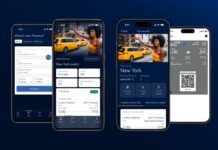
To support his argument, Patrick W. Diemer cites as examples the AirPlus account directly integrated into the solutions of SNCF, Avis, Amadeus and Snapcar, enabling virtually transparent payments for the traveller, and the development of the AirPlus Connect application, a mobile service platform for easily building expense reports.
While this 'invisible' payment is already well advanced in the air, rail and hotel sectors, AirPlus is working to extend its acceptance to other areas. AirPlus has recently signed agreements with partners as diverse as BizMeeting for the rental of meeting spaces, car rental company Enteprise, business meal reservation specialist Business Table, and Airbnb, with Uber and other MICE players soon to follow. At the same time, AirPlus is in talks with airports to develop its AirPlus Corporate Parking solution, which has already been tested in Frankfurt, and is working internally on another application, AirPlus Dine & Go, enabling meals to be paid for from a smartphone, without even having to call the waiter to ask for the bill. The latest prospect is the extension of these paperless payment solutions to indirect, non-production purchases such as office equipment, temporary staff and telephony, where case-by-case payment and paper invoices are still the norm.