

















Reported by Cécile Balavoine. Photos by Ludovic Maisant.
The Netherlands is a small country with a population of just 17 million, yet it is... 17e This nation of sailors has been a trading nation since the Renaissance. Since the Renaissance, this nation of navigators has been a trading nation, which today re-exports 40 % of the goods it imports. This commercial fibre The banking sector now accounts for 25 % of the regional economy and almost 20 % of jobs, with 255,000 people switching between stocks and bonds every day.
Home to all Dutch financial institutions, Amsterdam is also the headquarters of the local branches of the 50 largest European and international banks. This explains the growing presence of companies specialising in fintech. "Our very good digital infrastructure guarantees the best possible transmission of order and payment instructionsexplains Charlene Verweij, spokesperson for Amsterdam In Business, the Dutch capital's business promotion body. A number of trading firms have recently announced the opening of offices in Amsterdam, including MarketAxess."As a result of the Brexit, Amsterdam is flexing its muscles again as a financial centreHowever, Paris and Frankfurt are still a long way ahead, mainly for regulatory reasons, as bonuses are capped at Dutch financial institutions.
City of exchanges
Other historic activities include the cocoa, coffee and horticulture trades, which are still traditional in Amsterdam, design and fashion are also among its strong points. A curious fact: Amsterdam is the city with the highest concentration of denim brands in the world, including G-star and Scotch & Soda. More generally, retail and mass distribution are enjoying growing success, both in the upmarket sector, with cosmetics and fashion brands such as Rituals and Pauw, and in the more democratic sector, with brands that have long remained local but are gradually being exported, such as Action, Zeeman and Hema.
Today, however, it is above all new technologies and e-commerce that are the mainstays of the Amsterdam economy. "Amsterdam has become a good place for start-ups to grow for a number of reasons"says Charlene Verwij. Firstly, there's the infrastructure, with Schiphol airport perfectly connected to the rest of the world. Amsterdam also boasts one of the highest concentrations of high-speed Internet access in the world, and is home to the world's largest broadband network. the world's largest Internet exchange point with the Amsterdam Internet Exchange (AMS-IX), created in 1994. To complete the picture, Amsterdam is also a real breeding ground for talent, with motivated, highly educated, multilingual and multicultural people. All the ingredients for innovative ideas to flourish.
As part of its efforts to develop the high-tech scene, in 2015 the municipality introduced a four-year plan called StartupAmsterdam. One of the initiatives in this programme is called "project: a" and invites specialists from all over the world to present projects to a number of Dutch companies or companies based in Amsterdam, including TomTom, Adyen, Picnic, bloomon, Takeaway.com, Bynder, Squla, 3D Hubs and Alliander. Other initiatives are aimed more specifically at foreign entrepreneurs, such as Startupvisa, which offers a one-year residency in the Netherlands for non-European start-ups.
Another related sector, gaming - video games - is also expanding. Amsterdam's creative, festive and relaxed atmosphere This phenomenon is attracting a lot of foreign attention, with Amsterdam currently boasting 17 non-Dutch gaming studios.


Environment for start-ups
Patricia Schneiders, Director of the Franco-Dutch Chamber of Commerce, confirms that start-ups, like fintechs, are on a roll these days. "Amsterdam ranks second out of 35 cities in the world offering the best environment for start-ups"she asserts. Especially as Amsterdam its first-class image by hosting a number of trade shows, including the International Broadcasting Convention, which focuses on technology and film.
The Dutch spirit - pragmatic, not prone to salamanders, but straight to the point, favouring efficiency, but also free time and family life - is therefore in perfect harmony with the new ways of the 3.0 era. Behind large picture windows, in large designer lounges, you can work like you're in a café, oscillating between seriousness and relaxation. In the streets of Amsterdam, the number of coworking spaces is growing by leaps and bounds, and magnificent creative offices are springing up everywhere, like those in Spacesa pioneer in coworking created in Amsterdam ten years ago and acquired in 2015 by Regus, the world leader in business centres.
For young entrepreneurs, finding an office in the city is a challenge. While Amsterdam has become a huge digital hubThe price of a square metre is constantly on the rise. So we're trying to get round this. We also rely on communities, such as Bijlmerbajes. This former prison, which was closed in 2016, has recently become home to artists, people undergoing vocational rehabilitation and young start-ups under the aegis of the Lola Lik association. "Many of the buildings currently being refurbished are automatically allocated to this type of activity, because it's a way of creating what are known here as 'anti-krakers', anti-squatter blocks, while at the same time generating employment."explains Patricia Schneiders. There's a temporary hotel for refugees, creative writing courses, meeting rooms, some of the cheapest office space in Amsterdam and... brilliant young entrepreneurs.


Victim of its own success
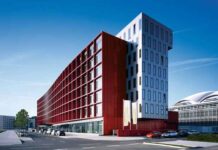
Amsterdam's appeal is undiminished, and the city is even a victim of its tourist success. "More and more Amsterdammers are renting out their flats on Airbnb"says Patricia Schneiders. Housing is becoming a real problem."In order to avoid unfair competition with the hotel industry and soaring prices per m2, a municipal by-law has been passed prohibiting residents from renting out their accommodation on Airbnb for more than 60 nights a year, on pain of a fine. But above all, Amsterdam is moving beyond its walls, and even beyond its canals. The new Zuidas business districtIn the south of the city, there is a real boom, with more and more residential buildings springing up around offices, shopping malls and hotels.
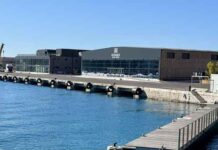
The north of the city is also undergoing real expansion, particularly the NDSM district. This former shipbuilding area, located on an island that can be reached by ferry, is on the way to becoming a major centre of the city's economy. Amsterdam's Canary Wharf. Between the dilapidated warehouses and wastelands are bobo restaurants made from old containers, organic ice-cream vendors and even a DoubleTree by Hilton hotel. To the east of Amsterdam, IJburg, a string of artificial islands, is also promising, with over 10,000 new residents already. As for the small town of Hoofddorp, close to Schiphol airport, it is gradually joining the metropolis, almost becoming one of its new districts. This explains why the municipality of Amsterdam is developing its already highly efficient infrastructure by planning a new metro line linking the south to the north, so that all the districts can be integrated into this urban landscape in the making.
If the Dutch capital is playing the new territories card, it's also a way of attracting outside attention. In 2016, 157 new foreign companies have established their headquarters in Amsterdam. In more ways than one, the city is advantageous to them. The 30 % tax regime for expatriates allows them to pay tax on only 70 % of their income for a period of twice four years. What's more, bringing in foreign talent, even from outside the European Community, is child's play, with work permits that can be obtained in just a few days and a couple of administrative procedures.


Open to the outside world
"Amsterdam is one of Europe's most attractive cities, not least because it has a major science parkwhich operates in parallel with the university. The synergy between the public and private sectors is perfectly mastered in the Netherlands"says Georges Régnier, Director of Business France in Amsterdam. "The fact that everyone speaks perfect English and that the country is very open to the outside world makes life easier for expatriates and attracts foreign talent."continues the director. Especially as, in return, the Dutch like to invest beyond their borders, perpetuating their reputation for being open-minded and pragmatic.
"A great deal of sharing of knowledge, solutions and new concepts is taking place in the Netherlands."notes Georges Régnier, who insists on the advantages of a small, well-served area. "We have a strong capacity for dialogue with our major neighbours such as Germany, Northern Europe and the United Kingdom."concludes the director. Trade with France, where the Netherlands is both the seventh-largest supplier and the seventh-largest customer, is just as fruitful.
As a result, Dutch growth is expected to come in at 2.4 % for 2017, with the unemployment rate declining to 5.6 %. This economic stability contributes to the city's reputation as a stronghold of European culture. In 2015, nearly two million people were employed in creative or creation-related jobs, making Amsterdam the fourth largest cultural employer in Europe, after London, Paris and Milan. There's more than enough to tempt you...


