

















For several years now, those involved in business travel have been working on a seemingly insoluble problem: how to reconcile business travel with respect for the environment? This important issue is often the collateral victim of economic ups and downs. The financial crisis has taken the wind out of the sails of a burgeoning green wave, as illustrated by the transfer of the Ministry of Transport to the new Ministry of Ecology, Sustainable Development and Town and Country Planning. Quite a symbol. Since then, COP 21 has come and gone, bringing the environmental debate back to the fore.
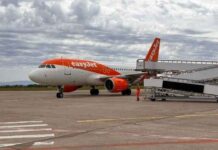
In fact, there is no longer any real debate. Almost everyone agrees on the idea of reducing our impact on the environment. The question is how to take concrete action. Driven by increasingly strict regulatory constraints, business travel suppliers have assumed their responsibilities, whether in hotels, car hire or air and rail transport. At the forefront, the airlines did not have to look long for their interest: a quick glance at the price of oil will have convinced even the least environmentally aware executives. With Airbus, for example, promising a 15 % reduction in fuel consumption for its A320 Neo, each order for these new aircraft offers airlines a green marketing argument. This summer, for example, when Norwegian announced the launch of its new transatlantic flights from Paris, the airline's CEO Bjørn Kjos introduced his presentation by quoting the International Council on Clean Transportation (ICCT), which stated at the end of 2015 that "the three least fuel-efficient airlines - Lufthansa, SAS and British Airways - together account for one-fifth of available transatlantic passenger seats and consume between 44% and 51% more fuel per seat-kilometre than the most efficient airline, Norwegian Air Shuttle".
CONSUME LESS, PAY LESS
Reducing fuel consumption also means shedding unwanted pounds. Dieting means using lighter equipment, whether it's seats - like the Titanium Seat Neo, a featherweight model developed by start-up Expliseat with the support of Peugeot - or even pilots' technical documentation. In 2013, American Airlines became the first airline to equip its pilots with iPads incorporating the 3,000 pages of documentation usually carried on board each aircraft. The result: more than 1.5 million fewer litres of fuel per year and savings of 1.2 million dollars. Of course, a commitment to sustainability also has economic implications. Consuming less also means paying less!
 Other suppliers are following suit. In the hotel industry, the La Clé Verte label - or Green Key on a global scale - identifies establishments that comply with eco-responsible specifications. Each hotel group is also taking measures, such as the Planet 21 sustainable development programme launched by AccorHotels in 2011. Carlson Wagonlit Travel, for example, published its annual report on 'responsible business' this summer, analysing the impact of business travel undertaken by the company's employees. The document reveals that scope 3 - the category of indirect emissions, covering business travel and commuting - was responsible for 33.83 tonnes of CO2 in 2014. Unsurprisingly, air travel accounts for the majority of these emissions (64 %), ahead of company vehicles (32 %), private cars (3 %) and rail (1 %). This transparency on the part of the agencies seems to meet a demand from corporate clients, even if this demand is still limited: "From time to time we receive requests for reports on travel and carbon emissions."Egencia's EMEA Senior Vice President Christophe Peymirat said. "This is a fairly occasional dynamic that is linked to the culture of the company itself or its country of origin, with Northern Europe being more sensitive to this issue.".
Whatever their underlying motivation - ecological conviction, brand image, regulatory constraints, cost savings - suppliers on the whole have embraced sustainability. Is the same true on the other side of the mirror, on the corporate side? Travel management seems to be following the same path, if the regularly published figures are anything to go by. In its "International Travel Management 2016" study, AirPlus reveals that "eco-friendly" business travel is the third most important future trend for 48 % of travel managers, behind data security (54 %) and social networks (50 %).
 This time, it's clear: sustainability is one of tomorrow's challenges. But what about today? Slowly but surely, attitudes are changing. 34 % of buyers say that responsible purchasing policies are more prevalent than five years ago, according to a Fed Supply survey conducted for Décisions Achats. However, eco-responsible approaches are still in the minority when it comes to travel management, according to the Sustainability in Travel Programs report from the Global Business Travel Association (GBTA). Barely 12 % of the travel managers surveyed in Europe report having set targets for reducing the carbon footprint of business travel. That's not many, but it's twice as many as their American counterparts (6 %).
ROOM FOR IMPROVEMENT
And what about the business traveller in the field? Reusing your bath towel at the hotel is one thing. Favouring a 'sustainable' trip that actually 'lasts' longer - several hours by train rather than a return flight - is quite another. According to the "Responsible customer seeks sustainable hotel" survey carried out by AccorHotels among 7,000 customers in seven countries, only 13% of those questioned systematically take sustainable criteria into account when choosing a hotel or a mode of travel. The figure is all the lower given that the hotel group says it surveyed travellers in November 2015, three weeks before COP 21 and the media exposure given to sustainable development... According to the study, travellers are nevertheless prepared to make certain sacrifices, in particular by paying - slightly - more for their stay in a hotel that has introduced measures to protect the environment. In fact, 67% of those surveyed said they would agree or strongly agree with such an approach. However, when it comes to making a choice, the location of the establishment will always be the primary criterion.
 There is therefore plenty of room for improvement, including the adoption of 'sustainable' measures in the company's travel policy. It shouldn't take an inordinate amount of effort to bring about change, since good environmental practices are often geared towards making business travel less costly for the company: concentrating several meetings at the same destination to optimise travel and avoid return trips; sharing a taxi or a car when travelling with colleagues; considering video-conferencing as an alternative to travel, etc. Large companies have started to take action in this direction. All that remains is to wait for travel policies to go from pale green to sustainable.


