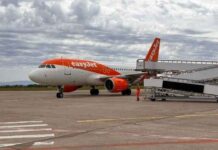
After the spectacular announcement of its first long-haul low-cost service, could Air Asia X's withdrawal from Paris Orly and London Gatwick mark the beginning of a radical change of direction on air routes between Europe and Asia? At the end of March this year, Air Asia's management justified its change of direction, on the one hand because of the introduction of the carbon offset tax on routes to Europe, and on the other because of the surge in air taxes in the United Kingdom. "We want to focus on markets where we can build a leadership position by strengthening our position in Australia, China, Japan and Korea".explained Azran Osman-Rani, CEO of AirAsia X.
Is this low-cost airline an isolated case? The signals sent out by the Asia-Europe market in 2012 are rather ambiguous. Admittedly, Asia-Pacific remains the world's most dynamic region, with more than 25 % of world passenger traffic and 620 million passengers a year for all the local airlines, including 184 million on international routes. But with the huge boom in traffic in countries such as China and India, as well as Indonesia and Malaysia, growth is increasingly being generated on a regional basis. According to the International Air Transport Association (IATA), intra-Asian traffic accounted for 16.5 % of scheduled world traffic expressed in passenger-kilometre revenue, ahead of intra-North American traffic at 16.3 %. By comparison, the Europe-Asia route accounted for only 8.8 % of global capacity.
State-of-the-art fleets
Asian airlines have invested massively in fleet renewal in response to the irresistible growth in traffic driven by the almost universal rise in living standards. IATA calculates that between now and 2016, Asian airlines will be adding some 500 aircraft to their fleets... It is no coincidence that the most modern aircraft are flying Asian flags.
In 2009, Singapore Airlines was the first airline to put the Airbus A380 into service. At the end of last year, All Nippon Airways (ANA) inaugurated its first routes with the revolutionary Boeing B787. Airbus A380s are now in service on Qantas (2008), Korean Air and China Southern (2011). This year, they will join the fleets of Malaysia Airlines and THAI Airways International. According to Airbus, firm orders for the A380 total 93 aircraft in the region. The Chinese government is blocking purchases by Chinese airlines in retaliation for the introduction of the European carbon tax.
In view of these developments, experts believe that supply will continue to outstrip demand in 2012. But this surplus capacity will be selective and will mainly concern the Asia region itself, as well as the Asia-Persian Gulf routes, the latter having become the real air hub for the entire planet...
While the outright withdrawal of Air Asia X remains an exception, Europe can expect to see a certain degree of disaffection on the part of Asian carriers. This is due to an indigestible cocktail served up by the Old Continent, with a strong taste of recession, sprinkled with high taxes and soaring oil prices. "The persistent high cost of jet fuel and the weakening of air travel demand in Europe due to the combined effects of a difficult economic climate and taxes on the industry are putting pressure on operating costs on long-haul routes between Europe and Asia", explains Azran Osman-Rani.
Adjusting the offer
The summer schedules are proving him partly right, as we are seeing the first adjustments to frequencies on Europe-Asia routes. Thai Airways, for example, has announced a reduction from ten to seven weekly frequencies on the Paris-Bangkok route from April. Services to Copenhagen, Milan and Stockholm are also experiencing a reduction in capacity.
However, the Thai national airline is not closing any of its European stopovers. In fact, the opposite is true, since last November it inaugurated the first direct service to Brussels. For its part, Malaysia Airlines is reducing its capacity to Amsterdam, while Indonesia's Garuda is cutting back on its Jakarta-Dubai-Amsterdam route, with four weekly frequencies instead of six.
Could European players benefit from the redeployment of Asian airline capacity towards intra-regional transport? The inflation of flights via the Middle East on the Europe-Asia route is a factor in their strategy. Air France also seems to be reviewing its plans. The French flag carrier is readjusting its frequencies to Bangkok, Ho Chi Minh City and Phnom Penh. As a result, Bangkok will be reduced from one daily flight to three frequencies per week. This downsizing may seem surprising given the route's very high load factors, but it can be explained by low revenue per passenger, with a route dependent on a less lucrative leisure market.
However, no airline can remain insensitive to the sirens of the continent, particularly the highly coveted China-Japan-Korea triangle. In China alone, the civil aviation authorities are predicting air traffic growth of 10 % in 2012. In this highly coveted market, the agreement signed by Air France-KLM should enable the group to increase its passenger capacity by 50% thanks to more frequencies and new routes. At the beginning of March 2012, Air France was serving four Chinese cities from Paris and a total of eight cities if KLM's operations from Amsterdam are included. The first concrete expression of the Franco-Chinese entente cordiale took place on 11 April with the launch of three weekly flights between Paris and Wuhan.
Air France is not alone in courting Chinese customers. Its rival Lufthansa inaugurated three weekly flights to Shenyang/Qingdao at the end of March. Swiss offers non-stop flights to Beijing from Zurich, while SAS has been flying to Shanghai since March and Finnair is preparing to launch four weekly flights to Chongqing from May.
The warming of relations between China and Taiwan is also having a positive impact on air transport. Not only because of the development of routes between the two countries, but also by allowing Taiwan to rejoin the international airline community. China Airlines has become a member of SkyTeam, while Eva Airways is expected to join Star Alliance. "This standardisation will enable us to position Taipei as a major hub between Europe, China and North America.In the middle of last year, Chi-Wen Fang, Secretary General of the Civil Aviation Administration at Taiwan's Ministry of Transport, said: "We are delighted to be able to offer our customers the best possible service.
The race for alliances
The two Taiwanese carriers should offer a credible alternative to the airlines of the People's Republic of China, whose three biggest - Air China, China Eastern and China Southern - rank among the world's largest airlines and are already members of alliances. The only downside is that they are far from offering services comparable to those of Hong Kong's Cathay Pacific, for example, which is still the benchmark for Chinese airlines.
Competition in the former British colony is set to intensify with the entry into the long-haul market of Hong Kong Airlines. For the moment, it serves regional routes, but at the beginning of March the airline launched a Premium business and economy class flight between Hong Kong and London in an Airbus A330. According to the airline's management, this was a trial run before extending its offer to other intercontinental markets, including Paris and Sydney. Faced with this competition, Cathay Pacific, which swore it would never launch a premium economy class, finally made a 180° turn with the launch in April of its Premium Economy class, noting the erosion of its full economy fare passenger traffic.
On the other side of the East China Sea, Japanese air traffic was thought to have been permanently affected by the terrible earthquake of March 2011. But it has recovered more quickly than expected. "We estimate that the fall in traffic has been contained at around 10 % to 15 %. In fact, now that the trauma of Fukushima has faded, we can see that Japanese travellers are showing strong demand for travel."says TakashiYokimura, Deputy Director of the Marketing and Promotion Department at Osaka-Kansai International Airport. This year, the debut of the new long-haul low-cost carriers ANA and Japan Airlines should also give a boost to traffic. As for the business segment, it is well on the way to recovery between Europe and Japan. The opening of Tokyo Haneda airport, the closest to the capital, to international traffic in 2010 has certainly helped to stimulate demand.
A cloudless future

Korea is benefiting from the surge in Chinese traffic and the upturn in Japanese demand, as well as a solid domestic market. As a result, the two major Korean airlines, Asiana and Korean Air, are continuing to expand their international network. Asiana - which has ordered Airbus A380s for delivery from 2014 - is this summer stepping up its services to China via Nanjing, Qingdao and Hong Kong. For its part, Korean Air is putting the Airbus A380 into service to Frankfurt, a launch that was initially scheduled for December 2011. The aircraft seats 407 passengers, one of the lowest densities on the market. This means that a duty-free shop and a lounge-bar can now be integrated! The airline is also adding three extra flights to London Gatwick from Seoul and two extra flights to Paris, making a total of nine weekly services to France. Korean is also increasing capacity to Amsterdam, Madrid, Moscow and Prague.
Asian air traffic therefore has a bright future ahead of it. The rising standard of living in Cambodia and Vietnam, the gradual opening up of Burma, the completion of a single ASEAN market by 2015, the discovery of hydrocarbons in East Timor - these are all reasons for optimism. And that's just what the airlines need!