




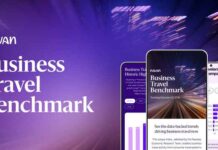








At the presentation of the American Express Global Business Travel (GBT) EVP barometer in January, one element certainly caught the attention of the many travel managers invited more than any other: for the first time in many years, the use of the 'best buy' - the best available rate rather than rates negotiated in advance with suppliers - is losing ground in the European business travel market... The travel agency is unable to put a figure on this decline. All it can say is that the decline is as unprecedented as it is elusive. Nevertheless, the information is significant enough to merit a closer look.
Indeed, since the arrival of low-cost airlines in European skies, the temptation to use the best fare rather than the prices fixed in framework contracts has continued to gain ground among companies. In fact, the study published by American Express Global Business Travel explains this trend very well, with best buy remaining the main budget optimisation lever, ahead of online booking and advance booking.
So how do we interpret this supposed decline? "For our part, we see no decline in best buysays Vincent Godard, Director of Business Management at HRG. This behaviour is now well established in the company. In fact, 60 % of our customers have made this part of their travel policy. The practice even applies to 81 % of our airline bookings. Travellers go straight for the best fare, even if their travel policy does not encourage them to do so."This phenomenon can be largely explained by the influence of consumer practices on the corporate world. Accustomed to hunting down the best rate for a weekend in the sun, business travellers often do the same when it comes to booking a business trip.
Framework contracts in resistance
Are framework contracts doomed to disappear? Far from it, according to specialists in the sector. "It's a false debate"says Guillaume Bizet, Partner at Areka Consulting.the cheapest rate may well be part of a contract."For his part, Vincent Godard of HRG believes that ".the two approaches complement each other" . Moreover, the best price at all costs is not a topical issue on long-haul flights. HRG reports a lower rate of use of the lowest fare (74 %) on international flights than on short and medium-haul flights (81 %). This is all the more significant given that the sums involved are often much higher. Business travel to far-flung destinations seems to be resisting this phenomenon. "Because the value of a corporate contract is enormous on long-haul routes"underlines Guillaume Bizet, reminding us that "the public fare for a business class ticket can be two and a half times more expensive than the same ticket booked under a contract."
A study published by another business travel agency, Carlson Wagonlit Travel (CWT), goes against the general trend in a way: in its report entitled "Eight keys to optimising a travel programme", CWT asserts that "travel policies that recommend using the best buy or the best available airfares do not reduce expenditure compared with those that favour their preferred airline". The report even puts the additional savings achieved through negotiated contracts at 3 % compared with the systematic practice of the best price. Indeed, airlines, penalised by breaches of past agreements, are not really inclined to offer companies the lowest fares. Depending on the scale of the problem, they may even refuse purely and simply to renew agreements that have not been respected.
What's more, the notorious hidden costs - known as ancillary costs in the industry jargon - can quickly add up when it comes to tickets with constraints. From modification fees to additional baggage, or even fare adjustments, the final cost of the ticket may turn out to be much less attractive than its initial advertised price. Above all, it will be difficult for the company to put a figure on the time and energy wasted by business travellers stuck by repeated delays or whose luggage has been lost. It is therefore easy to understand the rise of the TCM concept, which stands for "total cost of mobility" - i.e. the final cost of travel - which encourages a more global view of expenditure in order to better assess the profitability of a business trip. In this context, it is a question of going further in the analysis than just 'traditional' expenditure by considering all the direct and indirect costs of the trip.
Mixing the two extremes
Faced with the impossibility of systematically opting for the best fare opportunity to the detriment of negotiated contracts, the company must find the subtle balance between short-term savings and good understanding with the airlines. Now is the time to compromise in order to protect everyone's interests through mechanisms that are part of the company's travel policy. Guillaume Bizet explains: "Some companies, for example, have listed twenty or so strategic routes on which travellers should opt for the preferred airline. Other travel policies give preference to a carrier within a certain price range. It is often the hybrid models that are the most appropriate, as they make it possible to balance the two, with highly opportunistic behaviour that makes it possible to take advantage of aggressive fares while favouring one airline. And therefore the signing of very interesting agreements". A promising model, provided it can rely on a detailed analysis of airline expenditure.
Several speeds
With this in mind, players such as Areka Consulting are offering to support companies in their approach. Travel agencies are also gradually integrating this new asset, sometimes by creating dedicated consulting departments. This is notably the case with HRG, which also offers other optimisation tools such as comparison between GDSs, checking fares from another country or monitoring fare variations on a booked ticket. This constant attention to detail should make it possible to respond to the volatility of fares - which is very significant in the air travel sector - while at the same time reaffirming the role of the travel agency. The best buy phenomenon is also spreading to other sectors of business travel, leading some companies to opt for the cheapest agency, forgetting the quality criteria that are so crucial. "Some buyers apply this best buy policy to their travel agency, but I'm not sure that's the right choice."asks Vincent Godard at HRG.
The rise of hybrid models, where framework contracts coexist with opportunistic purchasing behaviour, is contributing to a rethink of travel management and the role of the travel agency. This complex balance requires a relevant analysis of data and the identification of the right partner. Depending on the maturity of markets and travel programmes, changes in fares and demand, and the constraints associated with certain categories of traveller, the use of best buy will be more or less encouraged, and more or less regulated. Yet another illustration of the Anglo-Saxon adage that "one size does not fit all".
The hotel and train still untouched...
Hotel and rail bookings - the other two pillars of travel policies - are relatively less affected by the rise of the best buy. At least, the problem is not posed in the same terms. SNCF's fare structure would explain why business fares have been maintained for rail travel. "The best buy is less developed here, as the price difference with flexible and semi-flexible tickets is smaller."says Vincent Godard at HRG. "The best buy is not taking in the hotel industry and the corporate contract is not about to disappear."says Pascal Jungfer, CEO of Areka Consulting. Companies are reorganising their strategy by reducing their hotel programmes, because it makes no sense to negotiate with 800 establishments. On the other hand, it makes sense to negotiate with the top 100." As in the airline industry, a hybrid model - dynamic pricing - is taking off in corporate-hotel relations. "For a long time, there was an opposition between dynamic rates and negotiated prices. For me, they complement each other."As Jean-Luc Chrétien, Accor's Executive Vice President Distribution, points out. As a result, contracts are evolving towards a combination of, on the one hand, corporate rates negotiated on a more limited number of establishments - those most frequented by company executives or those located in very popular cities where it is important to guarantee advantageous prices during busy periods - and, on the other hand, a discount on the daily rate for all other hotels.