


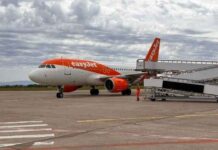










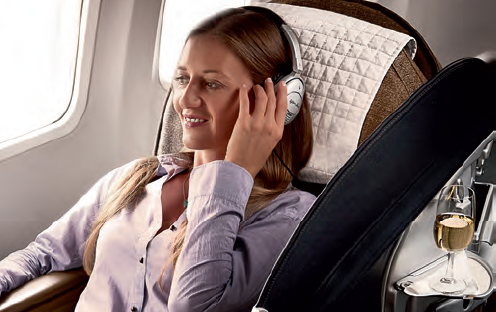
Imagine that once you've settled into your seat, the hostess brings you your favourite drink without you having to order it. That she offers you the products you are most likely to buy without you having bothered to consult the catalogue. That it has something special for you because it's your birthday. Thanks to Big Data, all these little gestures are no longer the stuff of fantasy. Equipped with tools capable of extracting this information from the vast volume of data contained in databases, forums, social networks, websites and emails exchanged with the company's customer service department, airlines are now in a position to anticipate their customers' desires in order to offer them the best deals and services.
Thanks to the cross-referencing of a wide range of data (satisfaction questionnaires, information acquired from partners, customer databases), Qantas Airways is able to offer its passengers personalised services, going so far as to ask each member of staff to pay special attention to five passengers identified as important customers. Big Data is also entering the cabin at British Airways. Equipped with tablets, flight attendants know whether the passenger in seat 10A is a loyal customer, whether he or she prefers vegetarian dishes, etc. For Etihad, one of the most advanced airlines in this field, information is even processed in real time. Flight attendants are informed of passengers' purchases just before boarding. This information enables them, for example, not to offer them a particular product knowing that they have just consumed it.
Aware of the benefits of this wealth of information, airlines are signing up to partnerships with banks, websites such as Amazon and Google, and major retailers, to enhance their knowledge of their passengers. But Big Data also raises the issue of compliance with the law on the protection of personal data. New rules of conduct still need to be defined to avoid losing the trust of customers.
Gouverner c'est prévoir
For the IHG Group, the future lies not in a 2D approach to its brands - the development of hotels on a global scale and their integration into the local fabric - but in a 3D approach, placing the customer at the heart of this strategy. The abundance of data should enable hoteliers to build increasingly close and personalised relationships between consumers and brands. Predictive analyses, real-time studies of factors that can influence customer behaviour - the weather in particular - and additional sales: by combining all the data using powerful algorithms, it is also a question of optimising hotel results, by selling rooms at the best price, almost on the customer's head.

Greater Lyon optimises its transport
TER, metro, bike, tram, bus, car... There are many and varied ways to get around Greater Lyon. But which one should you choose, so that you can be sure of reaching your destination within the allotted time? To address this issue, the Greater Lyon urban community has created a platform centralising all historical traffic data and data collected in real time from a wide variety of sources: public transport, GPS, electronic sensors in the streets, surveillance cameras, weather, police, etc.
Known as Optimod'Lyon, this system provides users with information enabling them to combine several modes of transport (bike, metro, bus, tram, car, etc.) to reach their destination on time. A powerful tool for all passengers wishing to get to the station or airport.


