
















Dubrovnik: The wonderful Republic of Ragusa
Dubrovnik is one of the most beautiful, accomplished and yet elusive cities in the world. No doubt its topography, between the crystal-clear Mediterranean and the steep mountains, has something to do with it. And its high ramparts, and its charming, tiny port, and its palaces, forts, churches, convents, theatres, squares and narrow, stepped streets...
In the 7th century, Dubrovnik was known as Ragusa. It was a much-coveted little republic, courted in turn by the Arabs, Byzantium, the kings of Serbia and Croatia, the Normans and, above all, Venice. Later, it was the turn of the Austro-Hungarian Empire, and a little later still, a certain Napoleon was not entirely indifferent. So many suitors, so many interested parties...
The "Pearl of the Adriatic" exudes majesty, talent and intelligence.
A night of celebration on the fort's towers
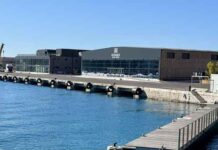
Now a venue for festivals, conferences and galas, the walls of Fort Revelin, which majestically overlook the basin of the old port, have been through every war, siege and battle. Today, the gigantic guard room, with its almost Cistercian simplicity, is transformed into a banqueting hall, concert hall and even conference hall. At night, under the stars and above the lights of the city, the tower hosts exceptional banquets in white. 300 people for a seated dinner, 600 for a cocktail party.
Split, a palace city
It was a daring move. To build a city within the very walls of an ancient palace... But what a palace! One of the most sumptuous palaces in the Roman world. In this case, that of the Emperor Diocletian who, no doubt tired of having massacred so many Christians, decided in 305 AD to retire here, on the shores of the Adriatic. Then came Roman decadence, barbarian invasions, Byzantium, the Franks, the Venetians, the Austrians, the French... The inhabitants of Split took refuge within the walls of the palace, which occasionally served as their quarry.
Nowadays, Split is a marvel of eclecticism, with a peristyle here, a sphinx there, a mausoleum elsewhere and a cathedral... But it's nothing like a museum town: Split's historic centre is alive with young students, a lively Mediterranean market and, on the seafront, a long, wide promenade lined with palm trees and lined with café terraces. Exactly under the high walls of the old palace.
The Plitvice lakes
It is a highly protected natural site located inland, less than two hours from Zadar. It consists of sixteen successive lakes suspended 130 metres above sea level at the bottom of a deep valley. They are fed by white water springs, mountain streams and dizzying waterfalls. The sediments that are deposited there, calcium and magnesium carbonate, paint the waters in an extraordinary shade of blue. The waters are so clear that they reveal fossilised vegetation everywhere.