
















What are the main changes you have witnessed in Dakar in the fifteen years you have lived there?
Yves Laplace - I'd say there have been two main ones. In terms of road infrastructure, the changes have been significant and positive. The construction of the Corniche road, which links the centre of Dakar to the airport with 4 lanes, has relieved congestion in the centre of the capital. This has been really significant, although it has been quite restrictive during the construction period. There have also been improvements inside Dakar, with asphalting and car parks.
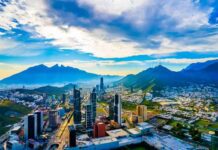
The second important but less positive change is the poorly controlled construction of buildings that are not always aesthetically pleasing or compliant with town planning regulations. We have seen Dakar transformed from a city of low-rise houses and villas into a panoply of apartment blocks, including in residential areas. Old buildings have been protected, but more in the sense of maintaining their existence rather than renovating them.
How has business tourism evolved?
Y.-L. - My hotel has around thirty rooms and our clientele is mainly business, non-governmental organisations and embassies, with a high proportion of international guests, mainly Anglo-Saxon, Scandinavian and European. In this niche of a small hotel that has established a brand image with this clientele, we have seen a steady increase in occupancy. From what I've seen of my colleagues, they've experienced the same trend, which is largely positive for hoteliers in Dakar. This is confirmed by all the hotels that are being built, of different categories, from three to five stars.
The number of expatriates is also on the increase. In addition to the 'Senegaullois', the French who have been here for decades, there are development workers, staff from European companies and NGOs who support the authorities, and a high proportion of non-French Europeans - Spaniards, Italians, quite a few Anglo-Saxons and, of course, a Chinese community that is quite visible. It has to be said that Dakar is a pleasant and relatively safe capital to live in, compared with other African cities.
Do you feel that infrastructure development is in line with this growth in business tourism and the number of expatriates?
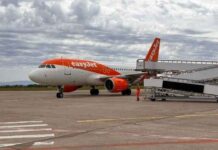
Y.-L. - Compared to other African capitals in Central and West Africa, Senegal is well equipped. It's easy to get around, even in the capital. Outside Dakar and for access to tourist areas, the motorway is a major step forward. The airport, the motorways and the development of internal networks in the capital are all very positive. In particular, these motorways will serve the new Dakar airport, which will replace the existing Léopold Senghor airport near the city. This new international airport, located some fifty kilometres from Dakar, will be able to handle a sharp increase in traffic, including, as far as we are concerned, passenger, tourist and business traffic. It will have the advantage of serving coastal tourist areas as well as the capital, with a regional express train project linking Dakar to the airport.
Dossier - Dakar on course to become West Africa's business capital
Dakar: on course to become West Africa's business capital
A new airport for the Dakar of the future
- Interview with Yves Laplace, owner of the Djoloff hotel
Dakar: address book


