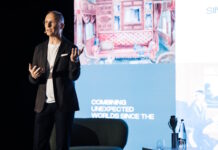
Christophe Peymirat, Senior Vice President Europe and Middle East, Egencia
What is the trend in the business travel market?
Christophe Peymirat : In 2015, the market held up well until the events of November, after which business travellers restricted their trips for around a month. In 2016, there was no let-up. Things have returned to normal.
As far as Egencia is concerned, how is your TripNavigator application developing?
C. P. : We recently announced our partnership with Uber and Citymapper to cover ground transport. A few years ago, we used to draw up 12- or 24-month plans. This is no longer the case: we now operate on 120-day cycles to manage our product. The market changes quite quickly. It's hard to predict what will happen in two years' time. These shorter cycles allow us to adapt according to user tests.
Is the future all mobile?
C. P. : It's likely. In some markets, such as China, the mobile is predominant. Tools are converging, and it's time for "multi-de-vices". Our solutions must enable users to move from one device to another with the same level of content.
Are any acquisitions under consideration?
C. P. : The acquisitions that have taken place since Egencia was acquired by Expedia in 2004 enabled us to enter new markets by integrating a portfolio of customers and local expertise. We are in the process of integrating Orbitz for business and are monitoring possible takeovers. However, our organic growth enables us to progress without necessarily needing to integrate other companies.
The new technological ambitions ofAmerican Express Do they put you under pressure?
C. P. : When we started out in 2000, the traditional players thought we were mad. Fifteen years on, everyone agrees: technology is at the heart of our offering. Does that put pressure on us? Yes, we're in a fast-moving market, but that's also because it's a buoyant one. I think we need to remain a little 'paranoid'. The competition is multi-faceted, with traditional players like American Express, but also suppliers from the leisure sector. We're meeting a real need, so I'm not worried about the future of the agency. It's a challenge: players who want to put off technological developments won't be able to operate like this for very long.
Is the agency business model set to change radically?
C. P. : I've been through several: commissions, management or transaction fees... What counts are revenues, costs and added value for the customer. I don't see a revolution on the horizon, although you should never say never.
What counts are revenues, costs and added value for the customer. As long as this is achieved...
The change in management at Traveldoo Does this mark a turning point in relations with Egencia?
C. P. : The teams that created Traveldoo have decided to leave. There is a new high-calibre leader at the helm, who must accelerate the company's development following some great commercial successes. So this is definitely a change for Traveldoo, but we're not going to upset our strategy. If certain Traveldoo modules are of interest, we will be able to share them, but plugging in another booking tool is out of the question. It's not schizophrenia, it's segmentation.
Expedia has launched MeetingMarket. Isn't Egencia better placed in this area?
C. P. : There's no one-size-fits-all approach within the group. Just because Egencia has a MICE division doesn't mean that other entities can't get involved. This creates emulation.
| KEY DATES |
| Graduate of HEC Paris |
| 1994: Starts her career at L'Oréal in marketing |
| 1997: Joins Bain & Company as an analyst, then consultant |
| 2000: Participates in the launch of the start-up Egencia |
| 2004: Managing Director, Egencia UK |
| 2010: Vice President Global Marketing, Egencia |
| End 2011: Appointed Senior Vice President, Egencia EMEA |
Interview by Florian Guillemin