


















For those who haven't already experienced it, you might as well be aware of it: the business trip 'after' will be nothing like the one before. Nomadic professionals will find that they have to deal with constraints that they are no longer used to, particularly when travelling within Europe. " I travel regularly between Amsterdam and Geneva. Before Covid, I never had to show my passport or any other document. Now I have to show it several times a journey." said Alan Murray Hayden, Head of Passenger Products and Security at the airport, in a video conference in November.International Air Transport Association (IATA).
With the ramping up of vaccination campaigns and the arrival of spring, the horizon seems to be gradually clearing for the world of travel, despite the still active circulation of the coronavirus and its variants. However, this slowly loosening vise does not mean that the end of the tunnel for all business travellers eager to get back to the airport. According to a survey carried out at the end of 2020 by BCD TravelAs of mid-2021, 60 % of them intend to start moving regularly again, and even 90 % by next December.
This resumption of travel will be highly regulated, or it won't be. To cross the borders of their country, almost all governments already require proof of negative PCR or antigen tests In the near future, some will no doubt also require vaccination certificates. All these measures will remain in place for some time to come, hence the idea of a "digital passport". to make the return to some form of normality as smooth as possible.
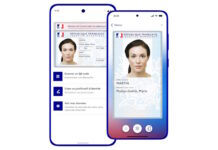
In anticipation of the time when passengers will be returning to airports in droves, a number of solutions are currently in the pilot phase on certain airlines, such as theAOKPassthe CommonPassVeriFly and TravelPass (see their descriptions here). They all have more or less the same ambition: to offer a simple and trustworthy means of demonstrating to those entitled that the traveller has fulfilled all the expected health obligations. The whole thing takes the form of a QR Code with digital proof of negative testsand, if necessary, the vaccination certificate.
" Our aim is to give all governments the confidence they need to reopen borders to travellers on the basis of verified data on vaccines and tests." says Nick Careen, Vice-President of Airports, Passengers, Freight and Security at IATA, the industry's leading association, which is developing the TravelPass for this purpose. Like the TravelPass, the main advantage of the systems currently being tested is that they secure test results from accredited laboratories and centres. This is a key point for the authorities in countries where, inevitably, false covid tests have appeared on the market.
Europol on 1 February, warned that ". As long as travel restrictions remain in place because of the pandemic, it is highly likely that criminals will seize the opportunity to sell false Covid-19 test certificates." . Several cases have been reported, including the dismantling of a counterfeiting network at Paris CDG and the arrest of a man suspected of fraud at London Luton airport. " Given the widespread use of technology in the form of high-quality printers and various software programs, fraudsters are able to produce counterfeit, forged or falsified documents." Europol stresses.
As well as reassuring the national authorities that the evidence is compliant, the proposed solutions have a parallel objective: to make life easier for company staff encumbered by all these new constraints. " I'm thinking of the agent on the floor at the check-in counter who has to validate a small piece of paper from laboratory X, Y, Z. How does he know that it's the right type of document, the right type of test - PCR, molecular or antigenic?wonders Nicholas Foowho is in charge of Business Development at Affinidi, a Singaporean start-up involved in these high-tech health passports. All this requires a lot of work, often manual, with all the attendant risks of human error. "
Health passport always to hand
Last but not least, through these health passports just a smartphone awayWith this in mind, carriers are hoping to save their passengers from a real obstacle course. "It is essential that we are prepared to help our customers deal with the complexities of changing entry conditions when the world reopens."said Sean Doyle, CEO of British Airways.
The first of the solutions launched on the market, tested since last September by Etihad and since implemented on the Paris-Abu Dhabi route, AOKPass is part of this desire to make life easier for players in the sector. for the ultimate benefit of passengers. "Both airlines and airports are our core targets.explains Sébastien Beduproduct manager for airport services at Medaire, an International SOS subsidiary dedicated to the aviation sector. Airports are very interested in this innovation, because they understand that airline passengers are also their customers, and that a solution like ours could help them to meet their needs. facilitate the resumption of traffic. "
With this horizon inevitably approaching, the list of digital health certification initiatives is growing. Developments over the last few days includeAlaska Airlines has started using the VeriFly on its international routes. In Latin America, Copa Airlines has announced a trial of the TravelPass in March. In some cases, airlines are testing several applications at the same time. Etihad, an early partner of the AOK Pass, is preparing to test IATA's TravelPass, for example.
a period of hyper-competition, undoubtedly necessary, but with the risk of ending up with a sort of patchwork, with travellers having to use a different application each time depending on their itinerary
The fact remains, however, that this proliferation of digital health passport solutions, while beneficial to the resumption of travel, also raises a number of concerns among industry observers. "I think we're in a hyper-competitive periodThis is undoubtedly necessary, but there is a risk of ending up with a sort of patchwork, with the traveller having to use a different application each time, depending on your itinerarye" said Brandon Balcom, senior director of innovation business development at travel agency CWT, in a recent post on the TMC blog.
All the more so as, in this panorama, we should also note growing interest from technology leaders such as IBM and its Digital Health Pass, or Microsoft, Oracle and Salesforce, all of whom are involved in the "Vaccination Credential Initiative. This consortium of public and private players, whose members also include the Mayo Clinic healthcare group and the Commons Project Foundation, have the shared aim of creating an international digital passport based on the CommonPass model, tested last year by Cathay Pacific and United Airlines.
Who will come out on top in the end? Will there be a simple and effective common standard for travellers? Are these solutions complementary or competing? " Time will tellsays Sébastien Bedu. Beyond the various solutions on the market, the aim is above all to help the airlines. We need to find a collective response to improve the conditions for recovery. Eventually, there could be alliances between the various players, or through the integration of these solutions into airline applications. "
In a recent interview with the daily Le FigaroAugustin de Romanet, CEO of the ADP Group, stressed that ". Three private companies asked us to work on health certificates. Arnaud Vaissé, from International SOS, was the first to make me aware of this. (...) As an airport that welcomes all airlines and nationalities, we can't promote any particular solution.
Some initiatives already suggest a desire to organise a potentially chaotic universe. SITAa key technology provider to the airline industry, has announced the launch of its Health Protectwhose main advantage is seamless integration with different systems health passports" such as AOKPass, CommonPass, SimplyGo and TravelPass. In Asia, the Unifier platform developed by Affinidi is interoperable and has been designed for secure data sharing with the various health check systems set up worldwide. A bit like a payment terminal that accepts Visa, Mastercard, American Express, JCB and Union Pay.
SITA and Affinidi, along with AOkpass and the Commons Project Foundation, are among the organisations taking part in the Good Health Pass Collaborative initiative, which aims to create a master plan for interoperable digital systems health passport. Announced on 9 February by the ID2020 alliance, this initiative also brings together the Airports Council International, IBM, the International Chamber of Commerce (ICC), the Linux Foundation Public Health, Mastercard and the Privacy by Design Centre of Excellence.
" A global, interoperable system can only be put in place if we come together to meet the needs of all the parties involved", said Ajay Bhalla, President of Cyber & Intelligence at Mastercard.. "To be useful to users, proof of identity must be accepted at check-in, on arrival by border control agencies, and much more.said Dakota Gruener, Executive Director of ID2020. We can achieve this - even with multiple systems - provided that the solutions respect open standards and participate in a common governance framework. But we can't, without it, fragmentation is inevitableand travellers - and the economy - will continue to suffer needlessly. "
In designing its TravelPass, IATA was not aiming for hegemony. " We can work with other providers if this will enable traffic to be resumed.said Alan Murray Hayden at the presentation of the Travel Pass. Hence the modular approach of our solution, based on open standards and interfaces. In the end, the airlines will dictate what we do and who we work with. "The message is simple: there's room for everyone, because if no one steals, no one wins in the end.
Dossier - Digital Health Passport: ready to go
- Dossier: digital health passports ready to go
Digital health 'passes' deciphered
Around the world, inexorable progress towards the digital health passport
The European Centre for Infection Prevention is cautious about the vaccine passport
Interview with Sébastien Bedu (Medaire, a subsidiary of International SOS)
Interview : Nicholas Foo, Affinidi


