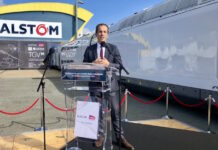
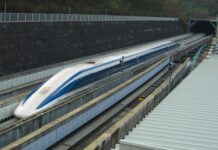
The TGV 'M', the code name for the fourth generation of high-speed trains developed by Alstom, will not enter service until 2024. But one thing is certain: SNCF is banking heavily on it to boost its competitiveness, thanks in particular to reduced acquisition and maintenance costs. 20% of additional capacity and modularity that will enable the number of cars to be adjusted to market needs, or a 1st class space to be easily converted into a 2nd class train...
Another advantage of the TGV M, its carbon footprint is claimed to be one of the lowest on the market thanks to the possibility of recycling 97% of the train set's components and an aerodynamic design that reduces energy consumption by 20% compared with existing TGVs. " This solution meets the SNCF's technological, economic and competitive challenges, in an environment of strong passenger demand for low-carbon mobility solutions." said Jean-Baptiste Eyméoud, President of Alstom France.
Following an order placed with Alstom in 2018 for 100 trains, the French company recently signed a new contract for the acquisition of a further 15 Avelia Horizon very high-speed trains, worth almost €590 million. These trains will not only help to meet the expected growth in rail traffic, but also expand SNCF's network abroad. The order covers the four-voltage version of the Avelia Horizon range, the commercial name of the TGVs of the future developed by Alstom. In other words, a version that " meets the needs of European traffic" says Alstom.
This TGV could be used to speed up the development of cross-border linksThe 15-year anniversary of the collaboration between SNCF and Deutsche Bahn on Franco-German lines, for example, sketched out the beginnings of a Paris-Berlin line. This could even enable SNCF to go further. to play on TrenitaliaThe transalpine airline has positioned itself on the Paris-Milan routes via Lyon since the end of 2021.