


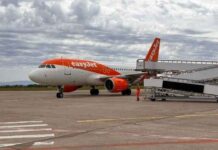

















When, in May 1997, five companies decided to join forces to create Star Alliance - Lufthansa and Scandinavian Airlines for Europe, Air Canada and United Airlines for North America and Thai Airways International for Asia - there was a little revolution in air transport. Even if, in truth, the movement was already well under way as a result of deregulation, which shattered half a century of rules laid down by the International Air Transport Association (IATA). This enabled carriers to work hand in hand, sharing capacity on certain routes, or offering reciprocal passenger tickets to each other.
Star was created with a slogan that perfectly reflected its ambitions: "the airline network for the planet". Following the launch of Star, the major airlines successively announced that they were joining these global alliances, with a host of marketing and communications initiatives. In 1999, oneworld was born under the leadership of American Airlines, British Airways, Canadian Airlines, Cathay Pacific and Qantas. A year later, SkyTeam took to the skies, supported by Aeromexico, Air France, Delta Air Lines and Korean Air.

Thanks to the synergies they would create, these alliances promised their passengers the best, with the emergence of global networks and a homogenous product offering. Everything was on the table, from the reciprocity of loyalty programmes between members of the same alliance to a harmonised range of fares and classes of travel, as well as shared airport services. For airlines, alliances also offered the prospect of attractive economies of scale by grouping together airport services such as passenger and baggage handling, as well as the management of certain activities such as lounges for high-contribution passengers.
By making it possible to circumvent the obstacles posed by national regulations - by acquiring stakes in local airlines, controlling airport slots, operating code-share flights - alliances have introduced real management flexibility. One advantage is that they can consolidate and even control the capacity offered on certain routes, effectively limiting competition.
The compromise was almost perfect, for both users and airlines. While the former felt they were benefiting from real advantages thanks to a wider range of destinations and services, the latter admitted their satisfaction at having found a clever model.


On the strength of this, alliances continued to grow over the last twenty years. According to figures published by IATA, 61.2 % of scheduled airlines expressed in passenger/km revenue in 2015 were concentrated in the hands of the three alliances, with Star leading the way with 23 %, followed by SkyTeam with 20.4 % and oneworld at 17.8 %. A remarkable increase, given that this same market share only reached 50 % just five years ago! At the same time, the three global alliances carried just over 1.85 billion passengers in 2015, or almost 53 % of the world's scheduled traffic. The dominance of the alliances is particularly noticeable on the transatlantic route, where Star, SkyTeam and oneworld account for more than 80 % of traffic. In Europe and Asia, this market share remains below 80 %.
All the major companies
At present, more than sixty carriers belong to one or other of these three alliances. With the notable exception of the low-cost carriers, the American Southwest Airlines and the Europeans Ryanair and easyJet, the fifteen largest carriers of the world - in terms of passenger numbers - are prominent members. And while the rate of new memberships seems to have slowed down since 2015, there are still two or three airlines joining every year.
Last November, Willy Walsh, CEO of the IAG Group, parent company of British Airways, Iberia and Vueling, stated that British Airways to acquire a stake in Irish carrier Aer Lingus was accompanied by ato bring Aer Lingus into the oneworld alliance so that it can benefit from the advantages inherent in the alliance." There is also talk of Royal Air Maroc and Air Tahiti Nui joining in the longer term.
As for new members, Star Alliance is preparing to integrate a new Chinese airline, Juneyaho Airlines, based in Shanghai. As for SkyTeam, rumours of India's Jet Airways being accepted were confirmed last year by the fact that the Bombay-based carrier closed its historic European stopover in Brussels to redeploy to Amsterdam and Paris, SkyTeam's two most powerful hubs in Europe. There is also talk of Brazilian carrier GOL joining the alliance, which is headed by Air France-KLM among others...
So what's behind this the impression that alliances are disintegrating today? Why do passengers feel so indifferent towards them? Probably because, in the space of five years, the world of air travel has undergone profound and often radical change. The alliances are at the forefront of these upheavals, having to adjust to an environment that is constantly changing with the proliferation of mergers and acquisitions between airlines. In less than a decade, British Airways has bought out its competitor British Midland and then made it disappear. In South America, the cards have been reshuffled around the LATAM group, the result of the merger between Chile's LAN and Brazil's TAM, and Avianca Holdings, the result of the merger between Avianca and Taca.
Low-cost troublemakers
These moves have not been without consequences for the alliances, which have lost or gained new members as a result. Star Alliance, for example, has seen five of its members leave for its competitors, but has taken two carriers from SkyTeam. For its part, oneworld has been hit by the outright disappearance of carriers such as Malev and Mexicana. All this is enough to upset loyal passengers who, generally without any consultation, automatically switch from one alliance to another, sometimes losing their VIP benefits.
But above all, there is increasingly unbridled competition between the various players in the air transport industry, with the rise of low-cost airlines in particular, which are increasingly attracting business customers on point-to-point routes, particularly in Europe and Asia. This is forcing the alliances to find solutions to integrate these new carriers. In 2012, SkyTeam was the first to openly admit that it was thinking about it. However, it was ultimately Star Alliance that stole the show with the launch, at the end of 2015, of its "Connecting Partner" formula, which enables synergies to be created between the networks of a traditional airline and those of a low-cost carrier via a simplified booking interface.
At the end of 2015, former Star Alliance CEO Mark Schwab described this progress as follows: "With this new concept, we are taking a completely new approach. We are seeing a trend towards convergence between traditional airlines offering a wide range of services and the low-cost model. At the same time, our customers are telling us that they need to be able to travel to markets where we don't offer ideal coverage. And traditional airlines are not in a position - in most cases - to fill this gap. So working with the future Connecting Partners will enable us to offer a wider network to our travellers."
The first company to benefit from this new status of "Connecting Partner" will be China's Juneyaho, with Star's aim of turning Shanghai into a genuine domestic and intercontinental hub. Connecting Partner status should then be awarded this year to the South African low-cost carrier Mango and probably to Eurowings, the low-cost/hybrid subsidiary of Lufthansa. Another potential partner is Scoot, the subsidiary of Singapore Airlines (SIA). Firstly because it is increasingly coordinating its offer with that of its parent company, but above all because because it recently absorbed Tigerairthe other low-cost airline launched by SIA.

For its part, SkyTeam is still working on a technical solution to open up the alliance to low-cost carriers, at a time when Air France-KLM is looking to move into the niche of a simplified service airline. Announced back in 2012, this second-tier partnership has been delayed, probably due to problems with the compatibility of reservation systems and flight connections, as low-cost carriers generally use simple reservation models.
The Gulf gets involved
Alliances are therefore faced with the low-cost phenomenonThey also have to contend with the fierce but more subtle ambitions of the Gulf carriers. Emirates' far-reaching agreement with Australia's Qantas has at the same time deprived oneworld of a strategic position by "emptying" part of its value on the famous "Kangaroo Route". Instead of sharing the route linking Great Britain and Australia with its historic partner British Airways, one of the founding members of oneworld, Qantas has joined forces with Emirates, making Dubai the new central hub between Europe and Australia.
Emirates repeated the same strategy in 2015, this time with Malaysia Airlines. Taking advantage of Malaysia's difficulties, the Dubai-based carrier signed a cooperation agreement to reposition passenger traffic between the Asia-Pacific region and Europe via its hub. At the same time, Malaysia Airlines has closed all its European destinations except London, depriving oneworld of a major network of fast connections to South-East Asia.

a strategic route, the "kangaroo route" between Australia and Europe.

companies that are members of alliances are upsetting the balance.
More than just a price war - Although it still exists, its influence on passenger choice has been somewhat eroded. The battle is also being waged over market capitalisation. Etihad Airways, the national carrier of Abu Dhabi, for example, is in the process of building a new airline, Etihad Airways. a veritable conglomerate. It owns 49 % of the capital of Alitalia and Air Serbia, 40 % of Air Seychelles, 33.3 % of Etihad Regional (formerly Darwin Airlines in Switzerland), 29 % of Airberlin, 24 % of Indian jet Airways, 22 % of Virgin Australia and finally 4.99 % of Aer Lingus. Including the parent company, this represents 120 million passengers a year and over 400 destinations on every continent...
The Abu Dhabi-based airline refers to all these carriers as "Etihad Partners", offering passengers end-to-end flight bookings, optimised connections, shared lounges and loyalty programme equivalents. In short, a model very close to an alliance that dare not speak its name. It is true that many of these airlines are already members of other groupings... However, Etihad could in future put pressure on the management of certain carriers to leave these alliances, with Alitalia appearing to be the most reluctant to continue the SkyTeam adventure.
The growing power of Etihad and its partners recently won over Lufthansa, which was under pressure to find a strong partnership with a Gulf carrier, "while the latter have a genuine strategic advantage due to their geographical location"The German State Secretary for Economic Affairs, Brigitte Zypries, told Bloomberg last year. For the time being, Lufthansa and Etihad set up a code share limited to a few routes, and found themselves working together to manage the financial crisis facing airberlin, with Lufthansa in particular preparing to lease airberlin aircraft to develop its Eurowings subsidiary. Who knows if Etihad and Lufthansa will not agree in the future on the future of airberlin or go even further in their partnership?
For its part, Qatar Airways is the only Gulf carrier to have joined one of the major alliances, in this case oneworld, which its CEO Akbar Al Baker described as "the best of all alliances, offering genuine flexibility and a high degree of decision-making autonomy". It should also be said that its 20 % stake in IAG and 10 % in South American LATAM give it considerable influence... Not to mention that with a 49 % stake in Meridiana and the possibility of entering the capital of Royal Air Maroc, Qatar would be bringing potential new partners into oneworld. So finance seems to be gradually replacing strategic and marketing considerations, which is probably one of the major trends of the next few years.
The alliances model remains still relevant today. Better still, it is now winning over regional players! In 2015, the Indian Ocean Commission helped create the Vanilla Alliance, which brings together Air Austral, Air Madagascar, Air Seychelles, Inter Ile Air and Air Mauritius. The aim of the alliance is to coordinate and better integrate the various flights in the region. This is reflected in the first initiatives. "For example, we are launching the first non-stop service between Réunion and China, with a joint flight with Air Madagascar on the Tananarive-St Denis-Canton route. Other partnerships should follow."said Marie-Joseph Malé, CEO of Air Austral, last December when the two airlines signed a code share agreement.
The last bastion resisting the alliances - the low-cost carriers - is in turn falling. In Asia, Value Air brings together six independent Asian carriers based in Korea, Japan and ASEAN. The alliance aims to establish itself as a counterweight to the low-cost giant AirAsia, and could ultimately become a decisive choice for passengers. In particular, Value Air is working on a common booking engine to enable connecting flights. Similarly, still in Asia, U-Fly brings together regional and hybrid airlines, mainly from China. At the end of the day, only easyJet and Ryanair have not yet joined the bandwagon... For the moment, both are resisting all temptation. But for how long?
Also in this issue:
What are the benefits for travellers?


