


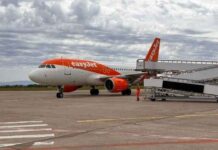

















Air fares on low-cost carriers are on the rise, according to a survey by the Deutsche Zentrum for Luftverkehr und Raumfahrt-DLR (German Centre for Air Transport and Aerospace) published in December. According to prices calculated in autumn 2014, average fares for a journey on a low-cost airline fluctuated between €70 and €140. This compares with an average fare of between €50 and €130 in autumn 2013. The price fluctuates on a scale of 1 to 2.5 depending on the booking period. While the average price of a coupon for a flight booked up to three months in advance was 63.05 euros, it was 113.99 euros a week before departure and 154.73 euros the day before departure. On some airlines, the one-way fare is well over the 200 euro mark...

The increase in fares is due to the rise of airlines offering a better service for a higher price - such as Germanwings, whose increase in the number of seats was 80% between July 2012 and July 2014. Higher prices also reflect new comfort options - priority boarding, reserved seats, etc. - on traditional low-cost airlines, which automatically push up the average ticket price. Finally, the densification of networks - particularly to more distant destinations - is another factor in the rise in the average ticket price.
We should also note the fall in supply at Ryanair, which closed a number of routes following the introduction of new taxes on air transport. Ryanair's supply of seats fell by 17% between July 2012 and July 2014 and by 22% over a one-year period.
Despite this increase, the number of passengers travelling on low-cost carriers continues to rise in Germany. While there were 29.7 million passengers in the first half of 2013 on a network of 658 weekly routes (average for July 2013), the total number of passengers in the first half of 2014 rose to 30.9 million on a network of 722 weekly routes. In total, some 875,000 seats were offered per week on average in July 2014.
The share of passenger traffic travelling on low-cost airlines was highest in the first half of 2014 at the major German hubs of Cologne/Bonn (74.6%), followed by Berlin (70.4%) - including Berlin Schönefeld (80%) and Berlin Tegel (60.7%)- and Stuttgart (56.2%). Low cost remains marginal at Lufthansa's two major hubs in Frankfurt (3.3% of total passengers in the first half) and Munich (14.2%).


