



















That's the bad news this week. The Airports Association International ACI has just revised its traffic forecasts for 2020. And the picture is even bleaker. Airports Council International (ACI) World has published an updated model showing the worsening economic impact on the global airport industry. ACI World's forecasts of the impacts and prolonged effects of the COVID-19 pandemic are expected to result in a reduction of more than two billion in passenger numbers worldwide in the second quarter of 2020 and by a fall of 4.6 billion passengers for the whole of 2020. The decline in total airport revenues worldwide is estimated at $39.2 billion in the second quarter and more than $97 billion for the whole of 2020.
" The impact of the COVID-19 pandemic on airports and the wider aviation ecosystem continues to worsen and represents an existential threat to the industry. "stated in a press release Angela GittensManaging Director of ACI World. " Airports are an essential part of the air transport ecosystem, a key driver of local, regional and national economies and the communities they serve, and this global economic multiplier effect must be safeguarded to help sustain the recovery. ".
Pending the reopening of routes by airlines with the gradual lifting of restrictions on passenger movements, airports are preparing for welcome passengers differently but also to redefine the conditions under which airlines operate. The new standards for health safety and social distancing are likely to have a profound effect on the core of the airline business model, the hubs.
According to an analysis by the consultant OAG which is working on airline capacities and frequencies, the introduction of restrictive health measures will totally transform air operations. According to John Grant, Senior Analyst at OAG, these new measures are certain to result in a increase in minimum connection times for passengers. " We have made totally hypothetical estimates for a new minimum connection time (MCT) for any type of connection, whether between a domestic and international flight or vice versa, or between two international flights. Currently, the average MCT is between 45 and 90 minutes. Assuming that this connection time rises to 120 minutes in order to allow the disembarkation and the test passengers, the cleaning aircraft, the application of social distances in movements. We applied this measure to five major connecting airports - Amsterdam, Chicago, Dubai, London Heathrow and Singapore - and found that it would lead to a 18% fall in the number of connecting passengers. Out of a total of 400 million connecting passengers at the world's 50 largest airports, this would result in a loss of 72 million euros. "he explained. The consequences are numerous. " It is likely that such a loss would result not only in the disappearance of connections as they have existed until now, but also in the cancellation of many point-to-point flights on short-haul routes. Indeed, many of these flights were economically justified only by the fact that, among other things, they also fed long-haul routes. "says John Grant.
READ ALSO: " Airports: COVID-19 ushers in an era of uncertainty"
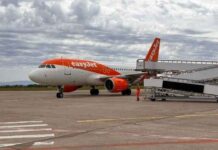
Airlines must discuss how to operate at airports to minimise these connection times. " We're already trying to anticipate the post-containment period for usexplains Jérôme Marmet, Head of Corporate Press atParis airports. However, the decisions on how to apply the safety measures are in the hands of the state, and we will adapt to whatever the government and health authorities decide. But it's still too early to say. ". Point-to-point routes are likely to be the most affected by the disorganisation or - more positively - reorganisation of airline ground time at airports. " For example, we took on an hour-and-a-half ground rotation on a point-to-point flight, says Mark Clarkson, Executive Vice President Products and Management for OAG.. For an Easyjet aircraft making four daily round trips to Porto-London Gatwick and back, Porto-Toulouse and back and finally Porto-Geneva and back, the additional operating time would be 2h44 per day, with the aircraft returning to base at 1.20am instead of 10.30pm. This is likely to increase operating costs, with more staff on the ground because the airports will have to be open longer. Not to mention the likely opposition from local residents. ".
Another handicap likely to discourage passengers is that of bring the traveller much further in advance on the platform in order to expedite formalities that have become more time-consuming. Airports and airlines will therefore have to speed up the possibilities of carrying out all the stages of a trip from home (baggage check-in, boarding passes) in order to reduce airport formalities as much as possible. " It's not certain that passengers will agree to come three hours in advance for a 7.30am flight, for example.says John Grant. Post-COVID 19 air travel looks set to be more complex than ever...


