



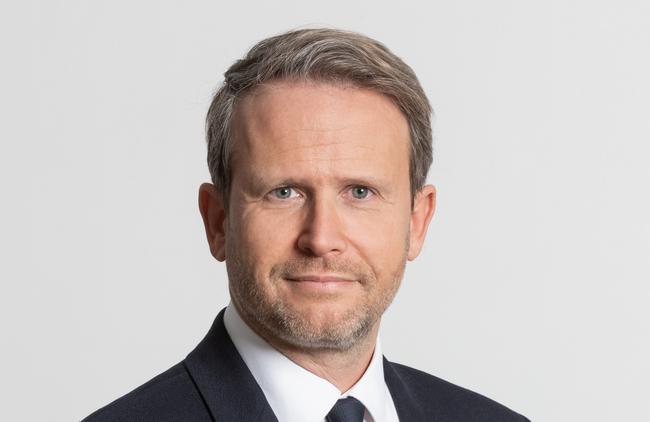
Moet & Chandon, Vuitton, Tiffany, De Beers: you joined Hyatt after a career in several luxury houses. What does this say about the evolution of the group, which is expanding its luxury and lifestyle hotels around the world and in Europe?
Marc Jacheet - My arrival at Hyatt illustrates something structural: the convergence of the luxury and hotel worlds. We are witnessing a 'luxurisation' of hospitality and a 'hotelisation' of luxury around one trend: the shift from possession to experience. If you have ten bags from a luxury brand, what's the point of having an eleventh? On the other hand, memories of family trips, the feeling of experiencing something unique, are for life. Hotels are not a seasonal product; they offer lasting, personalised, multi-sensory memories.
At the same time, there are more and more hotel brands. How do you explain this trend?
M. J. - This move towards branding is not specific to the hotel industry, but can be felt in all sectors, from F&B to consumer goods. The younger generation in particular is very fond of brands. The world around us is changing, so it's not surprising to see the hotel industry strengthening its appetite for brands. In this context, the Hyatt Group has a number of advantages. We are a listed company, but owned by a family. So we think in the long term. And in the world of branding, there is no substitute for the long term. Moreover, two-thirds of Hyatt's establishments in Europe are managed by the Group under management contracts, compared with one-third under franchise. To develop the luxury and lifestyle offer, these management operations are essential.
Hyatt recently restructured its brand portfolio. Can you tell us about this new organisation?
M. J. - We have reorganised our offer around five main segments: luxury, lifestyle, all inclusive, classic and essential. This nomenclature allows customers to better identify the type of experience they are looking for, while those involved in our development have a clearer map of our portfolio and the specific positioning of each product. In the luxury sector, for example, we have the Park Hyatt and Alila brands, but now also the Unbound Collection. We have repositioned this brand to bring it into this universe.

Your group recently launched a new brand, Unscripted by Hyatt, based around upmarket hotels with limited services. Are there still gaps to fill in your brand portfolio?
M. J. - We can always add to it marginally. But the important thing is to have as many brands as necessary and as few as possible to meet customer expectations. We have a portfolio of 33 brands that are well established in the segments we cover. For some of them, we are in the process of refining the value proposition to make them more specific, to give them their own identity through their codes, their designs and their experiences.
With brands such as Andaz and Thompson and conversion brands such as Joie de Vivre and Me and All, your group was already well positioned in the lifestyle sector. What does the acquisition of the Standard International group add?
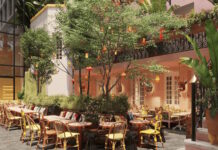
M. J. - In fact, we already had very strong brands in this segment, which are also very dynamic in the EMEA region. Since 2017, we have doubled our luxury portfolio, tripled our all-inclusive offer and quintupled our lifestyle portfolio. The acquisition of Standard International has further strengthened this position with its 22 hotels worldwide, including 4 in Europe, and a pipeline of around thirty hotels. But its contribution goes beyond numbers. Thanks to this acquisition, we are further strengthening our expertise in a key area for lifestyle hotels, namely F&B. Or, to be more realistic, 'B&F', with bars accounting for the majority of revenues compared with restaurants. In this context, Standard's identity is very strong, around pop culture and music, with hotels like Standard New York vibrating to the rhythm of major social events. They have jobs that we didn't know about before, such as 'vibe curator'. In other words, someone who can play on all the multi-sensory elements of a hotel to change its atmosphere throughout the day, in a form of hyper-subtle scenography. You can stay in the lobby for 24 hours and have the feeling you've been in five different hotels.
Are these establishments popular with business travellers?
M. J. - This vibrancy appeals to business travellers who don't want to feel like they're in a conventional hotel. This applies not only to individual stays, but also to meetings and seminars. These hotels offer "worktainment" with lifestyle team-building activities, such as learning to mix and marry strong and weak alcohols to create cocktails, and juggling bottles and shakers. Similarly, in Munich, the Andaz hotel has just set up a microbrewery where groups can learn how to brew and taste beer. These are proposals that correspond to the DNA of a lifestyle brand and are in line with current expectations. Before Covid, we used to get together to work. Today, it's about seeing each other and sharing an experience together. Which, more generally, explains the almost double-digit growth in demand for MICE events in Europe.
Lifestyle and bleisure often go hand in hand. How is this trend developing?
M. J. - We expect bleisure to grow by 500 % between now and 2030. This is a demand that is becoming structurally important, and which has three dimensions. Firstly, the integration of leisure elements into daily working life, such as sports or cultural visits between two meetings. Secondly, extending business stays by one or two days at the weekend, alone, as a couple or with the family. But also the creation of ecosystems enabling business and leisure to be combined in different destinations. For example, Paris and Reims, London and Cambridge or, in Africa, the Kenya-Tanzania-Zanzibar triangle. For example, you can have a meeting in Nairobi and then, before or after, take the opportunity to go on safari or spend a few days on the beach in Zanzibar. It's bleisure with a quick plane hop. These days, event organisers prefer destinations that offer these extension options.

You just mentioned Reims, where a Hyatt Centric has just opened. What are your areas of development in France?
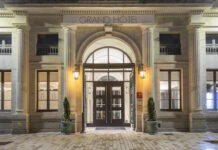
M. J. - We have just opened a Hyatt Centric at ReimsThis is an excellent business address with a great MICE offering, in a perfect destination for bleisure, just 45 minutes from Paris by TGV. We also have another major project in Nice, a destination on the move at the moment. After renovation, the Palais de la Méditerranée will be transferred from the Hyatt Regency brand to the Unbound Collection, with reopening scheduled for next spring. With its extraordinary location facing the sea, in a listed building dating back to the 1930s, with its Art Deco façade decorated with sculptures by Sartorio, its offer was more in keeping with the luxury on offer from the Unbound Collection.
What are your areas of development in France?
M. J. - We currently have thirteen hotels in France, with very significant growth potential in secondary towns. And these are becoming less and less secondary in the global traveller's agenda. Take Chinese travellers, for example. Rather than Paris-London-Rome trips, they are starting to explore destinations in greater depth, visiting the châteaux of the Loire and wine tourism. This supports the deployment of our hotels in the regions, yesterday in Bordeaux, Rouen, Reims and Toulouse, and tomorrow no doubt elsewhere.
More generally, what is your development strategy in Europe?
M. J. - We are expanding at a sustained rate. Over the last five years, we have tripled our presence to 224 hotels in Europe, with just over 50,000 rooms. We have gone from 25 to 42 countries over the same period. This represents a significant geographical expansion, even if we don't rush before launching into a new country. You have to find the right tempo, choose the right brand in the right place, the one that responds to the deep-seated needs of your customers. We often start with a classic, all-purpose product like Hyatt Regency, Grand Hyatt or Hyatt Centric - as we did in Estonia and Croatia, and soon in Albania - and then expand into luxury and lifestyle. Then eventually with our essentials brands, if there is a need for a network with more accessible products, near airports for example, like the Hyatt Place Amsterdam Schiphol.

This enables the development of networks within a destination. Where are you developing them outside France in Europe?
M. J. - Italy is one of those great European countries with a multitude of cities that are capitals in themselves. Rome, the political capital, Milan the economic and design capital, Venice, the capital of love. In Rome, we will be offering classic accommodation at the Hyatt Regency, which is located next to Termini station, followed by lifestyle accommodation at the Thompson. planned for next year. We are also looking at other opportunities in Milan and Taormina. We also have good growth prospects in Portugal, where, in addition to the Hyatt Regency already open in Lisbon, we are expecting to open two lifestyle hotels, an Andaz and a Standard. We will also be opening a Hyatt Regency in the Algarve, in Vilamoura, a major MICE product with large conference areas and a nearby golf course. And then there's the all-inclusive Dreams hotel in Madeira, which opened last year. There are things happening in the Portuguese market, and we could very well have a luxury proposition there.
Another key market is the UK, where we have recently opened hotels in Birmingham, Cambridge, Leeds and Manchester. Next year we will open a Hyatt Regency in London, as part of the the transformation of the area around the historic Olympia London exhibition centre. A new destination in its own right, focusing on entertainment, catering and, as in the past, professional conferences.
To all these hotels that may be of interest to business travellers, I would add the Grand Hyatt Waterpark, which has just opened in Dubai, an incredible hotel in terms of the quality of its facilities, with a wave pool and slides, private cabanas and the possibility of surfing, something extremely rare in the Gulf. The hotel has a 5,000 m² convention centre with a huge ballroom, several foyers and a dozen meeting rooms, as well as 750 rooms. There is virtually no equivalent in the emirate.

As well as the Middle East, is Africa also an area of development for the Hyatt group?
M. J. - Our ambition is to achieve growth of almost 50% in Africa by 2030. But we remain selective and focused on four main areas, including Morocco, a destination with very high potential. We are present in Casablanca, Taghazout and Marrakechwhere we recently opened a Park Hyatt. And we are planning to extend the brand's presence in Morocco, among other high-quality projects in the pipeline. In Egypt, we have opened a Hyatt Centric in Cairo. We are working to expand our presence in Cairo, driven by growing demand for top-of-the-range products, while the Red Sea area also offers potential for all-inclusive and luxury products. Thirdly, we have an extremely interesting triangle, Kenya-Tanzania-Zanzibar, where we find pure MICE products such as the Hyatt Regency at Nairobi and Dar Es Salaam, but also offers a bleisure ecosystem. Finally, we are also very active in South Africa, with Hyatt Houses and the recent opening of the Park Hyatt in Johannesburg, a jewel with around thirty rooms. This is not to say that we are not seizing opportunities, more in line with the "one product, one city" idea, such as the Hyatt Regency in Addis Ababa and Harare and soon in Lusaka and Lagos. Nigeria has a huge domestic market, but is international tourism already strong enough? We're already setting foot in the biggest metropolis, with a MICE product, to observe the market.