















There was a big crowd - and even a DJ - at Paris Est station this morning for the departure at 9.55am of the first high-speed train to link the capital to Berlin, via Strasbourg. A link operated for the first time in around 8 hours, on an ICE 3, as part of the cooperation between SNCF Voyageurs and Deutsche Bahn (DB) that began in 2007. Two hours later, the same train set off from the German capital towards Paris, with most of the journey taking place in Germany, with stops at Frankfurt South and Karlsruhe stations. Each train can carry 444 passengers, including 111 in first class, with fares starting at €69 and €59 in 2nd class.
On the strength of this daily service, the two airlines estimate that they are capable of carrying 320,000 passengers on this strategic route, despite the distance and journey time involved. Some 75% of tickets currently sold are for the entire route. " Eight hours by trainIt may seem like a long time, but we hesitated a little before launching this service in view of passengers' appetite for the train, for ecological reasons in particular.said SNCF CEO Jean-Pierre Farandou. Passengers can travel for 8 hours as long as it is comfortable and we offer a good crew." . Multilingual agents from both companies speak French, German and English on board these ICE 3 trains.

A direct train that is currently only 30 minutes faster
The length of the journey is explained in particular by the fact that trains travel at 320 kph in France, but only 250 kph on the German side. Alain Krakovitch, Director of TGV-Intercités, explained that DB had had difficulty finding train paths to run these two daily trains because of the high density of the German rail network. " However, we hope to be able to revise the timetable next year so that the ICE 3 can depart earlier from Berlin and save precious minutes over the duration of the trip" he added. This should attract more customers who would currently be put off by the eight-hour journey. This new direct link currently only saves 20 to 30 minutes compared to the journey that passengers previously made with connections.
Competition from air travel will continue
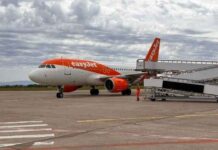
In addition to the length of the journey, the two rail partners will have to contend with competition from low-cost airlines offering cheaper fares. For example, a return journey between 22 and 24 January 2025 will cost €228 in 1st class by train (and €768 in Full Flex Première), compared with €114 with Easyjet. In addition to the comfort and service on board, Jean-Pierre Farandou believes " thata journey from centre to centre is an advantage, given the often complicated routes to and from airports "We are also concerned about the time wasted at these airports (check-in, security checks, etc.).
According to the company, this will give business travellers long, useful working hours on board, with the journey between Strasbourg and Berlin taking "only" 6 hours 15 minutes. And the CEO of the SNCF is confident that " Bookings are going very well. We are recording an occupancy rate of over 80% on the first trains." . To succeed over the long term in the face of air travel, DB will also have to rise to the challenge of regularity, with a third of its long-distance trains arriving late in 2023. On this point too, Jean-Pierre Farandou wants to remain " confident" .
Compensation for delays
This is a major challenge for the two partners, because in the event of delays, passengers will benefit from rights despite the special status of this international train. If the Paris-Berlin section is cancelled, they will have to offer " re-routing to the destination station" says the European Consumer Centre. If the ICE is more than 1 hour late, passengers will be entitled to " compensation equivalent to 25% of the ticket price and 50% over 2 hours" . The airline must also provide food and drink if the flight is delayed by one hour. If the passenger has a connection at Berlin Hbf station and misses it because the Paris-Berlin train is delayed, compensation will only apply to the Paris-Berlin train and not to the second train booked on the DB website and not on SNCF Connect.