














How will Singapore Airlines fare in 2020?
Franklin Auber - Obviously, 2020 has been so badly affected that comparisons with 2019 are not very meaningful... Looking at the IATA 2020-21 year, which we end in March, over the first six months we were at -97% for passenger traffic at group level and -80% income level. Since April, we have lost around one billion dollars every three months. These losses are compounded by two factors: all the tickets not stolen that we have had to reimburse, and the depreciation of certain assets, with the retirement of 26 aircraft from the fleet, the oldest aircraft, which we knew would not fly again when traffic picked up again.
What is the situation in Europe, and particularly in France?
F. A. - In Europe, in December, the occupancy rate was approximately 15% of the pre-Covid period, over a dozen lines. On the other hand, the cargo ship is doing very well. In France, the load factor was significantly higher when we operated four flights a week, which is one of the reasons why we switched back to one daily flight. Traffic has collapsed but has not completely stopped, particularly in the business travelwhich has always provided a minimum of traffic to the Asia-Pacific region, thanks in particular to sectors such as the merchant navy, major French industrial groups in the defence sector, and diplomats.
What are your plans for the coming weeks?
F. A. - At this stage, we estimate that by the end of the 2020-2021 financial year, i.e. the end of March, we will operate 25% of our capacity at group level, and 45% on our network of the pre-Covid era. There are, however, grounds for hope: for the first time in November, the airport at Changi has passed the 100,000 passenger mark again, given that since April, traffic has been struggling to reach 25,000 passengers a month, compared with 5 to 6 million before the crisis.
Why resume a daily frequency in Paris? Is demand already there?
F. A. - This is an important first step on the long road back to normality, which will take years. In addition to the need for cargo capacity, and the positive signal sent to the market, we have calculated that with one daily flight we are optimising the 'good connection' effect beyond Singapore, which represented 60% of our traffic before the crisis. This applies in particular to Cambodiathe Thailandrelaunched in December, the Malaysia (Kuala Lumpur) and theIndonesia (Jakarta) for business customers: destinations for which there is not much offer from Paris, especially on daily flights. On the other hand, for point-to-point traffic between Paris and Singaporedemand remains limited because there is no bilateral agreement on Green Laneas was done with theGermany. We had hoped to do this in January, but unfortunately the French economic situation has prevented it. This means we can get away from the four-week rule, while accepting other constraints. This is a crucial step forward, particularly for leisure activities, because for the business travel certain exemptions exist at the invitation of Singaporean companies. We hope that France will be the next country to benefit from such an agreement.
We haven't written off the A380
How is the Singapore Airlines fleet developing?

Franklin Auber - Back in April, we launched a comprehensive review of our global network and fleet, and today we are concentrating solely on high-performance medium-capacity aircraft. At this stage, just over half of our aircraft are flying around the world, essentially the most efficient twin-engined aircraft, the A350 900 and the Boeing 787 Dreamliner. We have left the largest or most fuel-hungry aircraft - such as the A380 or the 777 300 ER - on the ground or in the Australian desert. This does not mean that we are going to abandon them: we will bring them back on line when demand returns.
Will the Singapore Airlines A380 ever return to Paris?
F. A. - This is by no means out of the question. Before the crisis, our ambition was to launch the 471-seat version of theA380 in Parisand fill it in. So it's not out of the question to put it online in the long term. We haven't written off the A380.
How can we reassure travellers, regain their confidence and encourage them to travel by plane again?
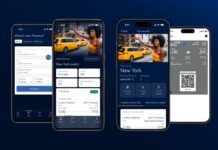
F. A. - Trust is a very complicated thing, combining very rational elements with very irrational ones. Rational elements include all the constraints involved, tests, masks, procedures, etc. There's also the economic aspect: you have to be able to afford to travel. We've taken a lot of measures, and the passenger journey has been completely overhauled to include all the necessary precautions. In addition to all the health measureswe have stepped up our efforts on the digital travel to limit contact. L'mobile application allows replace the on-board paper menuit is possible to remote control the screen from your smartphone. For two or three years now, we have been working on a digitisation at full speedLike most major airlines. The crisis has pushed us to speed up enormously. I don't know if the paper menus will come back, but they are also part of the standing of an airline like Singapore Airlines in the premium classes. There is also the possibility for all passengers, in both business and economy classes, to download around 150 press titles. Passengers no longer turn the pages of Voyages d'Affaires, which was distributed in paper form on board in the old days, but can find it on the digital kiosk.
we are embarking on a marathon over several years
What about the health passport project, on which Singapore Airlines is leading the way?
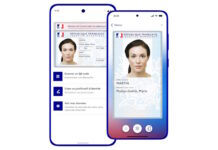
F. A. - Since 23 December, we have been IATA's pilot airline for testing the "Travel Pass which makes it possible to put the equivalent of a digital health passport with all the required test results. We are testing this system on two destinations with heavy traffic from Singapore: Kuala Lumpur in Malaysia and Jakarta in Indonesia. This will facilitate checks, and move towards a "seamless journey". Eventually, those who so wish will be able to include their own vaccinations. It is still too early to give an assessment, but this is clearly one of the great hopes of IATA and Singapore Airlines: to make travelling easier, without all the constraints and load breaks...
What is Singapore's strategy for reconciling international openness and health prudence?
Franklin Auber - In the absence of a global recovery, given the health disparities from one country to the next, Singapore's idea for reviving the machine is to start with countries that are in comparable health situations: hence the "Reciprocal Green Lane (RGL)launched at the end of 2020 with Australia and New Zealand, but also with Brunei, Japan and Vietnam. This will make it possible to replace the fourteener with traveller traceability. There's also the "Travel bubble", which is the next step up, offering even greater flexibility. This allows for a gradual recovery. In any case, we are embarking on a marathon over several years, so not everything will be settled this year. We are currently working on trends for a return to general traffic in line with IATA, over 2023-24. Our hope is that within a few months there will be a "vaccine effect", enabling us to start moving again.
Will Singapore Airlines' hub strategy be called into question by the new habits of travellers, who are likely to favour direct flights?
F. A. - The increase in point-to-point travel is probably a profound trend, but Singapore Airlines is somewhat immune to this debate, given the networks we operate, which are very long-haul. It is often almost technically impossible to make a direct flight: you have to go through a hub. Also, many of the destinations we serve in South-East Asia do not have direct flights to Paris on the national airline.
Do you fear competition from videoconferencinga trend that has become the norm?
F. A. - We've adopted new habits with the virtual, which has been a source of savings for companies... But as far as we're concerned, our corporate customers are very large Cac 40 companies, in the construction and public works sector, the defence industry... Professionals who sell submarines, ships, airports, can't do it all via the Internet. videoconferencing. Technicians and engineers have to travel to the site. We can probably expect travel to be rationalised, but the need to travel will remain.


