



















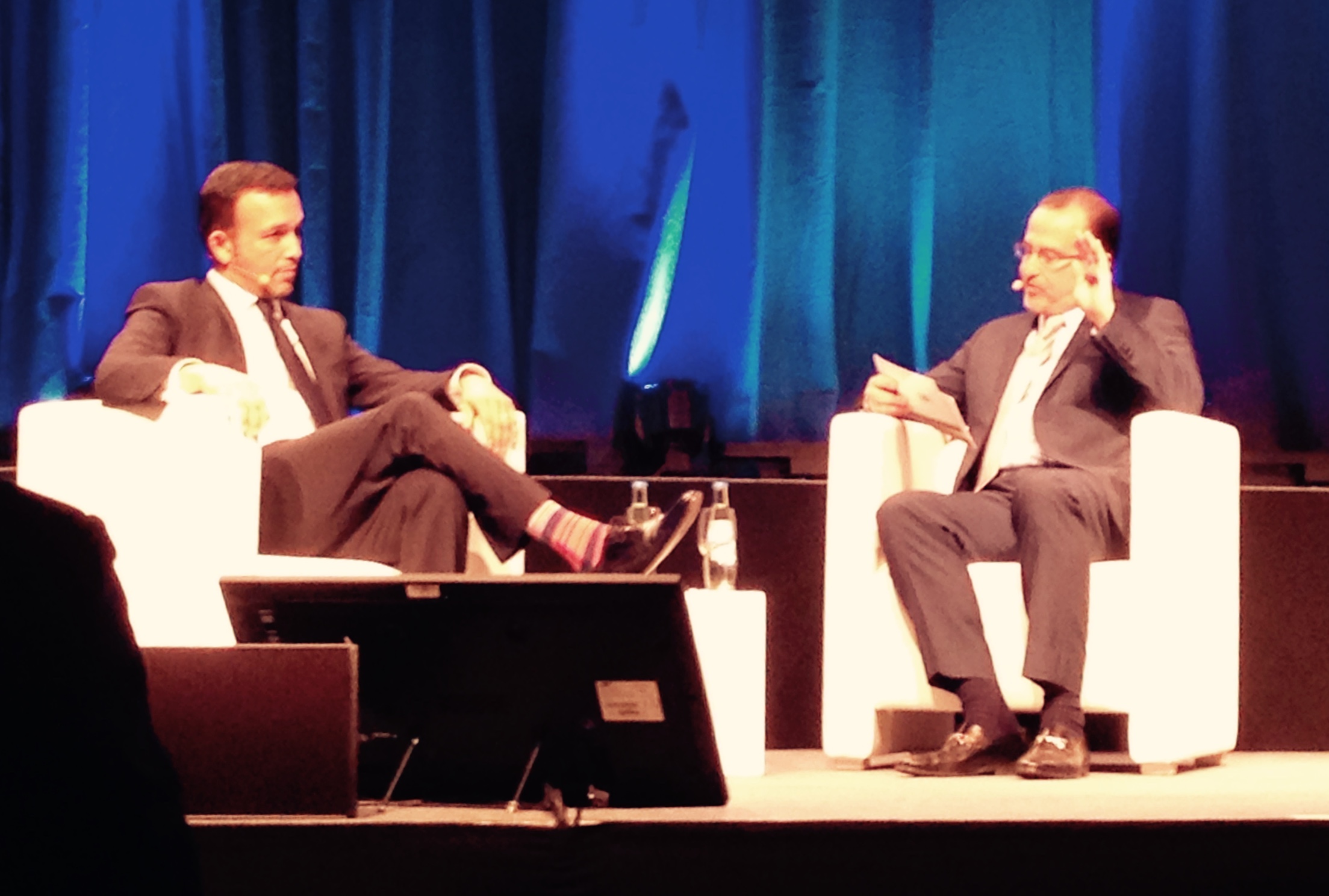
Were you expecting such a large turnout for the European Business Travel Convention?
Mike McCormick - You can't take anything for granted in this business... We were quite optimistic about the success of this event, but it took a huge amount of work on the part of the teams to achieve this result: a successful event, with a record audience. It's probably the biggest conference dedicated to business travel in Europe. Over and above the attendance, the level of the speakers and the quality of the content were truly exceptional.
The number of participants has doubled since 2013... How do you explain this development?
MR M. - The partnership with the VDR has been fantastic, and has led to a strong mobilisation of the German market in particular. But you can't isolate a single factor. It's a whole: a very high-quality programme, a solid membership base within each of the two organisations, a context of recovery in the sector, in which people are looking for events like this to do business.
Can this European convention match the scale of its American sister, recognised as the world's leading business travel event?
MR M. - We all hope so, of course! There are plenty of opportunities in Europe for this event to grow. In fact, it has come a long way since its first edition. The American convention now has a long history. It's been around for 25 years... But I don't see why we can't have this kind of large-scale event here in Europe, especially as there's a real demand for it.
Can you apply the same methods on both sides of the Atlantic?
MR M. - You always have to adapt to regional markets, but there are fundamentals that work everywhere. Content is paramount, not only in terms of conferences but also in terms of training sessions. Each guest's time is precious. So they have to choose how to invest it and make the most of it.
Can we now consider the former NBTA (National Business Travel Association) to be 'Global'?
MR M. - Yes, without a doubt. You only have to look at the origin of our members, who are now more numerous outside the American market. So the GBTA is now a truly global structure.
What are the main issues currently facing the GBTA?
MR M. - In the final analysis, these are the same issues that we have been dealing with for several years: simplifying procedures for passengers, to make their journey through the airport smoother. This involves government programmes to facilitate business travel from one market to another. Taxes on travel are still high, so we are making sure that governments are also aware of the consequences. It's a burden on the industry. At the same time, we also need transparency, which is why we have drawn up this "Berlin Charter" presented at this conference. Suppliers, in this case airlines, need to recognise that the customer is the company! Even if the focus is now on the traveller, it is the company that is footing the bill. So we're campaigning for greater transparency about what is and isn't included in the fare quoted, so that information is provided to the customer. It's crucial that data circulates, relevant data.
How do you view the European market, and the French business travel market in particular?
MR M. - It's very positive to see significant growth in European markets, particularly in Germany, the UK and France, which are the economic engines of the region. This is good for the international economy, because everything is linked these days. The economic recovery is linked to business travel: companies looking for growth can't fall back on their domestic market. So what's good for the business travel industry is good for business.
The GBTA is also growing in France, where the association will soon be celebrating its second anniversary...
MR M. - It's also very positive to see that professionals in the French market are coming together under the umbrella of the GBTA. I'm very proud of what we've already achieved in France, and I can only hope that this French network continues to develop as it has done for nearly two years now.


