












Two years ago, Louvre Hotels Group launched an in-depth transformation plan. How far have you got with this programme?
E.B. - To date, 70 subsidiary hotels and 130 franchise hotels have already been renovated. With half of our subsidiary hotels now converted, we are continuing our efforts to increase this rate to 80 % by the end of 2026. As for franchisees, the rest of our establishments will follow suit. We have more than 300 owner-investors in France, and each of these portfolios has a well-defined roadmap. Despite a complicated context of economic and geopolitical instability, the renovated hotels are recording double-digit growth, well ahead of the market. In the light of these results, they are convinced that they have to go for it. I always say that I'm a privileged person, because I'm piloting one of the hotel industry's finest transformation projects, with a plan to invest over €400 million, to which our shareholder, the JinJiang group, is fully committed.
This has taken time, given the ageing fleet.
E.B. - It took time, and it needed time. I joined the Group in the middle of Covid with the aim of transforming the business. But the pandemic meant that we had to wait before we had more visibility. In the end, Covid delayed the project by three years. What was planned for 2020 ended up in 2023. In May of that year, we received approval from our shareholder for this transformation plan, before it was validated and presented at the end of the year. By the time it is implemented in 2024, the machine is well under way. We are coming to the end of the first phase of this plan and we can speak loud and clear about our hotels.
Will you now be publicising this renaissance?
E.B. - Yes, to make everyone want to come and see us again. In April, we are launching a vast B2C and B2B campaign, running over the two years 2026-2027, to highlight our revival. "This is the new Louvre Hotels, our new brands, our new values. To begin with, the campaign will highlight Brillant Basics, the new standards of comfort that we are rolling out across all our brands. The campaign will then be rolled out brand by brand. The aim is to be in the top 3 in the minds of our customers, our teams and our partners.
How do you plan to promote this renewal to business customers?
E.B. - The current transformation is giving us the opportunity to put our brands back in the minds of our business customers. They were already known, but hadn't necessarily aged well. Today, we can take up our pilgrim's staff and say to companies at local, national or international level: "we're not that sleeping beauty any more". With this in mind, to get B2B marketing back on track, we are offering our hoteliers a 'Club of Sales', a joint offering from Louvre Hotels and the Radisson Group. This gives us a complete and coherent sales approach.
Given that the majority shareholder of the Radisson Group and Louvre Hotels is the JinJiang Group, does this joint marketing venture represent a new strength for corporate customers?
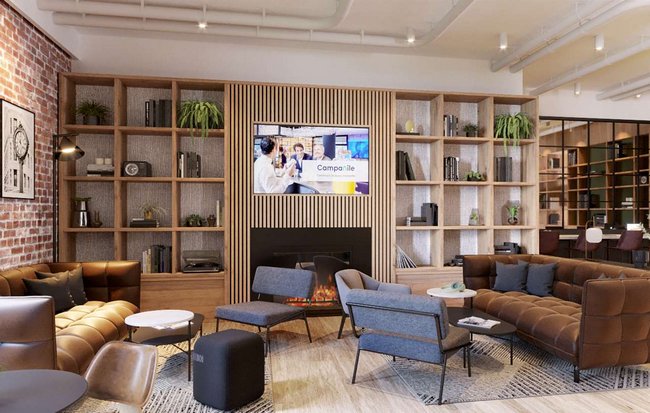
E.B. - Absolutely. Today, when our sales people visit a major international group, they can offer a wide range of accommodation solutions. For top management who only use four- and five-star hotels, they can highlight our Golden Tulip and Royal Tulip hotels, as well as the Radisson Group's top-of-the-range hotels. For mid-management, we can offer Campanile, Kyriad or our new lifestyle brand Tulip Hotels & Residences and, in parallel, Prizeotel by Radisson.
What other synergies are you developing with the Radisson Group?
E.B. - We enrich each other in many ways. We have worked hard with them to define the operating model for each of the brands. This internal competition stimulates innovation and service improvements. For example, we are doing better than them in terms of the self check-in experience, and they are adopting our systems. Conversely, the optimised operating model of Prizeotel by Radisson has inspired that of Première Classe and Campanile. The Radisson Rewards loyalty programme was the largest, with 25 million members, and our hotels will be integrated into it from next October.
At the end of the year, you will also be offering a redesigned platform covering all your brands' establishments, rather than one site per brand as before. Are you making common cause with Radisson here too?
E.B. - This platform will prioritise our customers' preferred brands while offering them the entire portfolio of the two groups. So a Campanile customer will always see that brand's establishments first, followed by Louvre Hotels establishments, but also the whole carousel of Radisson brands. Conversely, a customer loyal to Radisson will see the group's hotels first, followed by those of Louvre Hotels. The principle is to give access to our entire offer, in particular by proposing destinations that are not covered by one or the other.
How are these synergies structured?
E.B. - The vision is simple: we all belong to the same shareholder. Each group has its own roadmap, but with one very clear objective: to create all possible synergies. This will be achieved through this technology platform, with a joint sales platform with Radisson, but also a purchasing platform in which JinJiang is also participating. As cousins, we are going to capitalise on these elements to build strength together.
With this transformation well underway, what is your long-term vision?
E.B. - The plan defined with our shareholder is very simple and involves three phases. The first, which will be completed at the end of this year, has served to lay new foundations. The second phase, starting in 2027, will focus on a return to profitability and organic growth. Finally, by 2029, the third phase will be open to external growth opportunities.
What is your development strategy in France?
E.B. - One of our aims is to set up Campanile Prime hotels in the town centres of secondary cities. At present, we have hotels on the outskirts of these towns, but less in the heart of them. These Campanile Prime hotels will complement the Campanile Nature hotels on the outskirts. But our development teams don't have a target by brand, but by number of hotels. We work with investors to choose the brand best suited to each project.
Among all these brands, your portfolio has welcomed a new one, Tulip Hotels & Residences. What does it offer?
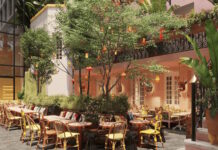
E.B. - It meets a growing demand for lifestyle and long-stay hotels. It's a hybrid concept between a hotel and a residence, with classic rooms and others equipped with kitchenettes. Of course, the word 'lifestyle' is a bit overused. Who isn't a lifestyle today? With the Tulip brand, we want to create life in our establishments, with bars, music and non-stop entertainment. The first hotel has opened in the Paris region, in Joinville Le Pont, and we will be opening five other Tulip hotels between March and April in business areas close to major cities, notably in Aubagne, near Marseille. At a time when investors need different products, this brand has taken well and its development is accelerating.

This new brand will further strengthen your Group's mid-range positioning. Why are you staying focused on your preferred segment?
E.B. - We really believe that we can reinvent the mid-range hotel sector. And there are still great opportunities in this market. The midscale segment has historically been more resilient, with crises always starting at the top. After covid, we saw a change, with luxury remaining very strong, but we're now seeing a refocusing on the mid-range. This gives us a competitive advantage. In India, for example, American groups are entering this market, but they are lagging behind us (editor's note: Louvre Hotels acquired Sarovar Hotels in 2017).
Louvre Hotels' strategy focuses on three key markets: France, where the group was born, China through its shareholder JinJiang, and India. How are you developing in these two countries?
E.B. - China is a market where we continue to grow strongly, with the post-covid domestic consumption stimulus plan resulting in a focus on the domestic market to offset the decline in international arrivals. India is a different story. While the country still faces challenges internally, India is booming, with a host of new hotels under construction. The country has made some important choices, and Prime Minister Modi has given a great deal of clarity to the country's strategy, playing on international issues with a historic trip to China and a recent agreement with the European Union. All of this gives the country a great boost.
To conclude, and to return to France, how do you see your hotels doing in the coming years?
E.B. - For 2026, I anticipate a year of stabilisation. After a very difficult period, the very positive outcome of the pandemic was prolonged by the Rugby World Cup in 2023 and the Olympic Games in 2024. But these exceptional events have been like trees hiding the forest. If we eliminate them, there was already a downward trend after the rebound from Covid. The market is now at a low point before picking up again. After a fairly stable start to the year, I expect a recovery at the end of 2026, before a good 2027. We couldn't have chosen a better time to begin our transformation.
So 2027 could be a good year, despite a presidential election that often results in a drop in activity?
E.B. - One thing is clear: in France, before the presidential election, everything stops. However, companies are taking two approaches. Some entrepreneurs are more focused on this year's municipal elections, believing that the levers of their business are at local level. Others, more focused on the national or international market, are more focused on the presidential elections. So our timing is right. The first phase of our plan runs until the end of 2026, when the market will pick up again after the presidential election. And we'll be ready by then, with hotels that have only just been renovated.