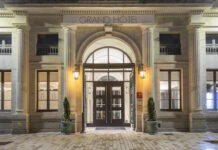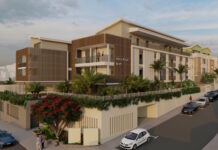





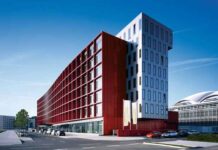



After Nice and Paris CDG airport, you opened a third hotel in France in Aubervilliers last spring. Are you satisfied with their business?
Karim Malak - These openings have been a resounding success, and we're getting up to cruising speed very quickly. The hotel market is doing well, so we've done a lot of work. an exceptional first half to 2023with record figures, particularly for the month of June, and not just thanks to at the Airshow at Le Bourget. This clearly shows that there is a need for quality budget hotels in France, particularly in the Paris region, given the results obtained.
Do your hotels attract a leisure or business clientele?
Karim Malak - The easyHotel brand has a fairly leisurely connotation. But, not surprisingly, we have one third business customersWe have a very strong customer base, not so much from large companies but from small and medium-sized businesses, self-employed entrepreneurs, and professionals in the events and construction sectors. At Paris CDG, we also have a clientele passing through between two flights, while taking advantage of our proximity to Villepinte to attract trade show participants.
You have three hotels in France and around forty in Europe. What are your development objectives for the coming years?
Karim Malak - I don't really like giving figures, but you could say around a hundred. One figure I prefer to rely on is our current offering of just over 40 hotels, half of which are in the UK. This is a market where our brand is very well known and enjoys a very high level of recognition, which means that we can further expand our network there. But, at the same time, there's no reason why we shouldn't succeed in having some of our own. around twenty in FranceIn the coming years, we'll also be working on new projects in Germany, Italy and Spain. What's more, this year our development team is handling four times as many projects as in 2022. This is a real dynamic, with new projects due to be signed at the end of 2023 and in 2024. In particular, there are a lot of opportunities in France, where we are looking to expand our network of franchisees, or even to buy hotels ourselves and convert them.
Do you already have any concrete plans for the French market?
Karim Malak - For the moment, the only project in the pipeline is a hotel. in Marseille, near the Euromed districtwhich should open in late 2024 or early 2025. But we also have a
investment capacity. Our shareholders have deep pockets. What's more, our hotel figures are so good that, on the basis of our financial results, we can afford to acquire more establishments. I am confident that we will make progress on this issue, because there is a real need in France to offer customers, investors and franchisees an alternative to Accor and B&B in the budget segment.
As part of this development, are there any possible synergies with the destinations served by easyJet?
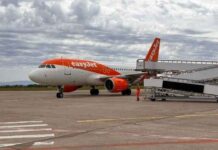
Karim Malak - They are two completely different companies, but in the minds of customers, there may be a correspondence. And secondly, there is the same logic. Both EasyJet and easyHotel want to get back to basics, very well executed basics - a very good mattress, good Wi-Fi, security - but without customers paying for things they don't need. Coming back to the destinations, there is obviously a logic to putting hotels wherever there are easyJet flights.
Which locations are you looking at first?
Karim Malak - Our positioning is to have hotels located in the city centreWe want our customers to be able to get around easily by public transport. Proximity to major public transport hubs is therefore one of our main criteria. As a result, we won't be building hotels on motorways or in industrial estates.
easyHotel's aim is to be a leader in low-cost, low-carbon hotels. What does this mean in practice?
Karim Malak - Firstly, we have more compact buildings, rooms with fewer square metres and more efficient communal areas. For example, we don't have large breakfast rooms, which are little used for part of the day. We don't have no big lobbies where to install a large bar or a faux coworking space. Less square metres means less materials, less concrete and less floor space. Secondly, our new room design uses only recycled and recyclable materials. According to an independent study, it consumes 20% less carbon. The two points add up, and it's starting to make a real difference to carbon emissions per night. If we add to that the fact that our customers tend to come by public transport, and that our suppliers also tend towards a minimum footprint, our whole ecosystem is lower in carbon.


Unlike other retailers, you don't go for attractive bars and lively lobbies. Why don't you?
Karim Malak - First of all, our room was designed by Saguez & Partners, people who know what beautiful is. Above all, we want to offer our guests the best possible night's sleep. Now, I'm not saying that you can't have a bar in the communal areas. It all depends on the building and the location. You can have breakfast rooms if there aren't any nearby places to have breakfast. We could also imagine having a bar, but it would still be very compact. By default, our common areas are very small. We want to make compact and functional accessible to everyone, without taking customers for living wallets. A bit like other operators, not low-cost but still affordable, like Decathlon or Ikea.
With inflation, are budget hotels more attractive?
Karim Malak - During the pandemic, and now in 2023, budget hotels have performed better than all other segments. With inflation, customers may want budget hotels for use their budget elsewhere. I think there is a greater acceptance of budget hotels, perhaps as a counterbalance to all the experiential hotels. There are times in life when you want an experience and other times when all you want is a good meal.one thing is to get a good night's sleep. If I'm going to a city, and I'm the first, I need two things: a good night's sleep and public transport to make sure I can get where I want to go. With that, I'm happy. That's the triptych we're defending: super deals, super easy and super low carbon.