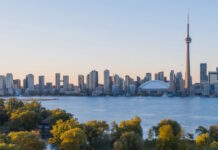















Under the plane's wings: nothing but green. Strings of dark colours lined up in a row; clumps that follow the curves of the land and are in fact oil palms; the kind that, since the 1970s, have enriched Malaysia, a major producer of this essential fat for Asian and African cooks. They are everywhere and even line the motorway leading to the outskirts of the capital Kuala Lumpur, renamed KL by its million and a half inhabitants. In these tropical latitudes, the air is saturated with humidity, veiling the buildings in mist and breaking in places, revealing the crest of the skyscrapers. In the distance, the shadow of a new-look Sagrada Familia can be seen, towering under clouds of grey and black. As you approach, the tall spires of the Petronas Towers, the Malaysian oil giant, come into view. These twin sisters, at 452 metres and 88 storeys, were the tallest buildings in Asia until 2004, and today continue to symbolise the Malaysian capital. The Petronas are the Eiffel Tower of Kuala Lumpur, a garden city where motorways, avenues and slip roads, often saturated, multiply. To make up for the endless traffic jams, the crowds take the aerial monorail that brings them as close as possible to the shopping malls. One of the favourite sports of Malaysian city dwellers is undoubtedly window shopping.
 Shopping malls and the 30s
The shopping centres are legion and all feature international brands, the most prestigious of which have taken over their ground floors. Phang Wei Yin, Public Relations Manager of the Malaysia Convention & Exhibition Bureau, explains: "The shopping malls are a must for any group visiting Kuala Lumpur. Participants do their shopping and then go underground to enjoy the huge canteens serving Chinese, Thai, Indian and, of course, Malaysian specialities. Of course, they also visit Chinatown, the old Chinese quarter, with its typical stalls, temples and Old China Café, still in its 1930s glory, where you can attend a real tea ceremony. At the Royal Selangor Pewter Factory, founded in 1885, they can discover the meticulous work of the craftsmen and leave with a cup engraved with their name. Of course, we always offer a city tour, which allows them to discover Independence Square, the old neo-Moorish railway station or the Museum of Islamic Art...".. Cindy Toong, Communications Director of the Sheraton Imperial, continued: "There are quite a few places in KL where we prepare receptions. For example, some groups meet at the National Museum for an exotic buffet; others for a cocktail party at the tropical botanical garden and still others for a snack at the Tien Hou Chinese temple."
The Convention Center, one of the most impressive in Asia, offers an auditorium, meeting rooms, exhibition halls and even a hotel, right in front of the Petronas - a well-known landmark in KL and the best place to photograph them. Angeline Lue, Director of Sales and Marketing at the Convention Center, adds: "Malaysia has a lot going for it when it comes to incentive groups. In KL, if they come to the Centre for meetings or conferences, they can then easily visit museums and go shopping. As for the beach, they only need an hour's flight to get to the Langkawi archipelago in the Andaman Sea. And for an unforgettable rainforest experience, Sarawak, on the island of Borneo, is just an hour and forty minutes away. In three stages, they have a great overview of the country...".
 The Langkawi archipelago, forest and idleness
The Langkawi archipelago, close to the Thai border, offers a real change of scenery, with wooden houses on stilts on the outskirts of the rice fields, where sturdy buffaloes toil tirelessly. Along the coast, fishermen work in squadrons of colourful barges, topped by powerful lamps that allow them to trap anchovies at night. To the north-east, the tropical forest has been preserved and, on the edge, the Andaman and the Datai, two resorts set on a white sandy beach. Sitting at the Andaman's bar, you can savour the fresh air under the fan blades. The air is muggy and the uninterrupted chirping of the local cicadas makes it almost impossible to doze off. Suddenly, hoarse cries and rustling branches signal visitors. They are langurs, delightful little black monkeys with white-rimmed eyes who, great fans of leaves, leap from treetop to treetop in search of the best shoots, royally indifferent to the comings and goings of humans. On the other hand, their distant cousins, the macaques, operate in packs and pilfer fruit or cakes before the astonished eyes of holidaymakers. The forest has its rights and conceals many other mysteries.
 In the company of a botanist
Iskandar Zulkarnain, Andaman's catering and conventions manager, recounts: "It's a protected area, and an incentive group has plenty of opportunities to observe nature. This can be done during the day, between the rocks cleared by the low tide, or at dusk, with a botanist explaining the virtues of the plants and pointing out nocturnal creatures such as flying squirrels. The region is home to a whole host of leaping fauna, which National Geographic took an interest in. The team managed to attach a camera to the head of a snake and film its surprising flight. But to see all these flying animals, you have to be patient! ". In the evening, they are invited to a gala dinner at Gulai House, Datai's gourmet restaurant housed in an old wooden house on the water's edge. Here, the refinement of a typically Malay interior awaits them as, by soft candlelight, they savour the subtlety of the spice blends used in a host of curries.
In Langkawi, the mangroves are a curiosity, protecting a very local fauna. In groups of ten, divided into small boats, the teams navigate this immense territory at the mouth of three rivers. They first visit caves that are home to colonies of bats, before entering a large channel that ends in the turquoise sea. On the way back, the boat passes through narrower channels where macaques munch on small crabs, before a traditional meal of crabs and prawns is served on the pontoon of a fish farm. To amuse the guests, the children throw pieces of fish into the ponds, which are promptly devoured by an impressive grouper, enormous tuna and also by noisy rays that come to claim their share of the cake - so to speak.
Sarawak, land of the head-choppers
In Borneo, the Sarawak River slowly drains its muddy waters into a China Sea whose waves can be formidable. All around, nature deserves its adjective of exuberant, so much so that it seems to grow from sight thanks to the frequency of tropical rains. The air is heavier, the heat more intense... Kuching, the capital of Sarawak and undoubtedly one of the most pleasant cities in South-East Asia, has at its heart the descendants of the forest ethnic groups who, although they have adapted to modern life, have not denied their age-old traditions. Children of the Ibans, famous head-choppers, or the more pacifist Bidayuhs, or the Penans, hunter-gatherers who are masters of the blowpipe, or the Orang Ulus who tattooed their wives... they all live in perfect harmony with the Malay and Chinese communities.
At the Sarawak Cultural Village, an ideal place to spend a morning before lunch, groups can familiarise themselves with the culture of each of these tribes, some of whom live in longhouses. "longhousesThese are long village buildings perched on stilts. Armed with an explanatory passport, visitors move from house to house discovering their crafts and rituals, culminating in a grand dance performance. Another curiosity is the Semmenggoh reserve, where the orang-utans are gradually being returned to the wild. This year, as the forest has not produced much fruit, the men are feeding them twice a day. It's amazing to see these big red apes climb down to a platform and gobble up banana after banana. It's also a great opportunity to photograph them, but be careful not to use a flash, as a glare can trigger a huge tantrum and terrible bites! And when you know that a female can break the shell of a coconut on a tree trunk in just four or five strokes, you feel pretty fragile...

5 ) Carambolas, rambutans and durians: a rich basket of fruit to punctuate a colourful cuisine.
6 ) With access to a private beach, the luxurious Datai is set in the heart of the tropical forest. Its architecture is inspired by traditional houses, like the bar perched on stilts.
 Unique wildlife
A beautiful walk not far from Kuching, Bako National Park is one of the rare places where you can observe the mangrove monkeys, which are fond of mangrove leaves. These endemic monkeys, with their grey and orange coats and disproportionate nasal appendages, are not exactly beautiful, but they are truly unique... Nearby, you can come across wild boar, silver monkeys, macaques, large monitor lizards and Wagler's vipers, which wrap their emerald green rings around the branches. Vincent Lepoureau, Borneo Adventure consultant, explains: "The park organises picnics on the beach, where local specialities are served. Swimming is prohibited, as the mouth of the Bako river, with its crocodiles, is not far away... You reach the park by a small, slippery path lined with roots. The path, although quite short, seems endless, because in the rainforest, without the slightest breath of air, the atmosphere is truly stifling. All the same, it's a little experience before heading off the next day for a headhunter-themed evening in authentic longhouses"..
When it comes to shopping, the groups take to the many boutiques of Kuching's Main Bazaar: a profusion of batik sarongs, small statuettes or masks inspired by those made by the various tribes, bamboo mats, not forgetting the famous pepper, white or black... A colourful stopover before boarding the Equatorial, a boat that glides on the Sarawak, to see the city's monuments such as the Square Tower - a former prison -, the old mosque and its copper domes, the Astana - the former palace of the white Rajahs -, Fort Margherita and, further downstream, fishing villages. Rowena Ngumbang, Business Development Manager of the Sarawak Convention Bureau and herself an Iban descendant, concludes with a serene cruise: "This river is fantastic. It flows through a land of myths and legends, a land of misty, semi-wild forests which is a rare paradise in the world for everything to do with wilderness adventures"..