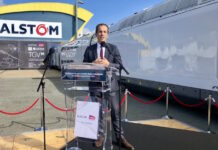















Yesterday's outing was one for the record. François Durovray at the National Assembly. The new Minister for Transport in the Barnier government has invited the rail companies, Voyages SNCF and its current or future competitors, to not to focus solely on the most profitable routes in order to achieve a more harmonious development of the territory. " In an open market, the rules of the game can change. I want the new entrants to participate in these regional development issues. I don't see why they should only take over the most profitable services and not contribute to the regional planning that we all share." he declared in the Chamber. Having already spoken out a week ago against the reduction in TGV services to medium-sized towns, the Minister intends to make a number of changes to the French rail system. proposals by summer 2025 to make the operation of high-speed lines compatible with regional development.
Investment incompatible with the operation of loss-making or unprofitable routes
This project seems somewhat illusory, given the colossal investment required for new entrants to get started and win market share from SNCF. Only by operating on high-traffic routes, guaranteeing a high occupancy rate, can we hope in the long term to make a profit on these services. Trenitalia and Renfe which are already present in France, and tomorrow in Proxima, Kevin Speed or The Train. You need to pay for the depreciation of trains, rail tolls which are among the highest in Europe (and even if new operators benefit from a degressive discount for the first three years), marketing, distribution, staff, electricity consumption…
Le Train has committed €300 million to order 10 high-speed trainsets from Talgo, and Proxima has secured €1 billion for its planned launch, scheduled for 2028 at the earliest, which also includes the purchase of 12 trainsets from Alstom. Amounts that are difficult to reconcile with the operation of loss-making or low-profitability routes. This concentration of operators on the same routes as part of the opening up of rail competition in Europe is not unique to France. The SNCF, with Ouigo Spain, and then Trenitalia, with Yrio, first launched themselves on the highly lucrative route Madrid-Barcelona. And here too the entry ticket is high: while Ouigo Spain has taken 20% of market share from Renfe since its launch in 2021, SNCF has already lost more than €120M in its Spanish venture!
The new Transport Minister wants to launch a new regional development plan that includes TGV lines, and is calling on SNCF's competitors to go beyond the "most profitable" lines.
As a reminder, today only Trenitalia and Renfe share the French rails on routes such as Paris-Lyon, Marseille-Barcelona-Madrid and Paris-Milan with SNCF.
SNCF Voyageurs, for its part, stated that this position was " a very encouraging signal for regions that are legitimately very attached to their rail services "reminding us that the operator " provides all these TGV services without any public subsidy ".