















After three-quarters of 2020, what do you expect for the congress and events sector in 2021?
Philippe Augier - The situation is serious, because after almost ten months' interruption of activity Due to administrative closures and regular regulatory instability, the events sector as a whole is under serious threat. Above all, it is deprived of any visibility. The sudden cessation of our activities has led to a vertiginous fall in sales, of more than 80 %, for the congress and events sector in 2020. For the Centre International de Deauville, this loss amounts to 55 %. The outlook for 2021 is similar, in the absence of clear and credible prospects. According to studies by the Union Française des métiers de l'événementiel (UNIMEV)55 % of business leaders in our sector say that their company's prognosis is vital between now and April. The outlook for 2021 is very pessimisticThe operators expect to generate no more than 50 % of sales in 2019.
Within this vague framework, what types of events will be the first to return to the convention centres and exhibition centres?
P. A. - We believe that the market for corporate and institutional events should be the first to restart. There is a demand for companies to get back in touch with meetings. In the long term, physical events will undoubtedly demonstrate their value even more to participants and stakeholders alike, through their ability to encourage networking and essential exchanges between colleagues or peers, and also to create wealth for the regions and for the medical, scientific, academic or technical sectors...
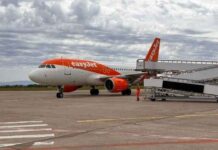
The recent announcement of the cancellation of the Paris Air Show, despite its being scheduled for June, does not augur well for the major international events scheduled for this year...
P. A. - It takes several months to organise an event. And for some, it's even one year or moreThis is particularly true of international events. The Paris Air Show, which you mentioned, is unfortunately a good example of this, and it also concerns a sector that has been particularly hard hit by this crisis, the aeronautics industry. When you consider the tourism spin-offs that have disappeared with the cancellation of this major show, you realise just how serious the situation is for those involved in the events industry.
We can't wait for our business to pick up again, especially as all MICE professionals apply the health standards for the events sector, which have proved their effectiveness.
What timeframe do you envisage for a recovery in the events industry, given that its production cycle is inherently longer than that of other tourism sectors?
P. A. - The fall in the number of cases of contamination is the key indicator, so it is difficult to commit to a date for the resumption of activity, which would be a ray of hope for all event professionals, organisers, venues and service providers of all sizes. We are impatiently awaiting the moment when our business will be able to resume, especially as all MICE professionals apply the health guidelines for the events sector which has proved its effectiveness. In Deauville, for example, it was put in place, under the supervision of the Calvados prefecture, during the American Film Festival, with 38,000 festival-goers welcomed over 10 days without a single cluster. I repeat: MICE professionals have all implemented health protocols that have proved their effectiveness. And finally, the very cautious management of the epidemic is a handicap for the Business component of the French tourist industry, which is a major source of economic spin-offs and jobs. Our regions - and in particular the hotels in Deauville, Biarritz, Cannes and of course Paris - live all year round thanks to these events.
Hard hit, the events industry will no doubt find it difficult to recover from this major crisis. What are the conditions needed to ensure its survival?
P. A. - The 'stop and go' management of the epidemic by the authorities, which is probably inevitable, is incompatible with the demand for visibility required for events. At this rate, much of the industry's expertise will disappear. We will certainly have to come up with new forms of meetings, certainly hybrid ones, in line with the world's new challenges, be they the preservation of resources and the climate, digitisation and knowledge-sharing, inclusion and partnerships with all stakeholders, etc. Survival of the players also depends on its ability to defend itself as an interdependent value chain: organisers depend on event venues and specialised service providers who, in turn, depend on confidence in the event industry as a vector for development and innovation. All these links are useful and essential: if one disappears, the whole chain is called into question. This is why it is essential that all event service providers - classified on the famous S1bis list - should have access to the solidarity fund increased in December, without any difference in treatment.
There's a lot of talk these days about hybrid events. Will the trend towards digital events accelerate?
P. A. - That's for sure. For many event professionals, the subject is nothing new. Nor is it anything new, digitising events very quickly established itself as the only possible solution during this period of crisis. In the future, face-to-face meetings will require changes on the part of all those involved to make the formats more participative, more qualitative and even better organised, opening the door to a wider audience thanks to hybridisation. But the more we work remotely on a regular basis, the more it will be necessary to physically bring together the men and women involved in common activities. So I remain optimistic for our industry, as long as we emerge from this crisis that is paralysing us.


