














After a stop at the Grand Café & Beach, a beachside café-restaurant where it's fashionable to have a light lunch with your feet in the sand, let's leave this world of cinema, this Hollywood exported to the southern hemisphere, and head for the city centre, just ten kilometres away. Because Cape Town hides its game well: under the air of a small Californian city, it stretches for dozens of kilometres and is made up of real cities within the city.  Distances that visitors ignore, usually contenting themselves with the beaches, the historic city centre, the arty Woodstock district with its old workshops and lofts, topped off by the renovated Old Biscuit Mill complex and the Test Kitchen restaurant.
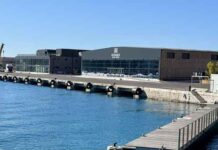
 Another tourist attraction is the completely refurbished harbour, very popular with Capetonians, now known as the Victoria and Alfred Waterfront. And when it comes to redevelopment, they haven't pulled any punches: reinvested warehouses, a red-painted harbour master's office, a neo-Victorian luxury hotel where stars, visiting heads of state and incidentally incentive groups stay, as well as a gigantic top-of-the-range shopping centre selling all the major international brands, a mind-boggling number of restaurants and bars, some of which are really worth a visit like this whisky bar, La Bascule, offering more than 500 brands... There's also a funfair Ferris wheel and a host of souvenir shops, as well as top-quality jazz and South African music groups performing free of charge in the open-air amphitheatre... The whole area is laid out around a real harbour, with cranes and docks for cargo ships and trawlers. And then there are the sea lions... playing, chasing each other, undulating in suppleness and not hesitating to climb onto the pontoons to laze in the sun. One of them, named Oscar, has even become the mascot of The Table Bay hotel.
 The Waterfront is also an opportunity to meet Capetonians from all walks of life, of all colours and of all faiths, with the particularly effective security systems allowing for real ?nonsense. On the subject of violence, just a word: it's true that when you arrive in South Africa, the electrified walls surrounding the houses and housing estates hardly augur well for a relaxed daily life... Similarly, later on, you'll tire of the anecdotes that South Africans like to tell about crime. But with a bit of warning and a bit of vigilance, you can walk around the neighbourhoods frequented by foreigners without much risk. Especially in a group. Of course, if you happen to ring your nose in the wind at night in a township, with a string of pearls around your neck, a Cartier bracelet on your wrist and a camera slung over your shoulder... well, there's a risk... But as Élodie Bonnefon, from the Akilanga DMC & Events agency, says, "South Africa is not the Wild West.
A real cinema set
 Let's walk up Long Street, in the historic district of City Bowl, dominated by the famous Table Mountain (1086 m), which we later climbed by cable car to its summit... A beautiful street, really. It has a touch of the sweet life, from Victorian wrought-iron lace to Art Deco masterpieces, a sort of film studio much used by directors in search of the 1930s. All tastefully repainted in generally light tones and converted into countless fashion boutiques, antique shops, cafés, restaurants and nightclubs.
 Almost without transition, a street or two away, you pass into the unusual neighbourhood of Bo-Kapp, inhabited by descendants of slaves and Muslim political prisoners from Malaysia, Sri Lanka, Indonesia and India. A blaze of colour climbs the hillside of Signal Hill, a colourful deluge of low-rise houses in blue, red, yellow or purple, almost all built in the 19th century, simplistic in their lines, punctuated by the presence of one or two small mosques, also joyfully coloured. There is hardly anyone to be seen in the winding alleyways, and the calm here is absolute, no doubt justified by the total absence of commerce.
 But as beautiful as the city is, as endearing as it is, you can't go to the very bottom of Africa without devoting at least a day to its immediate surroundings, with the Cape of Good Hope at the forefront, Cape of Good Hope as they say over there, a hundred kilometres away. Of course, we'll be taking the road along the peninsula's south-west coast, the one that clings spectacularly to the sheer cliffs overlooking the ocean, and which reveals, at the turn of a hairpin bend, sometimes an untouched beach embellished with colourful beach huts, sometimes a small fishing port where sea lions frolic. Shark flags line the beaches. They're white around here, and they're happy to sit on the boards of a few appetising surfers.
At the end of the continent
On the roof of a car park
 It's basically a reinterpretation of the village square, with all the gossip that goes with it, but it's also a convivial place where it's fashionable to stock up on rare, expensive and sophisticated products from all over the world, including France. To get a taste of what's on offer, sit down at one of the large wooden tables and enjoy a plate of oysters washed down with champagne, or a platter of charcuterie, or a pancake topped with honey... All to the accompaniment of live jazz. It's a long way from the atmosphere of the city centre... Because when it comes to the city centre, or downtown as we say in America, apart from a few bank head offices that held out, everyone left after the end of apartheid. As a result, not just small buildings have been abandoned, but entire skyscrapers, like the ex-Carlton with its sadly shattered windows. There's no doubt about it, you have to love the destroy aesthetic to like it here. And even then, during the day, it's crowded with hawkers and the usual local shops that aren't exactly flush with cash. But at night: no-one, no-one, no-one... Just a few worrying silhouettes that you don't want to meet and that you won't risk meeting, because at night you simply won't go into these streets. And there's nothing you can do about it, for the moment anyway, because this is all about rehabilitation.
An air of New York Destroy
 In the meantime, we prefer the Maboneng Precinct, another early New York Soho, an up-and-coming district of lofts and former warehouses reinvested by fashion designers, design galleries and laid-back red-brick complexes like Arts on Main, organised around an inner courtyard with a fashion boutique, bookshop and restaurant with a terrace under the olive trees... Luxury brands from all over the world are flocking to these places, set in unlikely streets, but which, given the urban development plans currently underway, should very soon become the top chic spot for Jobourgeois on the cutting edge of modernity. This will make a big difference to the countless aseptic shopping malls, with little in the way of architectural research - or even downright kitsch, such as the hilarious Montecasino, an attempt to recreate a Tuscan village - all packed with cameras and security guards, and which are the delight of idle weekends in this strange city, which basically resembles a huge green suburb.
You only have to get a little higher to realise it: trees and roofs, roofs and more trees, the skyscrapers of downtown and more trees... It's amazing how much this megalopolis loves greenery... You really realise it when you cross the bridge to return to the Braamfontein district at sunset. Then you climb to the 22nd floor of a building that will soon be home to fashionable designers and webmasters, to open onto a huge space, the Randlords, with a gigantic bar, a sort of open-air loft that can accommodate up to 450 people on party nights. With live music, needless to say. "We organise cocktail parties, of course, says Trevor Latimer, but also ultra-stylish sit-down dinners, fashion shows and corporate events. The decor is 'urban-creative', but it's the sublime view over an unexpected Jo'burg that makes it such a success."
And it's true that the stays of the Mandela Bridge, illuminated in turn in the colours of the rainbow nation - blue, green, white, black, yellow, red - as well as the skyscrapers in the distance of the new Sandton business district, the trains that cut through the night at the foot of the building, the ribbons of car headlights that stretch in red or white along the avenues, and the millions of bulbs that pierce the blackness of the wooded areas... It's true that, against such a backdrop, such a hyper-contemporary backdrop, one wonders where Africa is, made up of savannahs teeming with animals; the Africa that makes grown-up children dream and that we usually see on the posters of the underground trains in all the world's capitals.
All the animals in the world

 Yet the Africa of our origins is not so far away, barely three hours by bus from this city in the making, in the Marakele National Park Reserve, a 100,000 hectare paradise at the foot of the red cliffs of the Waterberg, the oldest mountain in the world, which offers itself as the ?nal bouquet of a successful operation. And it starts as soon as you enter the reserve. We leave the "civilian" means of transport at the protection barrier and climb into specially adapted land rovers to reach the lodge in 20 minutes, which is built in a style that is unmistakable from the outside. Out of Africa. In the meantime, the 'wild animals' festival begins straight away with impalas - later, we'll see so many of them that we'll almost ignore them - riding in front of the bumper of the powerful bush car.
Savannah aristocracy
 The wildebeest and warthog are much more shy, and can only be seen from a distance. But they don't waste any time in waiting, and they too can be found just about everywhere. Around the bend in the sandy path, perched on the top of a hill and well hidden in the vegetation: the Marataba lodge, a central unit and some fifteen bungalows. An African-chic enchantment, with misappropriated ethnic objects, dry stone walls, a restaurant overlooking a small river where the elephants come to drink, lanterns hung in the trees in the evening, a campfire lit on the grassy esplanade and divine cuisine led by Jesse Wollenschlaeger, a chef who trained in Cape Town and France. The bungalows, half hard, half canvas, are just like the central unit: sophisticated, but without preciosity, just the right amount of urbanity to blend in with the environment.
 Three days and two nights of a complete change of scenery, with nothing but the sounds of nature, to recover from the richness of the trip before returning home. And what days they are! Barring bad weather, which is rare in summer, the programme is unchanging. We start the first safari at sunrise, because that's when the animals are most active, and then, back at the lodge well into the morning, we meet up for a pantagruelian breakfast. There's time for a chat about wildlife, lunch, a siesta or a lazy afternoon by the pool, and in the afternoon, a second safari at sunset. The next day, the same. In the meantime, you'll have loaded your memory cards with hundreds of photos, because, it has to be said, the wildlife is particularly dense in this reserve. And they're not exactly shy, as they're quite easy to spot. There's a bit of everything: the big ?ve of course, i.e. the lions, leopards, elephants, rhinoceroses and bufes that make up the aristocracy of the savannah, but also giraffes, phaco-chères, wildebeests, impalas, zebras, hyenas, ostriches, monkeys... In short, just about everything the continent has in the way of wild animals. Oh, no! there's no crocodile. But who's going to complain about that?
 That said, underneath the calm exterior, between the tall grasses swaying in the wind, under the solitary trees that have sprung up haphazardly and make up the beautiful African landscapes, life is not so simple. It's a case of who's going to bite who, who's going to bite who, who's going to bite who... Only the elephant has no predator. And that's only when it's an adult. But that's when its beautiful tusks are the envy of men. Black or white. There is no difference. But we already knew that.