


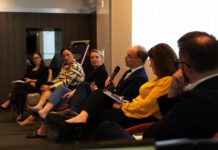









Businesses, government departments, private individuals: the plan to reduce energy consumption announced by the government at the Porte de Versailles exhibition aims to involve the whole of society in its objective of reducing energy consumption by 10%. A call to reduce waste heard by several travel industry players and business tourism. Also meeting at Porte de Versailles, the events industry announced that it had organised itself, " in a proactive spirit" to respond to the State's request with " concrete, high-impact actions that can be implemented almost instantaneously" said Renaud Hamaide and Pierre-Louis Roucaries, co-presidents of UNIMEV.
A number of emergency measures have been agreed with the government by the sector's main trade bodies, notably UNIMEV, Coesio and LEVENEMENT. These include a 10% reduction in the "set point - the constant temperature to be maintained during an event - compared with the previous edition. Among the other measures that will be put in place, the industry is committed to switching off the exterior lighting of sites 2 hours after they have closed to the public, to switching off stands outside opening hours, and to switching off cold rooms and ventilation during long periods of non-use. The gradual replacement of thermal bulbs with LEDs is also among the measures announced.
Adjusting the temperature to 19° in hotelsIn an interview with Les Echos, the French daily newspaper, the Group announced that it would be reducing the temperature in its hotels, including in bedrooms, setting the thermostat at 17°C when the premises - meeting rooms, bedrooms, corridors - are not occupied, closing heated outdoor swimming pools in 70 hotels, reducing the opening hours of saunas and hammams, limiting stocks of frozen food, and closing minibars except for medical reasons, Brune PoirsonAccor's Sustainable Development Director, set out the hotel group's action plan, adding measures specific to the group's hotels to the government's recommendations for establishments open to the public. For example, guests will have to make a specific request to change their sheets. " As market leader, we had a responsibility to go further" she said.
Lower temperatures, eco-driving and soft mobility as part of the sobriety plan
The plan to reduce energy consumption also, and above all, involves the transport sector, with railways obviously being a major energy consumer. At the beginning of September, a Transport" working group was launched in this context. The players gathered around the Minister for Energy Transition, Agnès Pannier-Runacher, and the Minister Delegate for Transport, Clément Beaune, included the SNCF and the RATP, as well as Air France, ADP and the motorway concession companies.
The commitment of transport sector operators covers widespread use of eco-driving public transport and trains, with ministers Clément Beaune and Olivier Véran visiting Montparnasse station on 7 October to promote the SNCF's "Opti Conduite" tool. In addition, a reduction in lighting and illuminated advertising is planned in stations.
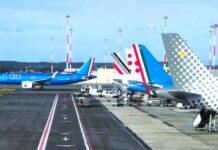
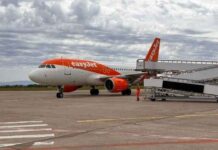
In the air transport sector, terminals are being asked to control energy consumption by optimising heating and air conditioning, while in airline operations, the recommended measures concern the use of electric power when the aircraft is on the groundThese include a single-engine taxiing system and the optimisation of flight routes to limit fuel consumption.
Companies are also invited to contribute to the overall effort. In agreement with employers' and trade unions' organisations, the plan defines around fifteen concrete actions to be implemented, such as lowering the temperature of premises, switching off interior lighting in buildings and exterior lighting by 1am at the latest, or the installation of modernised lighting with automatic presence detection systems.
But these measures also cover mobility and business travel, the government's adoption of current trends such as grouped business trips and the elimination of unnecessary journeys. Rail travel should also be favoured for journeys of less than four hours. The government is also committed to participating in the roll-out of the sustainable mobility package. Finally, the use of teleworking is one of the measures envisaged in the event of high voltage on the electricity network.