










Well-being in algorithms
Time differences, assembly-line meetings, junk food, stress: reconciling business travel with personal balance can be a complex business. Innovation players are working hard on this issue, relying in particular on travellers' best friend, their smartphone. At the2019 edition of UnivAirPlusdedicated to the well-being of mobile professionals, the start-up Moodwork had the opportunity to present its solution to the business travel industry. Objective: giving each employee control over his or her own well-beingthanks to a diagnostic to understand what they need to capitalise on or, on the contrary, what they need to improve. A second approach is to provide employees with resources so that they can take action themselves to improve their quality of life at work through personal development programmesand podcasts. All backed up by a support system enabling employees to talk live to psychologists and coaches, by telephone or videoconference.
In the same vein, start-up Smarter Time measures the amount of time the user spends on each of their activities, to help them achieve a better balance, particularly between their private and professional lives. Another crucial ingredient in the well-being of business travellers is their diet. There are a growing number of applications in this buoyant market niche, designed to provide better tracking of foodstuffs and their impact on the body. An application like Yuka has already made its mark on the general public. You can scan a product's barcode to find out all the useful nutritional information, or even identify healthier alternatives. But the start-up Foodvisor could well revolutionise this sector, based as it is on a simple photo of a piece of food or a plate. Ideal for business travellers in restaurants.

Delays, cancellations: compensation in three clicks
It is now fifteen years since European Regulation 261/2004 laid down the rules on compensation for passengers who suffer flight delays or cancellations. Yet many travellers, including the most seasoned of nomadic professionals, are still unaware that they can claim compensation. And, above all, that the beneficiary of such compensation is not the company, but the traveller himself. Taking advantage of this grey area, a number of start-ups have launched themselves into a buoyant market. Fligthright in Germany, AirHelp in the United States, but also French players such as Air Indemnité or Air Refund. These intermediaries offer to take all the necessary steps with the airlines and take a commission on any compensation obtained. Some of these players have entered into agreements with business travel agencies, such as Air Indemnité, which has joined forces with partners such as Frequent Flyer Travel Paris, Selectour, Manor and Tourcom. Travellers are automatically warned that the inconvenience they have just suffered is eligible for compensation, while their formalities are reduced to a strict minimum. As for AirRefund, the start-up has recently extended its activity with the introduction of travel insurance in alliance with Société Générale's 'assurtech' branch: Moonshot-Internet. The new product covers travellers in the event of airline bankruptcy...
The era of the augmented conference
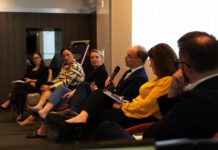
To mark the2019 edition of theIFTM Top ResaFrance's leading travel event has adopted a new technology designed to enhance the comfort of its audience. The start-up Odiho has been chosen to retransmit the sound of the various conferences to participants' smartphones. All they have to do is scan a QR code to access the speakers' contributions via their headphones in real time, sparing them any distracting noise. Odiho is also playing at home, with the start-up located just a stone's throw from the show, in the incubator. French Event Booster inaugurated at Porte de Versailles in September 2018. In the same spirit as Odiho, but from the angle of translation, Linguali is, according to its founders, "the first mobile app for conferences, meetings and events, so you can listen to the conference interpreter or speaker on your mobile, without the need for translation headsets". With a view to increasing participants' involvement in a conference or even a meeting, platforms such as Slido, Pigeonhole or the French Sparkup have proliferated in recent years. These solutions enable organisers to survey the audience during the event, but also to facilitate interaction with the speakers and view the responses live. There's no need to download a mobile application or fill in endless fields of information: a URL and a simple code streamline a process that often discourages many participants.

Towards inclusive business travel
For reconciling mobility and disabilityWith this in mind, a number of start-ups have tried to develop catalogues listing suitable infrastructures. This is the approach taken by the young start-up HappenGoHappenGo is a search engine that guides travellers in their search for a hotel, restaurant or shop, based on their facilities and user profile. HappenGo has a section dedicated specifically to travel, with information on trains, the metro, taxis, planes and car hire. Another practical tool for travellers with disabilities: Mobee Travel - formerly known as Handivoyage - allows you to book every stage of your trip with adapted facilities, if necessary medical equipment or assistance. There is even a specific module for business travel: Mobee for business. In the same "inclusive" logic, with the addition of a collaborative dimension, Streetco presents itself as a pedestrian GPS adapted for people with reduced mobility (PRM). The start-up relies on a community of users, "Streeters"These make it easier to get around town by pointing out potential obstacles and recommending accessible locations. As for Feelobjectthe Toulouse-based start-up has chosen to apply 3D printing - the core of its business - to the design of interactive maps to guide visually impaired users. These maps can be integrated into complex environments in the form of a kiosk, the Virtuoz "or a more mobile version, the Virtuoz Mini. The travel industry could well adopt these new tools, particularly hotels and airports.


