



















Of course, the launch of the World Expo in Dubai on October 1 is no small part of the good results achieved by the emirate's hotel industry. According to STR, hotels recorded an average occupancy of 81.6 % over the past month. Not seen since January 2020! However, the emirate has not waited for this global event to bring back its visitors. Once the initial shock of the pandemic had passed, it was even one of the first to recover. That's a tall order for a long-haul destination, and one that can't rely on large-scale domestic tourism like France, the United States or China.
By way of example, STR noted a hotel occupancy rate of 71 % in December 2020, a period when Europe was sinking into a long period of confinement. " Our leisure customers are familiar with the same number of visitors as in 2019but with a financial return 10 % higher than pre-covid levels. Business tourism is down 20%, particularly in view of the alternative offered by digital meetings. Nevertheless, with many companies' offices in Asia still closed, Dubai is emerging as a fallback solution for their meetings." says José Silva, CEO of the Dubai-based Jumeirah hotel group, who was in Paris to talk about his group's latest developments.

Wearing a mask was compulsory, even outdoors and in 40-degree weather, and almost the entire population was rapidly vaccinated. Dubai was relatively spared from the pandemic - just over 220 deaths per million inhabitants for the United Arab Emirates as a whole - and was quickly seen by tourists as a "safe haven". safe" destination. And what's more, it's wide open to them. " Unlike Singapore, for example, a financial hub to which the Emirate is often compared, Dubai has not cut itself off from foreign visitorssays José Silva, CEO of the hotel group. While schools and offices were closed and a curfew imposed for a few weeks, Dubai never closed its borders or set up a quarantine. "It's a position that has paid off, as it runs counter to many restrictions, some of which are still in force around the world. " Dubai is above all a service economy, with the Middle East headquarters of major companies in consulting and finance. The emirate has historically focused on trade, it had to keep its borders open" adds the hotelier.
Spearheaded by the Burj Al Arab, with its distinctive curve, its height three metres higher than that of the Eiffel Tower and its extraordinary presidential suites, the Jumeirah group is no stranger to the place that Dubai now occupies. " Since its launch some twenty years ago, the group embodies the vision of Sheikh Zayed to make his emirate a key financial hub and a popular holiday destination the world over" says its CEO. This objective has been achieved, given the number of offices, hotels and restaurants that the destination now boasts. In this respect, José Silva notes "After years of explosive growth, we've reached a plateau of maturity. The competition is more about quality. "

Formerly head of the Four Seasons George V, this hotelier took over the management of the group four years ago with a view to managing the competition from all the luxury hotels that have appeared in the emirate, some of which, like Jumeirah, are owned by Dubai Holdings, such as Bulgari, Four Seasons and Mandarin Oriental. But above all, its mission is to making Jumeirah a global brandThe aim is to position its name as a benchmark in the same way as the great names in Asian hotels such as Peninsula and Mandarin Oriental. " This requires a global presencestresses José Silva. Our globalisation is focused on luxury, with urban hotels of 150-200 rooms like the Carlton Tower in London, for example, or exclusive resorts like the Capri Palace or the one we recently acquired in the Maldives, both with less than 70 rooms. "
A showcase for Dubai's excellence abroad, the Jumeirah Group now boasts 24 hotels worldwideHalf of these will be in Dubai and the Middle East, but there will also be openings in China, notably in Shanghai and Guangzhou, as well as in Europe, with a business hotel in Frankfurt, two luxury hotels in London and two resorts, one in Port Soller, Spain, on the island of Majorca, and the other in Capri, Italy. Further openings are expected in Oman and Mecca in the Middle East, as well as Bali. A global footprint in the making that will undoubtedly include France, as Jumeirah's CEO has made no secret of his love of snow-covered slopes and the possibility of future development in the French Alps.
Paris is obviously also on the group's list of sought-after cities, as are New York, as well as Los Angeles and Miami in the United States. Given the loyalty of Russian customers to the Jumeirah brand, Moscow and St Petersburg are also natural targets for the Dubai hotelier. " A presence there would be just as strategic for us as in Paris, and even in Russian-speaking countries such as Kazakhstan, which are in the process of emerging." underlines José Silva.
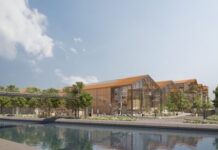
The Carlton Tower in London: luxury rethoughtA new opening, or almost. Last July, the Dubai-based group unveiled the metamorphosis of its London hotel The Carlton Tower Jumeirah, the flagship of its European offering. Closed for eighteen months, the hotel has undergone a complete renovation, at a cost of 116 million euros, including a reduction in the number of rooms - 186 instead of 216 - giving them more space. Half of these rooms are suites, including the exclusive Royal Suite, a newly-created three-bedroom suite with the option of making the entire floor private for added security and discretion.  Located in Knightsbridge, the hotel overlooks both Sloane Street and Cadogan Gardens. The modernist-style building has been redesigned by architecture and design practice 1508 London, who have drawn on the hotel's glamorous heritage to give it a classic style that is both modern and timeless. As part of the refurbishment, the hotel now offers a redesigned restaurant offering, including a signature Italian cuisine restaurant, Al Mare, a lobby bar and a new spa with the largest pool in London bathed in natural light. The Carlton Tower Jumeirah also boasts a function room for up to 400 people and three meeting rooms for up to 80 people with views over the lush greenery of Cadogan Gardens. |

