











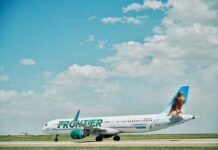


In mid-July, the Renfe has begun services on the Lyon-Barcelona and Marseille-Barcelona-Madrid routes. A year after the arrival of Trenitalia and its Frecciarossa operating on the Paris-Lyon-Milan route, the launch of the Spanish national airline on the French rail network represents a new stage in the development of the Spanish national airline.opening up to rail competitionavailable from December 2020. Following requests submitted to theTransport Regulation Authority (ART)other players have ambitions to embark on the adventure of high-speed rail in France, but the entry fee on the market is high and brakes to compete with the behemoth SNCF. This liberalisation has also started on regional lines but the process is slower there, with many regions postponing this development to the future. 2033the deadline set for this opening under European rules.
The French in favour of more competition
Faced with SNCF fares The opening up of high-speed rail services to competition, which was launched a year and a half ago and is considered increasingly expensive, is particularly eagerly awaited by French customers. According to a survey by Opinion Way for the European platform Trainline (a competitor of SNCF Connect), this process was approved by 80% of the 2543 people questioned for national lines and 77%¨ for regional lines. Unsurprisingly, 79% expect this opening-up to bring a improving service qualityThe French often have a poor image of the railways because of the problems they face. strikes and countless delays. Above all, users' support for more competition is linked to a strong desire for lower ticket prices (for 80% of them), which would lead them to take the train more often (for 53%). According to an analysis carried out by the same distributor, this reduction in fares already seems to be a reality. The arrival of Trenitalia has led to a average decline of 44% in fares on the Paris-Lyon route compared with 2019 and 30% on Paris-Milan. The benefit for customers would even be twofold, since it would be accompanied by a move upmarket The Italian carrier is offering three classes of travel on board its Frecciarossa trains. The first of these is the famous Executive class, with its 10 leather seats and top-of-the-range service. Under the "open access" principle, new rail operators have total freedom to choose their rolling stock (provided it is approved), the cities they serve, their commercial offer and the service they provide on board.
The rise of Trenitalia on Paris-Lyon-Milan or the Renfe on the Lyon-Montpellier-Barcelona route is not at the expense of the SNCF whose TGVs are still very busy, but attracting new customers attracted by attractive fares. Traffic on the Paris-Milan route has doubled since the arrival of Trenitalia. " Renfe is opening up a new chapter in the travel market, bringing new competition to France and driving down prices for the incumbent players, confirms Guillaume Rostand, spokesman for the comparator Liligo. These new routes will boost the travel sector, as southern European destinations such as Madrid and Barcelona are among the most popular with the French." . The environmental benefit Finally, the operators are happy to put forward the case for opening up to competition, since the train only emits according to theAdemeThis is only 4 grams of CO2 per passenger per kilometre travelled, compared with 30 grams for long-distance coaches, 47 grams for electric cars, 105 grams for internal combustion cars and 260 grams for aeroplanes. " Opening up the market is good for the planet because it means more trains" he likes to remind us Alain Krakovitchthe Managing Director of TGV/Intercités.
" In the eyes of foreign companies, France is not deregulated, which explains the timidity and even timidity of certain operators, including the Deutsche Bahn to get started" David Valence, Member of Parliament for the Vosges and Chairman of the Conseil d'Orientation des Infrastructures (Infrastructure Policy Council), said before the summer at a conference organised by Trainline on the opening up of rail services in France to competition. Due to start in December 2020, it is true that the opening up of the railways is a long way behind some of our neighbours. Particularly in Germany, where liberalisation took place in the wake of reunification, in 1994 for long-distance services and two years later for regional services. While DB has managed to retain a market share of 95% on long-distance routes, this has fallen to 62% on regional routes due to the emergence of a multiplicity of players, including France's Transdev (a subsidiary of Caisse des Dépôts et Consignations), which currently operates 20% in this market. On a positive note, some 800 km of track have been reopened in Germany since the liberalisation of the railways. Another example can be found in Italy, where competition on the Rome-Milan line led to a 40% drop in fares between 2011 and 2017 and a doubling of the number of passengers, with the "ecological bonus" of a significant drop in the market share of air and car travel. In Spain, three players are already competing on the Barcelona-Madrid route: Renfe, Ouigo Spain the SNCF and Iryo of Trenitalia and Air Nostrum.

The cost of tolls has an impact on the cost of tickets
In addition to a late legislative vote - which took place in 2018 - concerning this liberalisation, which put an end to the SNCF monopoly, this delay and then the initial wait-and-see attitude of the new rail operators can be explained by the particularities of the French system and the obstacles to be overcome. Foremost among these is the amount of rail tolls paid to SNCF RéseauThese are the most expensive in Europe, at around €18 per train and per kilometre travelled, compared with €7 in Spain and Germany, and €3.5 in Italy. Representing 40% of the price of a TGV ticket, they largely explain the soaring fares on TGV lines in recent years, to the great displeasure of customers. And there's more to come, as the French Transport Regulation Agency (ART) has approved a further increase of around 8 % in the amount of these tolls between 2023 and 2024...
This policy is the opposite of the one practised in Italy. " Trenitalia can play the frequency card with 457-seat Frecciarossa trains, while the level of tolls in France means that there are few TGVs running, but they are ultra-capacity." regrets Roberto Rinaudothe Chairman of Trenitalia France (see interview). SNCF would therefore start to make money on a TGV filled from 70%. The position of the head of Trenitalia France and this discrepancy with fares charged in Europe prompted Bruno Le Maire and Clément Beaune, the Ministers for the Economy and Transport, to ask the Inspectorate of Finances and the Inspectorate General for the Environment and Sustainable Development whether a sharp fall in tolls and, by extension, ticket prices could be offset by a boom in passenger numbers. " Developing rail transport is essential if we are to reduce greenhouse gas emissions and successfully decarbonise the transport sector, according to the Ministry of Transport. La pricing of the rail network is subject to reviews The aim of this assignment is to re-examine the cost of tolls, to study its structure and trends in comparison with our European neighbours. The aim of this mission is to re-examine the cost of tolls, to study its structure and its evolution in comparison with our European neighbours." . However, to support their ramp-up, the new entrants will benefit from a rebate during their first two years of operation. For Trenitalia, this means a 36% reduction in toll prices in 2022, and 17% in 2023, before being invoiced at full price, like SNCF in 2024. This no doubt explains Roberto Rinaudo's current concerns on the subject.
A shortage of high-speed trains in Europe
Potential candidates may also have been deterred by the poor quality of the French rail network, due to a lack of infrastructure. lack of investment. To remedy this, the government has this time announced a investment plan from 100 billion euros in the rail transport between now and 2040. " And not just for the TGV, which is the powerhouse of our rail system, but for all lines." said Clément Beaune in early October at an SNCF presentation of the future TGV M in its Paris-Charenton Technicentre. " The French want more affordable trains, and that means more trains." he added, welcoming the 115 units of this 5th generation TGV ordered withAlstom. A €3.5 billion contract! " More environmentally friendly, with 20% less fuel consumption but 20% more capacity (i.e. 720 passengers compared with 630 today), this TGV will give SNCF greater agility to respond to different markets in France and abroad, and to meet the increase in passenger traffic.assures Jean-Pierre Farandouthe CEO of SNCF. This train will be a strategic asset in the face of competition" . The lack of available equipment in Europe, particularly second-hand equipment, given the safety regulations, is also an obstacle to new entrants. It is this lack of second-hand train sets that has led to The Train to order 10 high-speed trains worth €300m from Spanish manufacturer Talgo. Delivered from 2025, these 350-seat trains will link 11 cities in the Greater West of France. Even the SNCF, despite its 363 TGVs (but 410 in 2018!) and its mega-order of TGV M trains, is tackling this issue through its Botox" programme which plans to renovate around a hundred trains between 2026 and 2033, extending their operating life from 2 to 10 years. It should be noted that leasing companies such as Akiem are developing in this niche in the same way as the airline industry. But they offer little or no TGV.

To each his own network in Europe
The last point complicating the arrival of new players is the lack of network interoperabilityEach country has developed its own command and control and signalling system. In this way TGV mobilised by the SNCF for Ouigo Spain can no longer run in France, as they have been adapted to the signalling characteristics of the Iberian network. Companies must therefore have suitable trains to run in France and even internationally, such as Thalys and Eurostar whose trains run between several European countries. To remedy this situation and facilitate interoperability on high-speed lines, a unified European traffic management system, theERTMShas been developed by the European Union, but France is lagging behind in its deployment, with only 40% of high-speed lines equipped because of the investment required. This delay is even more glaring on conventional lines.
New entrants on high-speed lines and conventional lines alike
Despite these constraints and the fact that admission ticket is financially very high for new entrants, two operators have set off on the French network. And others are in the starting blocks with varying degrees of success. Trenitalia made its debut in April 2022 and has since carried some 2 million passengers. However, due to landslides in the Maurienne Valley this summer, the Italian airline has been forced to concentrate its operations on 3 daily return flights between Paris and Lyon. The Renfe which set off from Marseille in mid-July.Madrid and Lyon-Barcelona, two routes now operated daily. This rail service has also quickly found its audience, with an average occupancy rate of 80% and 120,000 passengers carried in a month and a half. The Renfe now aims to serve Paris for the Paris 2024 Olympic Games, when it will compete with SNCF and Trenitalia on France's main - and most lucrative - rail route. Passengers will no doubt have to wait late 2025 or early 2026 to benefit from an additional player in the high-speed game with the 50 trains a day announced by The Trainwhich plans to operate from Bordeaux, Niort, Tours and Nantes.
" Our plan is to offer a new high-speed mobility service to encourage low-carbon travel within and between the regions of the Grand Ouest." says Alain Gétraud, CEO of Le Train. If Trenitalia or Renfe have the capital and the right rolling stock, they will be able to offer the best service, the long process of creating an operator from scratch Le Train was founded in 2020, obtained its rail operator's licence in December 2022 and had to decide to order 10 trains from Spanish manufacturer Talgo. " It takes a long time to prepare for operation. There have to be enough TGVs and a maintenance workshop, the trains have to be tested and the staff have to be trained." confirms Catherine Pihan-Le-Bars, Train DGA. The Train should also meet the New call for tenders for the Nantes-Bordeaux and Nantes-Lyon Intercity lines scheduled to begin in 2027, the previous procedure having been suspended because the SNCF was the only candidate. To make the wedding even more beautiful, even though these services are heavily subsidised, the candidates can propose the operation of a third line between Nantes and Lille, new route which would serve Angers, Le Mans, Caen and Amiens. Visit project Railcoop which concerns another rail link - Bordeaux-Lyon, closed by SNCF in 2014 - is more uncertain. The rail cooperative with 14,000 members, was placed into receivership last month for lack of sufficient capital. Will we see its Renovated TERs acquired from the Auvergne-Rhône-Alpes region? Nothing is certain any more. Other projects by private operators are said to be on the cards, such as Kevin Speed, a start-up that wants to provide TGV services to secondary towns, Evolyn to compete with Eurostar on the Paris-London route (via Lille) and Proxima, backed by Rachel Picard, the former CEO of Voyages SNCF.
Distribution, the sinews of war for new rail operators
Marked by the priority given to digital which, in theory, ensures simple and rapid marketing, the question of the ticket distribution is another crucial point in opening up the rail sector to competition. The SNCF y has a major competitive advantage with its platform SNCFConnect (formerly Voyages-sncf and now Oui.sncf), which sells more than 200 million tickets a year. Heir to its past as a single rail operator, the site could reach 6.5 billion euros in business volume by 2025 according to SNCF's wishes, compared with 4.3 billion euros in 2021. For many travel professionals, however, SNCFConnect is an obstacle to the arrival of new entrants, because this platform does not distribute new rail offers. Trenitalia's and Renfe's in this case, which require you to use each company's website. " It is the role of the legislator to oblige SNCF to integrate the other operators." said David Valence, Chairman of the Conseil d'Orientation des Infrastructures and Member of Parliament for Vosges, last June. And he referred to the German model where Deutsche Bahn distributes all the companies present in Germany on its website (to which it redistributes the proceeds of their sales) and allows you to travel with a single ticket when the journey combines a mainline journey and a regional section.
This French situation is beginning to be the talk of the town. online railway agenciesTrainline leads the way with a market share of around 15% and Omnio in transport and multimodality (KomboTictactrip, etc.), not forgetting comparison services (Liligo, Kayak, etc.). Trainline was born 25 years ago in the UK, at the same time as the liberalisation of the British rail system, and has been expanding in France since the acquisition of Captain Train in 2016. The platform is now increasing the number of agreements with travel management companies (TMCs), including FCM Travel, Voyagexpert, Reed & Mackay, Havas Voyages, BCD Travel and Amex GBTto provide them with inventories of referenced operators and technological solutions. The provision of essential functionalities such as exchange and cancellation is another important point to make the sale of the rail product satisfying and enable TMCs to gain in productivity. " The arrival of new companies is developing the market and accelerating our growthsays Christopher Michau, Trainline's Managing Director. It has to be easy for the customer. If they have to buy several tickets to make a multiple journey, it won't work. Trainline therefore offers a combined ticket to make the offer as attractive as possible." . At Kombo, after Trenitalia, Renfe's content will be available for booking in January while the API is developed. " It takes time to integrate each new companyexplains Matthieu Marquenet, Managing Director and co-founder of this multimodal platform in 2016. One of the problems of a new entrant is its marketing. If a company is well distributed, it can quickly take market share from SNCF. Trenitalia already accounts for one in every two tickets sold at Kombo on the Paris-Lyon route." .