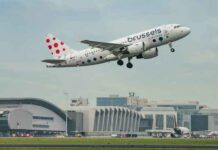



















In the middle of the expansion works at Cluj Napoca airport in Romania, the the Aviation-Event 2024 conference CLJ. The conference brought together a large number of airport managers, particularly from Eastern Europe and the Balkans, as well as airlines and air transport specialists.
Cluj Napoca airport is a perfect example of the sector's growth in Central and South-Eastern Europe. The hub, the gateway to Transylvania, only became international in 1996. From 32,000 passengers at that time, Cluj welcomed 3.2 million passengers last year. An all-time record for this airport. There has also been a similar phenomenon throughout Romania. Passenger numbers soared by more than 1000%, climbing from 2.2 to 24.6 million between 1999 and 2023.
Boosted by EU integration and low-cost traffic
This exponential growth in air transport in Central Europe and the Balkans is due to a number of factors. Foremost among these is the integration into the European Union, which began in the 2000s.. In 2004, the Baltic States, Hungary, Poland, the Czech Republic, Slovakia and Slovenia joined the European Union. Romania and Bulgaria followed in 2007. This entry into the European Union has resulted in a number of numerous investments, an increase in the standard of living as well as the liberalisation of air transport with other EU member states.

But this integration has also resulted in a completely new configuration for air transport. In Romania in 2007, the national airline Tarom still generated over 30% of passenger traffic, compared with 27.5% for low-cost airlines. "Today, the low-cost carrier Wizz Air accounts for 49.7% of our traffic. Along with Ryanair, low-cost services generate more than 62% of passenger traffic, while Tarom's market share is only 13.3%" David Ciceo, Managing Director of Cluj Airport, analysed the situation at Aviation-Event 2024.
The outlook for Romania remains excellent, with its entry into the Schengen area at the end of March.. According to Cluj airport management, the Romania's air traffic is expected to gain 20% by 2025with passenger traffic flirting with the 30 million mark.
In fact, according to a study by ACI Europe, presented during the conference by David Ciceo, the passenger/population ratio in Central and South-Eastern Europe argues in favour of accelerated growth in air transport. While the percentage is well above 2 passengers per inhabitant in Greece (the country even has the highest ratio at 6.82 passengers/inhabitant), in Austria, Croatia and Germany it is even higher, around 1 to 1.6 passengers/capita in Bulgaria, Hungary, the Czech Republic, Poland and Romania. It is even less than 1 in Slovenia, Bosnia-Herzegovina and Slovakia.. By comparison, the passenger/inhabitant ratio was 2.83 in France metropolitan France last year.
Airports prepare for growth
The expected windfall from air travel is therefore translating into numerous investments in the region's airports. At the Aviation-Event 2024 CLJ conference, Cluj airport is increasing the capacity of its terminal from 3.5 to 4.5 million annual passengers. The terminal extension will come into service this year.

The same ambitious project at Sofia. Bulgaria's airport launches major works to become a regional hub with a high quality of service. By 2028, the airport will be building a new Terminal 3. It will modernise Terminal 2 by adding check-in counters and walkways for more aircraft on contact. Management is also promising more security filters and a commercial area with more shops and restaurants. Sofia will then be able to handle more than 10 million passengers a year.
Also present at the conference, the CEO of Riga Airport, Laila Odina, spoke of the sixth phase of expansion of the Baltic platform by 2028. It is carried out in conjunction with the arrival of the Rail Baltica high-speed train in the new Airport City. The investment represents more than 300 million euros, partly supported by the European Union.

The largest project in the region involves Poland's future central airport. Planned between Warsaw and Lodz, the hub will include a mainline railway station. This will be linked to the whole of Poland as well as to neighbouring countries. However, the project is behind schedule according to Pawel Galiak, Director of Aviation and Commercial Services at Krakow Airport. "The new government wants to review the conditions of the concession and revise the original plan. Of course, Central Airport Poland will be built, but I think it will be between 2030 and 2035" he said.
In the meantime, other events supported by Aviation-Event will be taking place between now and the end of the year. The first is scheduled for May in Chisinau, Moldova, and the second for late November in Sofia. For Marcel Riwalski, organiser, Aviation-Event provides a unique opportunity for the air transport industry to meet, share their vision of the future and explore possible partnerships. And above all, to showcase Europe's most dynamic air transport region.