

















We take the same things and we start again. Or almost. Or even more so. Superposition of crises, hybrid threats, climatic shocks, uncertainty that has become permanent: the trends that have characterized the past year will repeat themselves next year, leaving companies facing an accumulation of potential risks for their operations and their movements.« Nothing indicates a return to a more stable environment in 2027 », believes Béatrix Renaut, regional safety director at International SOS, even predicting a «world of chaos" even more divided ".
The global order resulting from the fall of the Wall is weakening and alliances are being reshaped. The rivalry between the United States and China is growing, although a direct confrontation remains unlikely. And defense spending is soaring, with 65 armed conflicts having been recorded in 2026, a record since the end of the Second World War.
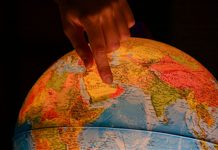
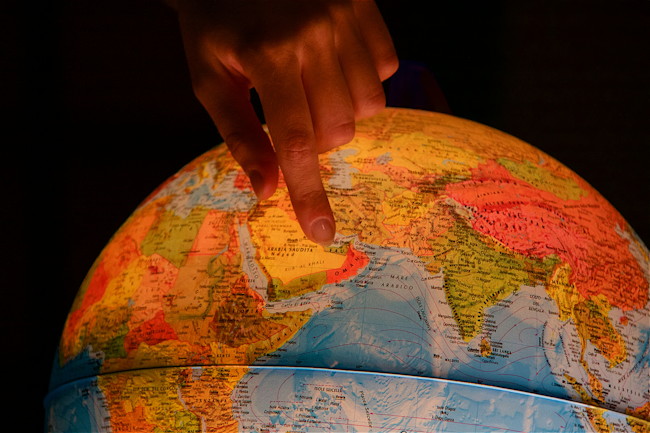
In this context, the conflict that has pitted Iran against the United States and Israel since late February has led the specialist in managing security and health risks to raise the risk level for the Gulf countries last March. And the region logically remains in the red on its 2027 global risk map. International SOS forecasts new cycles of confrontation and de-escalation in the coming months. Consequently, for companies, there are risks related to commercial and energy routes in the Strait of Hormuz and the Red Sea, but also the exposure of critical infrastructure and civilian targets to missile strikes, drones and cyberattacks.
Hybrid activities, a risk for everyone in Europe
Not to mention the social movements that are expected to continue to dominate the news in 2027, with all the disruptions they could cause in France and elsewhere. Europe is also positioned at the forefront of geopolitical risks. A new fact for a continent that has until now remained largely untouched. As the annual report «Risk Outlook 2027» by International SOS notes:« The decades of low security risk in Europe may already be behind us ".
While an open conflict across the continent is undoubtedly not on the agenda – yet – it is the hybrid activities, carried out in particular by Russia and Iran, that risk weighing on business activity in 2027. As no resolution of the war in Ukraine looms, the continuation of the conflict is expected to maintain these threats, including cyberattacks, sabotage, espionage, and influence campaigns.
Defense-related companies, critical infrastructure operators, and logistics players are among the most exposed sectors, as are transportation platforms and airports, recalling the many hubs that have been blocked by drone strikes in recent months. But, through a snowball effect, the consequences can affect companies well beyond these sectors, through power outages, communications disruptions, and problems in supply chains.« In the context of hybrid threats, the goal is often not destruction but disruption. "says Beatrix Renaut.
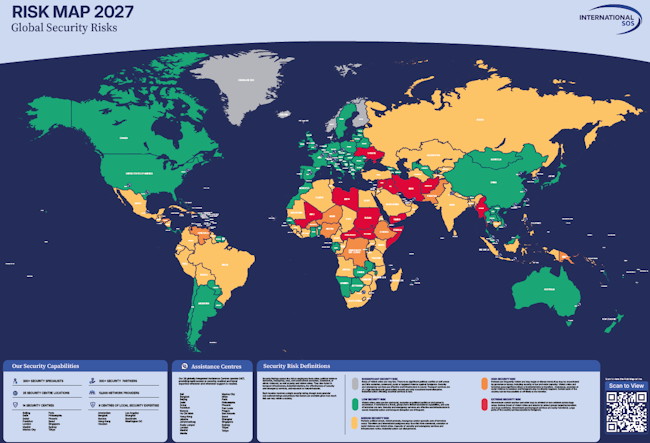
According to International SOS, the challenge for companies is therefore no longer just protecting themselves against a direct attack, but also anticipating the consequences of an incident affecting a supplier, a partner, or an infrastructure essential to their business. In this context, the risk management specialist recommends that companies prepare for simultaneous disruptions. And, accordingly, to better respond to them, strengthen coordination between physical security, cybersecurity, crisis management, and business continuity.
Climate: a multiplier of risks
If the world’s outlook is already clouded by geopolitics, an expected El Niño episode with intense rainfall could lead to drought and malnutrition in the Horn of Africa, floods in West and Central Africa, and tensions over water and energy in southern Africa. And Europe is not left out, with International SOS expecting a wetter and more disrupted winter than usual. This could lead to a cumulative effect of flooding, disrupted transport, and disrupted access to healthcare.
Because, here too, the climatic and health risks are cumulative and intertwined.« These risks have consequences that go beyond the health of the employees themselves: they can also directly affect the functioning of companies. »That is the case," summarizes Dr. Philippe Guibert, medical director of International SOS, who highlights the 15,000 people displaced by the storms in southern Spain in February or the nearly 700,000 hectares burned in the European Union. To this is added the summer heatwaves that worsen certain chronic pathologies, increase fatigue and increase the risk of death, effects amplified by the aging of the working population.
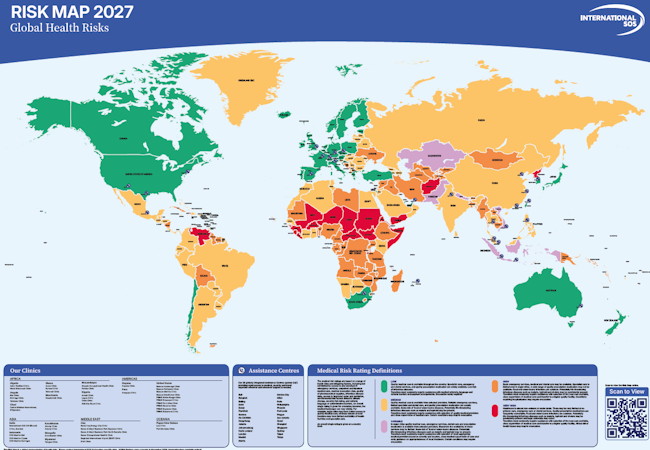
In this context, Philippe Guibert warns against a « Deficiency of resilience » within companies, namely the gap between knowledge of a risk and the actual ability to cope with it. And advocates for a « climate intelligence » which consists of transforming weather forecasts into protection decisions. « Resilience is built before the crisis. A heat alert is only useful if we know which employees are exposed, which are vulnerable, and what measures to trigger. "he stresses.
Mental health, a latent priority
In terms of health risks, International SOS points to a growing difficulty in accessing healthcare in Europe, while health systems are struggling to keep up with the increase in needs linked to population aging and chronic diseases. It also notes infectious risks, notably in the Democratic Republic of Congo with the largest Ebola outbreak ever recorded in the country, which may even be spreading as dengue cases have recently appeared in France.
But the priority mainly lies in mental health. Among the company medical directors surveyed by International SOS, 70% ranked this issue and stress as the top challenges for 2026 and reiterated this prescription for 2027. The World Health Organization estimates that depression and anxiety are responsible for 12 billion working days lost each year.
Economic, societal or environmental uncertainties, uncertainties regarding permanent change, uncertainties regarding the rise of AI: the great ambiguity of today’s world can generate storms under the wings. «Offering psychological support remains essential, but we must address the factors that produce these vulnerabilities: the workload and conflicting priorities, the lack of autonomy or the isolation of salaried employees,» describes the medical director of International SOS. For 2027, the challenge will be to move from a system that forces employees to cope in an organization that truly protects their mental health to a work system that truly protects their mental health.
