

















The slogans are regularly heard along the expressways of Addis Ababa, the sprawling capital of four million inhabitants. "We are vigorously pursuing our global and regional role in achieving our sustainable development objectives"says one sign. "We are entering a new era of global partnerships"says another. The deeper meaning of these messages is open to question. But they do prove one thing: the Ethiopia of 2017 shows its ambitions.
A demographic giant with almost 100 million inhabitants, the second most populous country in Africa behind Nigeria, a political and diplomatic heavyweight with the headquarters of the African Union in Addis Ababa, the Federal Democratic Republic of Ethiopia also dreams of becoming an economic giant.
Its strengths are real. With GDP rising steadily at 9 % a year for the past decade, experts are now talking of the "Ethiopian economic miracle", or even, by analogy with emerging Asian economies, the "Tiger of Africa"! Even if, of course, the country's symbol is the famous Abyssinian lion...


According to the International Monetary Fund, GDP per capita has more than doubled in less than ten yearsfrom 361 US dollars in 2010 to 795 dollars last year. In purchasing power parity terms, this GDP is currently flirting with 2,000 dollars. While the middle class now represents 22 % of the total population, or 20 million people, the poverty rate has fallen over the same period from 45 % to 22 %. These figures need to be qualified, because they are for the whole country, where rural and densely populated areas live in extreme poverty, while the new "middle class" often struggles to pay the mortgage on their state "condominiums", modest flats on the outskirts of Addis.
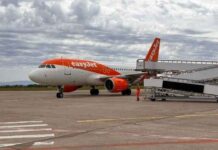
Nevertheless, the economic boom is real and has been influenced by two five-year growth and transformation plans that have seen industry, infrastructure and services grow. Infrastructure targets, for example, have been met at over 60 %, while international investors praise the relative absence of corruption, a rare phenomenon in Africa. With an airport under expansion and a world-class airline, a road network under development with over a billion dollars invested and, most importantly, a new freight and passenger train between Addis Ababa and Djibouti, the country's ambition is to become a trading hub from all over East and Central Africa.
Such a climate is favourable to business, despite the attack on foreign factories in 2016. So, despite the state of emergency, the outlook remains positive for 2017 and 2018, with the IMF forecasting growth of 7.5 %, albeit lower than the 9 % recorded in recent years.
While foreign direct investment (FDI) has also been revised downwards slightly - the country expects to receive US$3.2 billion in 2017 - it is now expected to reach US$1.5 billion in 2017, International companies are rushing to Ethiopia's doorstepThese include the new Hawassa Industrial Park, a complex dedicated to the textile industry 275km south of the capital. The country is also home to subsidiaries of General Electrics, Dow Chemicals and Unilever, as well as Japanese, Indonesian and, of course, Chinese companies.
As well as being the main importer, China is also a major investor in Ethiopia, attracted by the country's well-trained and inexpensive workforce - an Ethiopian worker costs half as much as a Chinese worker. It is building everything from the road network and tramway system to real estate and public infrastructure. For its part, France is not to be outdone, as it is present through 32 subsidiaries, the two largest companies being Total and BGI-Castel, the country's main brewer.
The new success train
 After five years of work, the new Addis Ababa-Djibouti railway line is about to become operational. It will link Ethiopia, a landlocked country with this strategic port on the Red Sea through which 90 % of the country's imports and exports pass. This represents almost 70 % of the 11.3 million tonnes of goods that pass through Djibouti's quays every year! "This achievement brings us a step closer to our ambition of becoming a regional logistics hub."said Djibouti's Head of State. The new train runs parallel to the old line built by the French between 1897 and 1917, during the reign of Emperor Menelik II, which has been at a standstill since 2010. Built and financed by China in conjunction with the Ethiopian government, this 750 km railway line cost 3.4 billion dollars. The investment is expected to boost Ethiopia's economy and relieve traffic congestion on a Dante road, which is used by 1,500 lorries a day.
GETTING THERE
Formalities Passport valid for more than six months. Issue of a business visa - accompanied by a letter of assignment - or tourist visa at the Ethiopian embassy in France + copy of return air ticket required (36 euros for a single-entry tourist visa, 21 euros for a single-entry business visa). Since June, e-visa formalities on www.evisa.gov.et
Time difference 1 h in summer; +2 h in winter.
Currency Birr (ETB). 1 euro = 27.98 ETB (Sept. 17).
Special report - Ethiopia: a new economic power in the Horn of Africa
- Ethiopia: a new economic power in the Horn of Africa
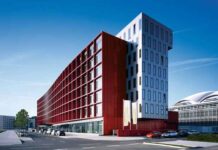
Bolé, Addis' new business district


