















2018 brought some good news for Singapore's hotel industry. After the average nightly rate peaked at 244 S$ in 2012, the rate dropped to 216 S$ in 2017. This is a result of supply outstripping demand, a change in the clientele in Singapore - more arrivals from developing countries are resulting in lower hotel spending - and finally a greater number of mid-range accommodations.
Between 2009 and 2018, demand grew by 74.6%, while supply grew by 85.5%. The divergence between supply and demand even accelerated between 2014 and 2017, notes the report, which speaks of a downward spiral in the price of overnight stays. The sharing economy will also have played a role, albeit a small one, since players such as Airbnb are very strictly regulated in the city.
However, 2018 marked a turning point: the average price per night recovered, reaching 219 S$. Unit revenue per available room rose sharply for luxury and economy hotels, with increases of +6% and +5% respectively, while first-class (4-star) and mid-range hotels recorded an increase of 3%. This good result is also due to a slowdown in new hotel openings.
In 2017, Horwath HTL counted the arrival of 800 rooms on the Singapore market, notably with the Sofitel Singapore City Centre, the Intercontinental Robertson Quay and Andaz Singapore. Last year, the luxury segment saw the opening of just three hotels offering a total of 344 rooms, the Six Senses Duxton, the Six Senses Maxwell and the very luxurious Capitol Kempinski.
Priority to Sentosa Island
However, Singapore's hotel industry is set to return to strong growth in 2019 (1479 rooms forecast), which is likely to result in a moderation in price growth. Horwath expects revenue per room to grow by 4 to 5% over the long term.
Unlike in the recent past, the new establishments are located outside the historic or financial city centre. On Sentosa Island alone, for example, three hotels - Sentosa, the Barracks and the Outpost - will be opened, representing 839 rooms and a 25% jump in the island's hotel capacity. Sentosa, long regarded as a purely leisure destination, is being developed into a major tourist destination. MICE centre with its many hotels.
The long-awaited opening of the Dusit Thani Laguna will be highlighting a new destination in the State City, Laguna National Golf & Country, particularly for incentive groups and visitors to the exhibition centre.
The golf course is just a 10-minute drive from Changi International Airport and 15 minutes from the city centre. This will be the Thai chain's first property in Singapore. It is due to open in the third quarter of 2010. quarter 2019. The Dusit Thani will comprise 198 rooms and suites.
Another major event is the reopening of Singapore's iconic hotel, the famous Raffles, fell into the lap of Accor Group. It will reopen in August and should, as the group promises, rediscover all the splendour of its origins.
By 2023, Horwath HTL predicts the addition of 1475 additional bedrooms in the metropolis, including the arrival of a new Banyan Tree.
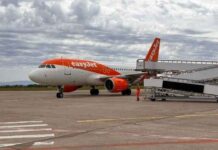
Green light to open Seletar airportA dispute between Malaysia and Singapore over overflight rights over the port area of Johor Bahru (Malaysia) for aircraft wishing to land at the renovated Seletar airport resulted in the outright cancellation of all flights to this hub, particularly from Kuala Lumpur. The Malaysian low-cost carrier Firefly, a subsidiary of Malaysia Airlines, will resume flights to Singapore from 21 April. In addition to Kuala Lumpur, the airline also serves Kuantan and Ipoh. Another Malaysian airline, Malindo Air, is also expected to apply for traffic rights for Seletar, having been blocked in its application for additional flights between Kuala Lumpur and Singapore due to a lack of slots. The hub is located 15 km north of Singapore city centre and could also quickly attract hotel investors. |