



















La Belt and Road Initiative was launched by the Chinese President Xi Jinping. The BRI provides for the construction of imposing infrastructures - mainly land and sea - linking China to the rest of the world, the aim being to improve trade between China and the rest of the world and at the same time to consolidate China's position as a world power.China's influence.
In addition to infrastructure, the Belt and Road Initiative project also includes developments in the telecommunications, finance and customs policy sectors, as well as cultural, scientific and tourism projects. According to Morgan Stanley analysts, Chinese investment in the countries participating in the BRI should reach 1300 billion dollars in 2027.
While this strategy has been very well received in developing countries, particularly in Africa and in AsiaHowever, it is finding it more difficult to find partners in the Western economies, which still have a certain degree of "social cohesion". no confidence towards a China perceived as hegemonic.
With the exception ofItaly who, by signing the 23 March China, which has recently signed an integration agreement with the Belt and Road Initiative, is hoping to revive an economy that has been in recession for several years and is seeking its bearings within Europe. China and Italy have also agreed to develop ports along the Mediterranean, with the ports of Genoa and Trieste at the forefront. The Italians would favour the development of Genoa, already Italy's leading port with over 70 million tonnes of goods and some 3 million passengers in 2018.
Genoa first
The Genoa trading zone in the Mediterranean covers an area encompassing the Côte d'Azur, Switzerland as well as Liguria and Lombardy. The Chinese and Italians were quick to sign an agreement, following Italy's accession to the Belt and Road Initiative. The Commissariat for the Reconstruction of Genoa, the Port Authority of Western Liguria - which manages the ports - and the China Communications Construction Company (CCCC) are to implement a project to build a new port in Genoa. action and investment plan for the reconstruction and development of the port of GenoaThese include upgrading access infrastructures.
But while Genoa is already a major economic hub, it is in Trieste that the arrival of the Chinese is likely to have the greatest impact. This city of over 200,000 inhabitants had its heyday over 100 years ago, when it was the only maritime gateway to the former Austro-Hungarian Empire. Trieste has retained a sense of nostalgia for those days, reflected in the Viennese facades of its buildings facing the Adriatic. By becoming Italian, Trieste was deprived of its hinterland and lost its influence. The transfer of maritime insurance headquarters to Trieste and the development of university and technology centres - although the latter two have enabled Trieste to remain one of Italy's richest cities - have not, however, restored the city's international aura.
Trieste back in favour
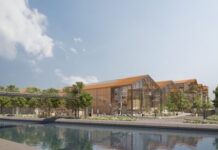
However, Trieste intends to make up for its poor image in business circles by hosting theEuroScience Open Forum in 2020, when the metropolis will be officially "European City of Science 2020. To mark the occasion, the city will be inaugurating a new congress centreIts ambition is to become a meeting place for scientists from the Mediterranean, Central Europe and the Balkans.
With an investment of 11 million eurosThe convention centre will be located in former warehouses on the historic port, right in the heart of the city. With a surface area of 9,000 m², the centre will be the largest of its kind in north-east Italy. It is expected to host around thirty events a year, including a dozen international conferences and congresses.
However, the port remains the most important factor in Trieste's economic recovery. As the gateway from the Mediterranean and the Adriatic to Central Europe, it is currently in head-on competition with the ports of Koper in Slovenia and Rijeka in Croatia. While the ports of Trieste have seen 67 million tonnes of goods In 2018, Koper is already handling more containers per year than its Italian counterpart.
China has now entered the picture, and should tip the balance in Trieste's favour. Local business circles see the Belt and Road Initiative as an opportunity to elevate Trieste to the rank of commercial hub between the Adriatic, Central Europe and AsiaThis is an import/export centre for both Chinese companies and European SMEs.
the Adriatic equivalent of Hong Kong or Singapore
The former Habsburg city will benefit from both European and now Chinese funds to connect its port to a rail network. The China Communications Construction Company (CCCC) has also signed a memorandum of cooperation with the Trieste port authorities and could invest 10% of the total €200 million needed to link the port to a new rail freight distribution centre in Germany, a project supported by the European Union, as well as to its own freight terminal in Slovakia.
In an interview with Bloomberg, the Chairman of the Trieste Port Authority, Zeno D'Agostino, said that Trieste would in future be the equivalent of Hong Kong or a Singapore for the Adriatic.
While waiting for this radical transformation, Trieste is dreaming of regaining its lost power, while China is watching...
Trieste: practical guide
|


