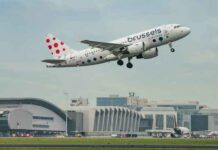



















There were probably smiles in the corridors of the FFB airport authority (Flughafen Berlin Brandenburg), in charge of managing Berlin's airports. The Airport Supervisory Board has just approved the allocation of airlines to the future complex BER. The airport will consist of three terminals: Terminal 1, Terminal 2 and Terminal 5. terminals 1 and 2 in fact refer to the new terminal while the Terminal 5 is the future name for the current terminal of Berlin Schönefeldlocated on the other side of the tarmac of the new airport complex.
The 60 or so airlines operating in Berlin will be distributed as follows:
- Terminal 1 for incumbent operators and easyJet
Most carriers are handled at BER's main T1 terminal. 45 airlines will be based in Terminal 1. These are the main airlines in the European network, such as the airlines of the Lufthansa Group (Lufthansa, Swiss, Austrian Airlines and Brussels Airlines) as well as Air China, Air FranceAeroflot, British Airways, Delta Airlines, Finnair, KLM and Turkish Airlines.
Easyjet, which has become Berlin's leading carrier since the demise of Air Berlin, with a market share of around 30 %, will also be based in Terminal 1. The airline will occupy the South Jetty, which has no gangways and was originally designed to accommodate the traffic of The late Air Berlin.
- Terminal T2 for low-cost carriers
The Berlin authorities are in a hurry to complete a second terminal, designed to handle low-cost airlines and will open its doors atAutumn 2020 at the same time as the platform's inauguration. It will be a simple, modular structure, built to avoid congestion at the new facilities after the inauguration. ten years late. Ten airlines are expected to attend: Aer LingusAir Baltic, NorwegianVueling, Wizz Air and Lufthansa's low-cost subsidiary, Eurowings. The terminal will have a capacity of six million passengers.
In total, Terminal 1 and Terminal 2 will be able to handle traffic of 28 million passengersThis figure is lower than the current traffic levels at Berlin's two airports, which handled more than 34.7 million passengers. Hence the idea of preserving the old Schönefeldwhich is expected to remain open to passenger traffic until 2025 at least. It can be used to treat 12 million passengers. Ryanair, Berlin's second largest airline in terms of passenger numbers, will be the main tenant. Some 18 other airlines will use the terminal, including charter carriers and major low-cost carriers such as Pegasus Airlines and Pobeda.
In the longer term, the airport will continue to expand to handle 48 million passengers by 2030 and 55 million passengers by 2040. One unknown factor remains: the exact opening date of the new terminal. The airport's CEO, Engelbert Lütke Daldrup, plans to announce this before the end of the year...