
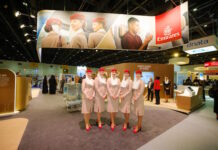















If the world ofaerial As studious as business travellers may be, who hasn't enjoyed painting a picture at 30,000 feet? All the more so since, in their race for excellence to attract premium customers, airlines are vying with each other, particularly in the field of in-flight entertainment. Both by improving their catalogue and their IFE (In-flight entertainment) system. It's not yet time for the optoelectronic devices mentioned recently by easyJet's vision of travel in 2070... But it has to be said that the devices fitted in the cabins of the new aircraft - particularly in the forward classes - offer a very high level of comfort. constantly improving visual comfort. The new business classes unveiled by Etihad and Flydubai at the last Arabian Travel Market are equipped with screens of over 17 inches, connected by Bluetooth. Each year, an award is presented to the airline with the best IFE, a ranking dominated by Emirates in the latest Passenger Choice Award and Skytrax rankings.
There's nothing new about spending a long-haul flight enjoying the latest Palme d'Or or a low-grade 'nanar'. As for enjoying a cinema session on the cow floor before boarding, the concept is more recent and less widespread. A number of major international hubs have in fact equipped themselves with real cinemas. Like Singapore Changi, which this offer may have helped to re-designate. best airport in the world a few weeks ago.


And yet, at a time when the smoothness of the passenger journey appears to be an essential success criterion for these platforms, is such an investment justified? Especially in infrastructures where every square metre must be optimised. Just ten years ago, CNN asked: " Cinemas in airports: a good idea, but would you use it?" . The article was a dubious echo of the results of a survey published by Skyscanner. Of the 10,000 or so people questioned at the time about their ideal airport, one traveller in two (49%) cited access to a cinema. Sleeping cabins (36%) and a library (32%) rounded out the list. However, according to figures published by CNN, up to 40% of the IMAX audience at the Hong Kong hub is made up of airport employees. It's worth noting that some hubs have gone even further in terms of the space given over to the seventh art, albeit in a very special context. Vilnius airport distinguished itself during the health crisis by transforming an aircraft car park into a good old drive-in cinema. This "Aerocinema", part of the Lithuanian capital's International Film Festival, was intended by the airport's management to show its support for the aviation and cultural sectors. An original initiative to project yourself "onto the black screen of your sleepless nights"...