














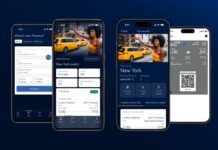

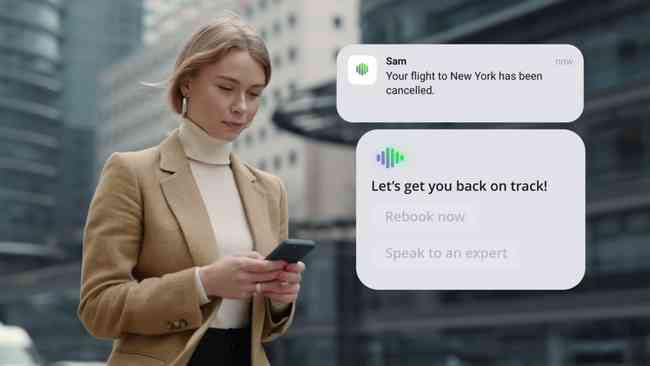
On August 4th, FCM Travel announced a conversational booking feature integrated into FCM Booking, its proprietary platform. The traveller describes their request in natural language and receives proposals from Sam, FCM's artificial intelligence layer, built using their profile, travel history, and the company's travel policy. Each recommendation is accompanied by a justification. Jessica Dunderdale, Global Head of Product at FCM Travel, explains: " conversational booking only works if travellers trust what they are shown, and that trust comes from context, not just convenience ".
A wave of MCP integrations in business travel
This announcement is part of a broader trend. For several weeks now, the MCP (Model Context Protocol) protocol has been establishing itself as the gateway between business travel tools and consumer AI assistants. CDS and BCD Travel had paved the way in early July, followed mid-July by Perk for its travel and expense and MICE modules, then by Amex GBT on 29 July, with an Egencia AI connector integrated into Claude. FCM Travel thus becomes the fifth player in the sector to display, in the space of a month, a strategy for connecting to conversational AIs.

A more cautious approach for FCM for now
Nonetheless, Amex GBT already claims, via its proprietary "agent-to-agent" architecture, a complete flight and hotel booking directly within Claude, with availability announced for Egencia customers in the third quarter. FCM Travel, for its part, only makes its conversational booking available in internal company channels, Microsoft Teams and Slack, and has set no deadline for the promised extension to ChatGPT, Claude and Gemini. John Morhous, Chief Experience Officer at FCM Travel, places this caution in a logic of complementarity rather than full automation: " We didn't build FCM's tech ecosystem to replace our consultants' judgment. We built it to take away their repetitive tasks, so they can focus on the moments that truly need a person ".