China and India saw spectacular growth in traffic in 2005. What are the main challenges facing these new markets?
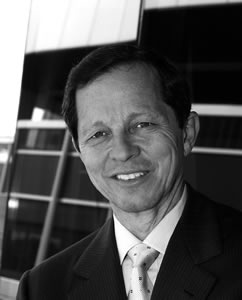
Giovanni Bisignani - For China, it's all about adapting to phenomenal growth forecasts. The Chinese government has understood this and is investing in airports. We need to keep pace with this trend by ensuring that costs are viable, particularly through the development of e-ticketing. We are working with the authorities to develop the flexibility of entry points and direct routes, which would alleviate the severe delays experienced by flights in the Shanghai-Beijing-Guangzhou 'golden triangle'.
In India, the main problem is the lack of infrastructure. Here too, we are working with the government to increase the capacity of the infrastructure in Bombay. But the situation remains alarming, and could turn into a disaster if the 331 aircraft ordered by India last year don't find a place to land...
You call for a reduction in airport costs. Has this call been heeded?
G. B. - Airlines pay 42 billion dollars a year to airports and other service providers for navigation. This represents 10 % of our operating costs. Europe, where fifteen of the "most expensive airports in the world" are concentrated, alone picks up half the tab! These monopoly service providers must join our fight for efficiency. Some airports have understood this and have taken positive steps. I'm thinking of Vienna, Geneva and Copenhagen, with whom we have signed a three-year tariff agreement. But other airports continue to live in an anachronistic monopolistic felicity...
You are very critical of Aéroports de Paris, which is forecasting an annual tax increase of 5 % over the next five years...
G. B. - It's an outrageous situation. Roissy is already the second most expensive airport in Europe. More generally, it's time to put an end to the era of "airports spend and airlines pay". I've talked about this with Jacques Barrot, the European Commissioner for Transport, who also thinks that more transparency should be introduced into the way airport taxes are set.
You have launched a battle against the "Chirac tax", which finances development aid through a levy on airline tickets. Why is this?
G. B. - Because this tax is absurd, and will worsen the situation it is supposed to resolve. No industry has done more for development than air transport, which brings in tourists, provides jobs and gives access to markets. In Africa, the role of air transport is vital given the absence of an efficient road network. The sector generates 450,000 jobs in Africa and contributes 11.3 billion to the continent's GDP.
Taxing air transport means biting the hand that feeds development. And why penalise only air transport? Once again, governments are mistakenly looking at air transport as a profit centre rather than a vehicle for growth.
Bio express
1946: Born in Rome. Graduate of the Harvard Business School in Boston and the University of Rome (law).
1976: Assistant to the Chairman of ENI and then IRI.
1983: Vice-Chairman of IRI.
1989: Chief Executive Officer of Alitalia.
1994: CEO of Tirrenia di Navigazione.
2001: Managing Director of Opodo (London).
2002: Director General of IATA.