










Ilios International has just announced that it has raised €1 million to continue its development and strengthen its position in the security and assistance market. Can you tell us more about the origins of your company?
Thibault Janin - Safety risks have evolved, which is why we need to change things. Risks are no longer dealt with in the same way as they were five or six years ago. The Covid crisis has exacerbated social and political tensions in many countries around the world. As a result, even in relatively safe countries, you can still run into security problems. My father and I set up this company because we realised that the existing solutions were missing the mark in a way, i.e. the traveller himselfHe was a former security director of a major group. As the former Security Director of a major group, he was a buyer of security and assistance solutions, while I was used to using them on business trips, whether to the United States and the Middle East or to riskier countries such as Nigeria. From my experience in the field, I think I have a good idea of what travellers need abroad.
What exactly do you think they need?
Thibault Janin - Essentially, it's about two things: on the one hand, being well informed about the areas and streets to avoid for safety reasons and, on the other, being reassured that someone will come to their aid if they have a problem. There are lots of situations where travellers find themselves very much on their own when they have a problem abroad. Most solutions, apart from their ability to manage travel to high-risk areas, are based on country files, alerts and a hotline to contact in the event of a problem. But a hotline that directs you to the nearest doctor or hospital is not enough. Hence our desire to offer our customers a genuine assistance system in the field.

What solutions have you put in place?
Thibault Janin - We have set up an operations control centre to coordinate rapid responses to any problems that may arise. This centre relies on around thirty specialists who are used to managing crises, including coordinators from the civil security sector, former military personnel and police officers. At the same time, we have a network of partners in some sixty countries, all connected to our tools, and which can rapidly deploy a response team on site, often within a quarter of an hour and even within the hour in highly congested cities such as Lagos, Luanda or Johannesburg.
How does Ilios International orchestrate relations between its operations centre and field operations?
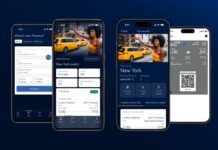
Thibault Janin - This operations centre is supported by a digital component that enables us to anticipate risks. Of course, we offer all the classic functions, such as country files, alert systems and PNR tracking, thanks to our API key for linking up with travel agencies. We also organise group training and safety briefings before travellers leave. What sets us apart above all is our digital system, developed in-house, which relies on both the geolocation of travellers and the precise mapping of sensitive neighbourhoods.
How did you create this map?
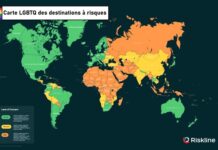
Thibault Janin - Our monitoring and analysis department has covered nearly 800 towns in 160 countries by defining at-risk neighbourhoods, all of which is fine-tuned with our local partners. They can, for example, suggest that we remove certain streets that are safe or add neighbourhoods that are not. As soon as a traveller enters one of these zones, they start to be geolocated in real time. Similarly, they can be tracked continuously from the moment they press their emergency button. This is key to being able to give the passenger's precise location to our local partners in the event of an intervention, manage the time between the call being made and recovery, and direct the person to a refuge area.
So you don't geolocate travellers all the time?
Thibault Janin - Travellers are not against being geolocated, but they are not in favour of being constantly tracked. without understanding why. Unlike previous systems, passengers are not permanently tracked in our solution. Their position is only pushed into the system once a day, at 12 noon GMT, and it is this position at that precise moment that will be accessible to the security departments. Of course, all the data is kept in the back office in case of legal problems. But it's an untouchable black box.

Can you give some concrete examples of these interventions in the field?
Thibault Janin - Take the recent case of a traveller sent on a three-week mission to Tanzania who, after a few days, twisted his knee on the stairs of his hotel. A team was sent to collect him from the hotel and take him to see a doctor. These are the kinds of incidents we deal with, the little everyday problems that are a far cry from terrorist attacks or kidnappings. Another example occurred in South Africa at the end of last year, when a business traveller was followed by a group of young people. during a trip to Johannesburg. She called our assistance officers, who understood the situation and contacted our partners in less than two minutes. From there, she was directed to a hotel, where our partner came to pick her up about twenty minutes later, comforted her and then drove her back to her hotel. This is one of the things we can help with, but we can also deal with administrative problems.
What kind?
Thibault Janin - Take the case of a traveller who was due to visit a country in Africa, convinced that he would obtain his visa on arrival at the airport as part of his mission for a UN organisation. We had our doubts and told him so. But, out of a clear sense of conscience, our operations department asked one of our partners to be at the airport, just in case. Good for us, because the traveller was unable to obtain a visa as planned. Within a few hours, we were able to resolve the situation by demonstrating that he had not complied with the rules, but that his visa was perfectly valid.
But are you also prepared for crisis management?
Thibault Janin - Of course, we have had to manage crises in Angola, Mali and Burkina Faso. We have a dedicated roomWe also have an operations department that can organise temporary protection, relocations and even exfiltrations of personnel. However, coups d'état, natural disasters, attacks and kidnappings obviously have a major impact, but these are actually fairly rare occurrences. On the other hand, everyday problems occur every day.
Let's talk about your customers, who are they?
Thibault Janin - We currently have around thirty customers, from SMEs to large groupsThe only difference is the way we sell our solutions. The only difference is the way we sell our solutions. Large groups buy our services on a flat-rate basis over the year, whereas SMEs pay by consumption. If they organise 200 trips in a year, they pay for the number of trips and nothing more, apart from extremely low connection costs to our platform. But what also makes us very different in the security sector is our insurance-type business model. Our customers pay for our solutions like travel insurance, a few dozen euros per trip or per month for expatriates. The cost of interventions is none of their business. Ilios takes care of them according to the conditions agreed with our partners.

Does this explain why Ilios also wants to roll out its offering via the major insurance groups?
Thibault Janin - Exactly, we have two types of target. The first are ETIs and large groups directly, and the other type are insurers and brokers. They are interested in our model, primarily because of the quality of our infrastructure. Apart from International SOS, I think we're the only ones in France with an operations centre of this level. But they're also interested in our offer, above all because our model is similar to theirs, to their key understanding. Whereas other security providers send invoices for their services, we take care of everything. As a result, insurers can make projections based on the number of trips insured, and know how much it's going to cost them. And they like that.
How will the funds you've just raised be used?
Thibault Janin - This fundraising will enable us to move forward. This business requires a very high level of structure to run its network of customers and partners, to have high-performance IT tools and above all to keep our operations centre running. 24/7 is a heavy investment in human resources, especially as we are not the cheapest country in terms of charges.