









As rich as it is in facilities and experiences, the Korean capital should not overshadow what the rest of the country has to offer for a MICE operation. Especially as distances and infrastructures make it easier to explore the territory. Here are a few examples of colourful stops on an incentive trip from Jeonju to Yeosu.
Jeonju

From Seoul, it's easy to reach Jeonju in less than 3 hours by coach or by KTX, the comfortable Korean high-speed train similar to its French cousin. A half-day stopover can be enough to discover the main attractions of the destination. Starting with the hanok village, a sort of moving postcard in which visitors are invited to pose in traditional garb, the hanbock. After wandering through this most picturesque of atmospheres, the Jeonju Korean Liquor Museum will enable an incentive group of a dozen people to learn more about soju, a major part of Korean culture. Then they'll get hands-on with making their own beverage, mixing rice with the various ingredients under the friendly, humorous guidance of the host. Depending on the timing of the trip, participants may even be able to return home with their own concoction. Failing that, they will have taken up an unprecedented challenge together, and will be able to console themselves at the end of the exercise with a tasting session of the different types of soju. Jeonju is also home to a hotel specially designed for MICE clients: the Royal Room of King has around ten hanok pavilions with a capacity of 232 guests, and even a modern convention centre for events with up to 150 participants.
- Royal Room of King : 5218-20, Chunhyang-ro, Wansan-gu, Jeonju-si, Jeollabuk-do Province - Website
- Jeonju Korean Liquor Museum : 74, Hangi-gil, Wansan-gu, Jeonju-si, Jeollabuk-do


Gwangju
After a 1? hour journey winding its way through lush green mountains, Gwangju offers two new facets of Korean culture. Starting with its sometimes painful history. For GwangjuThe "City of Light" is best known for having been the city of resistance against all forms of oppression. And it was precisely in front of the square where the struggle against the military dictatorship crystallised in 1980 that the "Asia Culture Center took up residence in 2015. The museum, which claims to be "a window on Asian culture for the world", regularly hosts MICE events, thanks in particular to its comfortable surface area of some 140,000 m² - more than the National Museum of Korea, as those in charge of the site like to point out...

A visit to Gwangju is also an opportunity for a team-building activity that immerses you in Korean culture, with an undeniable aesthetic dimension. Because in this Gwangju Traditional Culture Centre whose door we are now pushing - a traditional building dominated by the Mudeungsan mountain - the two women sitting on stage in traditional dress are imposing. In front of them, as in front of each of the participants in the operation, is a gayageumn. After a demonstration of fingering and singing by the two experts, the session becomes participatory. After a fingering and singing demonstration by the two experts, the session becomes a participatory one, with the participants learning how to handle this kind of zither with twelve silk strings. Then you join in the singing of a traditional Korean song, with varying degrees of skill and in a friendly atmosphere. No matter how melodious, the chorus will have been forgotten once you cross the threshold of the Gwangju Traditional Culture Centre. But the memory of this moment shared between peers with two ambassadors as talented as they are charismatic will undoubtedly remain a highlight of the operation.
- Asia Culture Center : 38 Munhwajeondang-ro, Dong-gu, Gwangju - Website
- Gwangju Traditional Culture Center : 222 Uijae-ro, Dong-gu, Gwangju - Website

Yeosu

After this timeless musical interlude, we turn our attention to a congress destination firmly anchored in its time, and even indelibly linked to a year: 2012. Because that's where the rebirth of a destination resolutely turned towards the future lies. Yeosu l'Universal ExhibitionIts tenth anniversary was celebrated with great fanfare in July. It has to be said that the event, which attracted more than 8 million visitors, has profoundly transformed the city. In particular, it has transformed the city into a leading MICE destination.
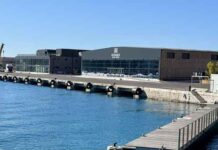
Symbolising this new status, the Yeosu Expo Convention Center was completed just a few months before the Universal Exhibition, establishing a new events spot on the South Korean coast. Facing the sea, the ultra-modern building was able to expand during the crisis: "We were one of the pioneers in Korea when it came to hybrid events, providing ourselves with suitable equipment at the start of the pandemic, because we were expecting to go through a very... calm period."says the General Manager of the Yeosu Expo Convention Centre. He nevertheless assures us that the major "traditional" events are making a comeback. And he is preparing for the future to maintain and even enhance the appeal of the site. "We plan to create more small and medium-sized seminar rooms to meet the demand from international and Korean events. Our aim is to be ever more competitive with other convention centres."He explains, with an undisguised eagerness to make up for the time lost during the crisis, a period that is all the longer in the history of the infrastructure.
Among the many spaces available at the Yeosu Expo Convention Centre, the vast Expo Hall (976 seats) is particularly noteworthy, as is the outdoor Expo Digital Gallery (covered), whose surface area (9,000 m²) and multimedia wind tunnel open up interesting prospects for event organisers. Boasting particularly well-designed multimodal transport links (KTX station, bus station, cruise terminal and even the airport), the convention centre is also adjacent to an entertainment hub that further enhances its appeal as a MICE venue.Arte Museum and its catalogue of immersive and interactive activities, reminiscent of the Atelier des Lumières.
Above all, in parallel with the construction of the events centre, the local authorities have taken care to develop a quality hotel offer. These include three establishments in the immediate vicinity of the Convention Centre, with a capacity of over 1,200 rooms - including the Sono Calmrecognised as one of the best hotels in the area. A Shilla Stay is currently under construction. Once completed - expected by the end of 2022 - it will add around 300 rooms to the destination's catalogue.
- Yeosu Expo Convention Center : 59723 1, Expo-gil, Yeosu-si, Jeollanam-do - website
- Arte Museum : International Building A, 3rd floor, Yeosu World Expo, 1 Fair-gil - website
- Sono Calm Yeosu : 111 Odongdo-ro, Halnyeo-dong, Yeosu-si, Jeollanam-do - website


Special report: MICE operation in Korea
From Seoul to Yeosu, MICE under the sign of K
Seoul, the essential MICE hub
- Jeonju, Gwangju, Yeosu: MICE immersed in Korean culture
Incheon, the other "K-MICE" carrier
Interview: Kwon Jong Sool, Executive Director of the Korea MICE Bureau, KTO