














Four years before the start of the tournament, it is difficult for the teams that will participate in the next FIFA World Cup to set performance goals. The Moroccan National Office for Tourism, on the other hand, does not hide its ambitions. Namely, to exceed 26 million tourists by 2030, compared to nearly 20 million in 2025. And to capitalize on this momentum to grow even bigger, reaching the 40 million mark in the more or less long term.
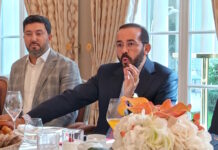
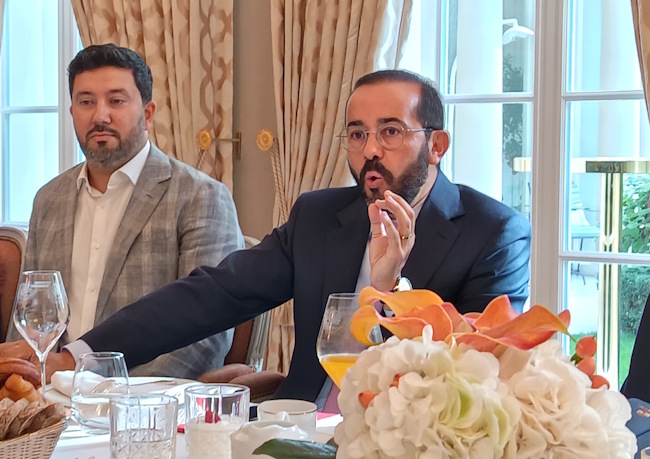
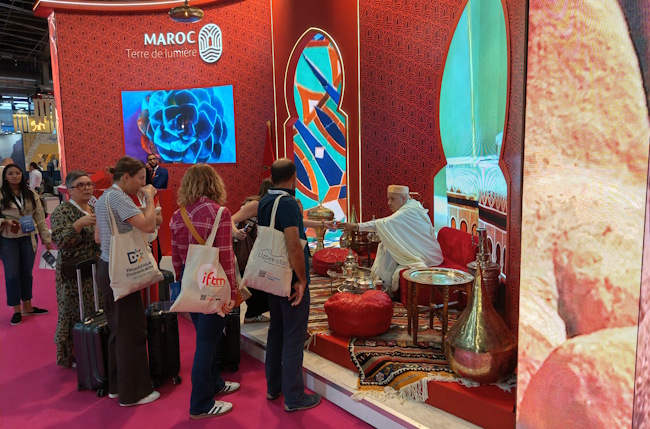
Faced with these challenges, the Kingdom’s authorities intend to capitalize on the impact of the World Cup. In terms of both global visibility and the modernization of the infrastructure that usually accompanies such events. the organization of such an event. In the margins of exhibition IFTM, The officials of the’ONMT They therefore invited the press to Paris, in the refined setting of the Bristol hotel, to affirm their ambitions and clarify their roadmap.
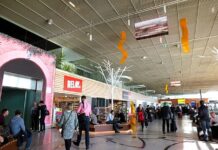
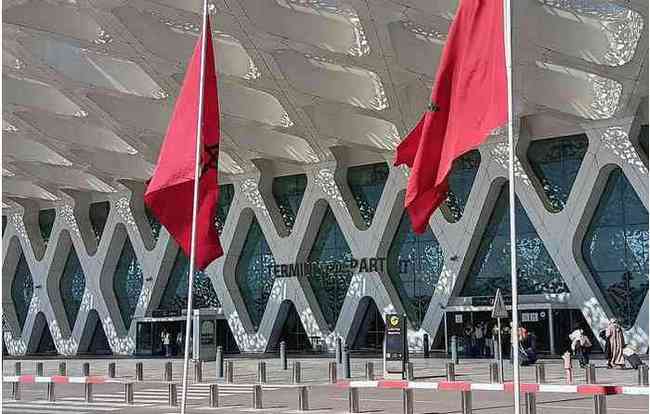
To open the Kingdom’s doors to international customers on a grand scale, the airports are undergoing modernization.« Airports constitute the primary infrastructure for tourism. Their capacity will double by 2030. » Achraf Fayda warns. The general director of the Moroccan National Office of Tourism (ONMT) specifies: « We were at 32 million passengers in 2024, 36 million in 2025. By 2030, the airports in Morocco will be able to accommodate 75 million passengers ".
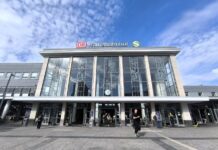
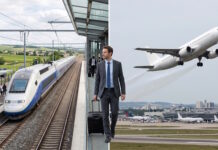
The rail line is also one of the major infrastructure projects poised to transform mobility in Morocco. The high-speed line Tangier-Rabat-Casablanca It will thus be extended to Marrakech by 2029.« The high-speed train is a beautiful project, a beautiful product, which has made it possible to connect Tangier with Rabat and Casablanca. »Reminds Achraf Fayda.« A project underway, which will be inaugurated in 2029, will extend the line to Marrakech. Travelers will be able to arrive in Tangier and take the TGV for two and a half hours to find themselves in Marrakech, or vice versa: land in Marrakech and head north. This high-speed train will allow us to further accelerate mobility within the country. ".

The new railway network is also intended to contribute to one of the Kingdom’s major projects for the months and years to come: the decentralization of tourism, as evidenced by the Director General of the ONMT.« This responds to a strategic priority for us: regional development. The development of the destination Morocco It will inevitably involve the development of all the regions, and not just of one or two that play the predominant role they have today. ». The evolution of air connectivity also contributes to this desire.« Historically, we were very focused on the major French airports. »Note Mr. Fayda.". Today, we are developing other regions: Nantes, Lille, Bordeaux, Nice, Brest, Strasbourg... We are truly expanding our network, because we are convinced that through this point-to-point development from the regional airports, we can serve not only Marrakech, Agadir and Casablanca, but also Tangier, Fès, Dakhla, and so on. ".
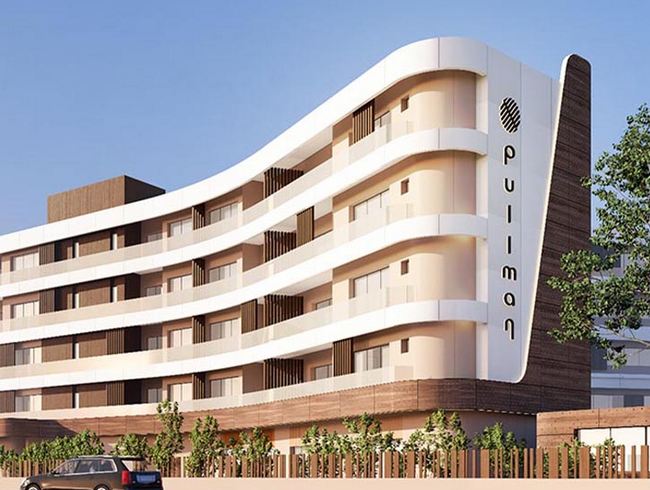
As for accommodation, in the coming years the capacity will increase from 300,000 beds to 360,000 by 2030. This is a relatively limited increase, but should be enough to meet the Kingdom’s ambitions:« We are very confident about Morocco’s ability to host 26 million tourists, and even beyond that. Because today, with 300,000 beds, we are barely at an occupancy rate of 52 %. We could therefore receive twice as many tourists over the current capacity. »Achraf Fayda analyses. The director of the ONMT welcomes the diversification of hotel groups investing in Morocco: « We have seen both an acceleration in the investment activity of historical types of investors. Accor, an increase in investors who did not have a large footprint, such as American groups, and new entrants such as Asians, Egyptians and investors from the Middle East ".
In the short term, the Morocco It is eyeing the rise in popularity of the leisure clientele. However, several projects are expected to attract the favor of the MICE segment and business travelers in general. Here again, the goal is to decentralize, while Casablanca concentrates the vast majority of business flows.« Today, economic development is evolving. Emerging poles are emerging, such as Tangier, with Tangier Med and the Tanger Free Zone. Tangier is therefore becoming the second major pole. A pole in the south is also emerging: Dakhla, with its new large port and its accelerated investment plan. These will, I would say, be the three major poles to attract travelers who come for meetings. ".
On the more specific MICE sector, the destination is busy. This is evidenced by the project to develop the facilities. ad hoc To structure the offer, in this case a network of Convention Bureaus that should become more dense in the near future. As for the MICE infrastructure, the organization of the World Cup will not particularly benefit the Moroccan offer. However, the Director General of the ONMT confirms that projects are under consideration. Three destinations are vying to host a new congress palace. Marrakech is bidding for a second center, and Casablanca and Rabat are also involved. But Achraf Fayda emphasizes from the outset: « Perhaps all three of them can be realized, or one, or two… I’m talking about projects that are under consideration. I don’t want to make false announcements like «we’re going to do this.» These are projects in the planning phase. We don’t know yet. In any case, all three cities have positioned themselves to obtain an exhibition park and a convention center. For organizing events of major scale, it’s actually more of an exhibition park than a convention center. ".
For now, the priority remains, of course, the preparation for the World Championships: « We must succeed in the World Cup. It’s a big project. I’m probably not the best person to say whether there will be a congress palace before 2030 or not. But given the momentum, I think the priority is first and foremost to ensure a great success for the World Cup. »summarizes Mr. Fayda.
