



















A major comeback after a 10-year absence: the Sultanate of Oman has returned to the IFTM Top Resa last September, as part of its strategy to promote tourism. This is yet another opportunity to shine the spotlight on a destination that is a firm favourite with French tourists, with double-digit growth in recent years following the post-Covid recovery, all of which is supported by the fact that visas are not required for stays of less than 14 days.
Far from the gigantism of Dubai and the pharaonic ambitions of Saudi Arabia, Oman plays on its cultural riches to attract tourists in search of authenticity. With its five UNESCO-listed sites, its capital Muscat, where even the most recent buildings are no higher than ten storeys, its souks teeming with handicrafts, spices and incense, and its natural sites ranging from deserts to lush wadis and, in the north of the country, the fjords of the Musandam region, the "Norway of Arabia".


If this combination appeals to holidaymakers, the destination also has everything to appeal to event and incentive organisers, who can combine the two. " Business travellers usually extend their stay to include at least two days exploring the Nizwa and Ad Dakhiliyah regions, or enjoying activities in Muscat such as a visit to the National Museum, the Opera House and the Matrah Souk, the oldest in the country. "says Khulood Salem Al Kaabi, in charge of European and American markets at Oman's Ministry of Tourism.
To support the MICE segment, the MHT - Ministry of Heritage and Tourism - has set up a unit dedicated to helping organisers build their events. Its cornerstone is the Muscat Convention Centre, one of the largest in the Middle East, located four kilometres from the capital's international airport. Opened around ten years ago, in 2014, the Oman Convention & Exhibition Centre has two auditoriums with 450 and 3,200 seats respectively. At the same time, there are five exhibition halls covering an area of over 22,000 m², of which Halls 1 and 2 can be used as vast plenary halls, accommodating 10,000 participants in theatre format. All this is in addition to 20 meeting rooms for 25 to 360 people, two ballrooms, the largest of which can accommodate 1,100 guests, and a VIP pavilion.
For major regional or international meetings, organisers can count on a luxurious JW Marriott directly connected to the convention centre or a Crowne Plaza in the immediate vicinity. But the venue can also draw on the accommodation on offer in the Business Park Al Mouj. This business district, with its 40,000 m² of office space, is also a place to relax, with its golf course, marina and beach in a natural environment that is also home to top-of-the-range flats and villas.


It was here, in the heart of the Al Mouj business park, that a luxurious St Regis, owned by the Marriott group, opened its doors last year, adding to an already strong offering of five-star Kempinski hotels and Mysk by Shaza, a four-star hotel owned by the Qatari group Shaza Hotels. All hotels with excellent event hosting capacities. Soon, in 2027, they will be joined by a hotel from the Japanese group Okura, with a 150-room resort and seven meeting rooms blending the Middle and Far East. But before that, a voco hotel, from the IHG group, is expected in the district by the end of the year, offering travellers 251 rooms on the seafront, as well as three meeting rooms. All this is part of the British group's expansion in the country, where IHG now has nine establishments, with the opening of Hotel Indigo Jabal Akhdar last year and three more to come.
Oman is counting on ambitious hotel development to support its growth in tourism, with almost 40 new establishments currently under construction. Muscat has the largest number of projects. Not to mention conversions of existing hotels. Already present in the sultanate with a DoubleTree and a Hilton Garden Inn in the capital, as well as a Hilton in Salalah, the American group of the same name has just announced three openings next January. In the same location, within the luxury Barr Al Jissah complex, located along the coast near Muscat, which until now has been home to a Shangri-La offering a range of experiences from family leisure to luxury.
Renovated, re-segmented and entrusted to the Hilton group by its owner Zubair Corporation, the Al Husn hotel will see a 180-room Waldorf Astoria set up in its most prestigious part, while a 198-key Hilton and a 302-room DoubleTree will complete the complex's offering from January 2026.
" These new properties will enable us to meet this growing demand in both the leisure and business segments - supporting Oman's Vision 2040, which aims to attract 12 million tourists a year to the Sultanate by 2040. "said Carlos Khneisser, Hilton's Managing Director of Development for the Middle East and Africa.

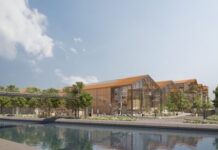
Among recent openings, a Mercure opened in the capital in October 2024 and others are expected to follow, with plans for the Tivoli Muscat Hotel & Residences, which will be located in the mixed-use district of LA VIE, close to the airport. Thai group Minor's luxury brand Anantara is also set to add to its Omani network. After Salalah on the country's south coast, then the Jabal Akhdar mountains, the brand is moving closer to the capital with, in the pipeline, the Anantara Bandar Al Khairan Resort, a 121-key complex set between sea and mountains, 45 minutes from Muscat.
While Khulood Salem Al Kaabi offers a variety of accommodation to suit all budgets, including " three- and four-star hotels in Muscat city centre "The hotel offer is also aimed at the top end of the market, with other upcoming projects including a Nobu hotel on the shores of Yiti Beach, just under 30km from Muscat. But while the French clientele is one of the key customers for Omani tourism, the country is preparing a guest of choice in 2028, Club Med, with a resort near Khasab. In the heart of the Musandam fjords.
